


































byEstonian Research Council
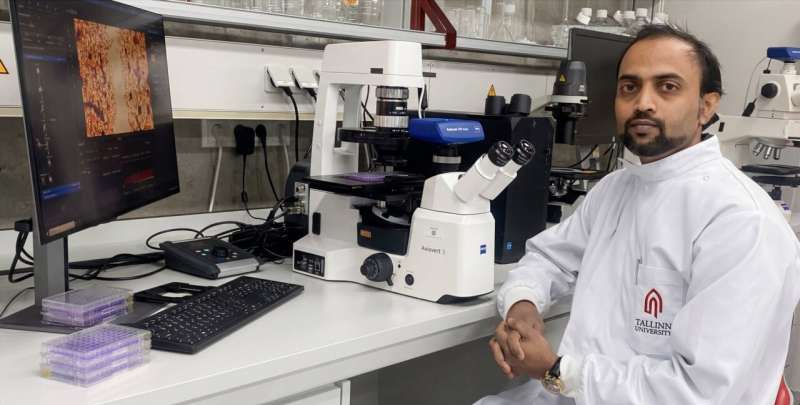
Amal D. Premarathna. Credit: Amal D. Premarathna
Chronic wounds affect approximately 2% of the population in developed countries. Existing treatments are expensive and may cause side effects. In his doctoral thesis, Amal D. Premarathna shows that a promising alternative to synthetic wound care treatments may come from nature—namely, algae. Some beneficial algae species are also found in Estonia.
Amal D. Premarathna, who recently defended his doctoralthesisat Tallinn University, demonstrates that polysaccharides extracted from various seaweeds and freshwater cyanobacteria possess remarkable bioactive properties. His research shows that these natural compounds can accelerate wound healing, reduce inflammation, and protect skin cells from UV-induced damage. These findings highlight their potential as alternatives to synthetic treatments for chronic wounds, a condition that affects millions of people worldwide.
His doctoral research investigated polysaccharides derived from diverse algal sources, including red, green, and brown seaweeds collected from Estonian coastal waters, the shores of Sri Lanka, the coasts of South Africa, Canadian coastal waters, as well as commercially available materials. Using advanced analytical techniques such as nuclear magnetic resonance (NMR) spectroscopy and chromatography, Amal characterized the chemical structures of these complex sugar molecules and evaluated their biological activities in laboratory studies using human skin, immune, and intestinal cells.
Algae support wound healing in multiple ways
A fucoidan polysaccharide extracted from the brown seaweed Macrocystis pyrifera demonstrated an exceptional ability to protect skin cells against UV-induced damage while simultaneously activating immune cells, a dual effect valuable for both therapeutic and cosmetic applications. Another compound from the red seaweedFurcellaria lumbricalis, found in Estonian coastal waters, significantly enhanced skin cell migration and proliferation, which are key processes in wound closure.
"We discovered that the biological activity of these polysaccharides is closely linked to their specific structural features, including molecular weight, sugar composition, and sulfate content," explains Amal.
This means we can now begin to select or design seaweed extracts for specific medical applications based on their chemical fingerprints. The research also revealed that polysaccharides from the cyanobacterium Nostoc sp., collected from freshwater ponds in Harjumaa, Estonia, exhibited strong anti-inflammatory effects. Their bioactivity was further enhanced by naturally associated proteins, opening new avenues for understanding how these natural complexes function.
Chronic wounds are also associated with high treatment costs, exceeding $25 billion annually in the United States alone. Current therapies are often expensive and may cause side effects. Seaweed-based alternatives, derived from sustainably harvestable marine resources, could provide more affordable and safer options, particularly in regions with limited access to advanced health care.
Proven results
Amal's thesis work provides scientific validation for these traditional uses and opens the door to developing new, evidence-based natural products. The research was further validated using an animal wound model, in which oral administration of seaweed extract significantly accelerated wound closure compared to untreated controls, with no observed toxic effects on liver or kidney function.
These findings have potential applications in pharmaceutical development, advanced wound dressings, skincare products, and functional foods. The next steps include further preclinical studies and formulation development to translate these laboratory discoveries into practical applications for human health.
The doctoral thesis is based on ten articles, in which Amal D. Premarathna is the first author, published in leading international journals, includingFood HydrocolloidsandInternational Journal of Biological Macromolecules.
More information Amal Dharmapriya Premarathna Deliwala Ambegoda Gedara, Algal Polysaccharides for Biomedical Use: Wound Healing and Immunomodulation (2025). DOI: 10.60518/etera/133







Post comments