




































byCity of Hope National Medical Center
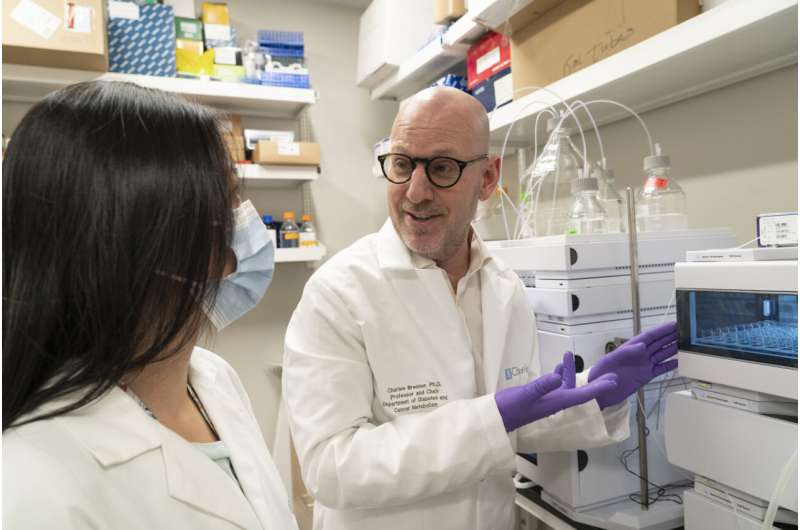
Charles Brenner, Ph.D., City of Hope's Alfred E. Mann Family Foundation Chair in Diabetes and Cancer Metabolism, has conducted a landmark study that dissects citrin deficiency as a lean fatty liver disease. The discovery suggests new therapeutic targets for MASLD and how to curb desire for sweets and alcohol. Credit: City of Hope / Arthur Riggs Diabetes and Metabolism Research Institute
Scientists at City of Hope have unraveled how citrin deficiency (CD), a rare genetic disorder that prevents the liver from converting food into energy efficiently, can trigger fat buildup in the liver—even in lean individuals.
Their study, published inNature Metabolism, also reveals how the liver turns on a hormone that reduces cravings for sweets and alcohol. The findings could lead to new therapies for a variety of health conditions, including fatty liver disease or MASLD (metabolic dysfunction-associated steatotic liver disease), which afflicts more than 1 billion people worldwide and increases the risk of developing type 2 diabetes and liver cancer.
The study's lead author, Charles Brenner, Ph.D., City of Hope's Alfred E. Mann Family Foundation Chair in Diabetes and Cancer Metabolism, observed thatfatty liver diseaseis most common in people with obesity, yet hundreds of millions of lean people unknowingly also have this condition that programs the liver to store fat rather than burn energy.
An internationally recognized biochemist, Dr. Brenner has spent decades discovering metabolic pathways and determining how disturbances in metabolism shape health and disease. Dr. Brenner was struck by two unusual facts:
Knowing that the liver increases levels of the FGF21 hormone in multiple conditions of metabolic stress and that high doses of FGF21 cause an aversion to sweets and alcohol, Dr. Brenner hypothesized that specific stress in CD drives fatty buildup in the liver and the production of FGF21.
"Much like how the study of rare, inherited cases of breast cancer in men led to pinpointing key genes that drive common cases of breast cancer in women, we utilized CD as a model to understand why the liver would generate and not burn fat in the lean state," Dr. Brenner said.
"We found that the key is the accumulation of a small molecule called G3P that activates ChREBP, a protein that turns on fat synthesis genes."
The work was surprising because G3P had not previously been identified as the activator of ChREBP, and the conditions that induce FGF21, which include both ketogenic diet (the absence of carbohydrates) and consuming simple carbohydrates, had eluded understanding.
Based on the research, the G3P mechanism has the potential to explain the liver's logic of fat synthesis while also explaining how G3P functions as a stress signal to turn on FGF21.
The findings suggest novel therapeutic approaches to resolve MASLD. When G3P-ChREBP turns on fat synthesis, it also turns off fat burning in a way that could be targeted by drugs. In addition,G3P-based drugscould be prescribed by physicians to get the effects of FGF21, namely curb the appetite for sweets while also turning on fat-burning pathways.
Ongoing research will be key in exploring these avenues for treatment, offering hope for people with CD, lean individuals with fatty liver disease, and others for whom FGF21-based therapeutics may aid weight loss and/or promote a healthier diet and lifestyle.
"Our chief goal is to transform our understanding of metabolic dysfunction into tangible benefits for people facing these interconnected diseases," Dr. Brenner said. "By helping uncover new ways to treat root causes, this study brings us one step closer to achieving that objective."
More information Vinod Tiwari et al, Glycerol-3-phosphate activates ChREBP, FGF21 transcription and lipogenesis in citrin deficiency, Nature Metabolism (2025). DOI: 10.1038/s42255-025-01399-3 Journal information: Nature Metabolism
Provided by City of Hope National Medical Center









Post comments