


































byJustin Jackson, Medical Xpress
Credit: Gustavo Fring from Pexels
Researchers at the Institute of Psychology at the Maria Grzegorzewska University in Warsaw report associations between alexithymia and parental burnout and sex-specific differences.
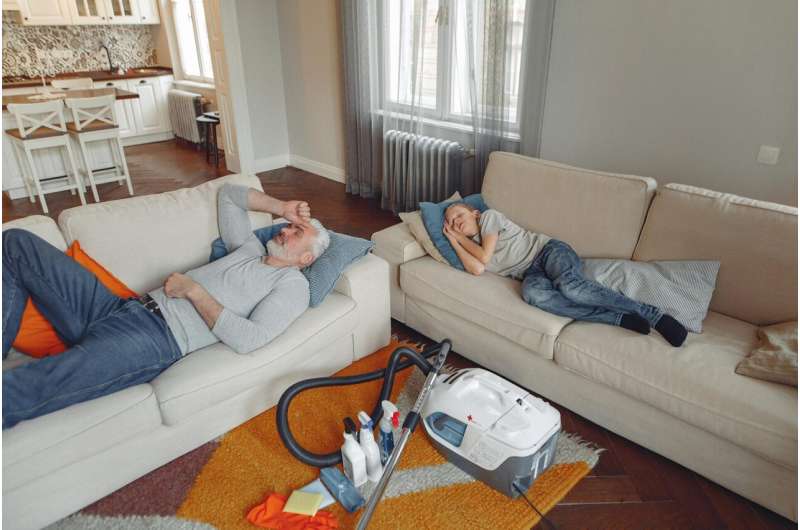
Parentalburnoutis a chronic condition marked by exhaustion, emotional distancing, and a reduced sense of fulfillment. Previous work has connected attachment insecurity and emotion-processing problems with burnout in parents.
Alexithymia is apersonality traitcharacterized by a difficulty in identifying, describing, and processing emotions. The term literally translates from Greek to "lacking words for feelings."
In the study, "Alexithymia and attachment dimensions in relation to parental burnout: A structural equation modeling approach,"publishedinPLOS One, researchers examined alexithymia associations with attachment orientations and parental burnout, and whether patterns differ for women and men.
A cross-sectional sample included 440 Polish parents, with 229 women and 211 men aged 21–61 years. The mean participant age was 38.91 years, and children had typical neurodevelopment with a mean age of 9.10 years.
Participants completed the Parental Burnout Assessment and the Toronto Alexithymia Scale, focusing on difficulties identifying and describing feelings and externally oriented thinking.
Attachment anxiety and avoidance toward mother and father were assessed with the Experiences in Close Relationships-Relationship Structures questionnaire (ECR-RS) for mother and father.
Alexithymia showed consistent links with parental burnout across all models. Analyses indicated direct paths from avoidant attachment to burnout and indirect paths from anxious attachment to burnout through alexithymia.
Women in the sample reported links between how they relate to their own parents and how burned out they feel as parents. Greater avoidance toward their mother showed a direct association with higher parental burnout in the women's model. Anxiety towards their mother related to higher alexithymia in women, and higher alexithymia related to higher burnout. Avoidance toward their mother did not relate to alexithymia in women.
Women showed comparable patterns when models focused on their father. Greater avoidance toward their father was directly associated with higher burnout. Anxiety toward their father related to higher alexithymia, and higher alexithymia related to higher burnout.
Group comparisons showed that women reported lower alexithymia and lower burnout scores than men, and higher avoidance toward their fathers at statistically significant levels.
Men in the study showedstrong connectionsbetween their attachment patterns and burnout, with alexithymia playing a central role. Avoidance toward the mother was directly associated with higher parental burnout. Anxiety toward the mother was related indirectly to burnout through alexithymia. Men who described greater difficulty understanding and expressing emotions reported higher burnout overall.
The same pattern appeared when the models examined the father. Avoidance toward the father connected directly to burnout, while both avoidance and anxiety toward the father related to higher alexithymia, which in turn was associated with higher burnout. Overall, men reported higher alexithymia and higher scores on all parental burnout measures than women.
Findings across sex-stratified models implicatealexithymiain the association between insecure attachment and parental burnout. Authors state that differing sex patterns suggest value in emotion-focused and attachment-informed support tailored by sex.
© 2025 Science X Network
More information: Dawid Konrad Ścigała et al, Alexithymia and attachment dimensions in relation to parental burnout: A structural equation modelling approach, PLOS One (2025). DOI: 10.1371/journal.pone.0334647 Journal information: PLoS ONE






Post comments