


































by Heather Heap,The Conversation
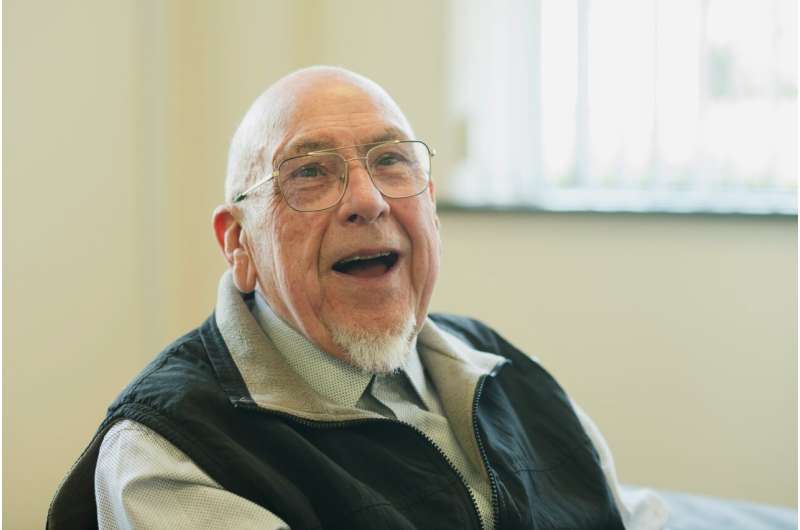
Credit: Unsplash/CC0 Public Domain
For many older people, humor can be a lifeline. It's not easy to discuss the challenges of aging—from loneliness and the loss of a loved one to dealing with chronic pain. But laughter can be an invaluable way of opening up about how hard life sometimes feels.
"I struggle to get round at times, but I have to," a 72-year-old man told me during myresearch with colleaguesinto older people's experiences ofhumor. "If I didn't laugh at myself, I'd cry."
Past research has suggested thatcognitive declinecanreduce older people's ability to be funny. But our study offers an alternative explanation for the reduced amount of humor in their lives. It's not so much about older people losing their sense of humor, as about changes in their opportunities to use and enjoy it.
We interviewed 20 people aged 60 and over about the role of humor in their lives, having already asked them to rate their well-being. What emerged was a complex picture: humor can be a key part of life for some older people, but a source of distress and discomfort for others.
Many participantsliving aloneexplained they simply had fewer opportunities to share humor. Without partners or regular companions, it diminishes not due to inability but isolation.
"Now I live by myself, it's a bit more awkward," said a 75-year-old male interviewee. "But as soon as I'm meeting anybody, that's when the humor surfaces with other people. Not when I'm by myself."
Fears of causing offense
Many older people highlighted shifting social attitudes about the humor they wanted to use and find funny. They felt that while younger generations could use profanity and edgy humor freely, their preferred humor was increasingly seen as unacceptable.
Many said they self-censor around unfamiliar people for fear of causing offense, resulting in a decline in their overall use of humor. A 62-year-old male told us: "If it's somebody you don't know, you could use [humor] to break the ice—but there's the social barriers. You don't know them, so you don't really want to use them too much. You don't want to use humor which they might not find acceptable."
When pressed on what kind of humor was no longer considered acceptable, our older interviewees were often wary in their replies. One 71-year-old man suggested that ageist humor was no longer possible among elderly people: "I think it's a subject people are a little bit wary of making jokes about these days … Just as anti-Jewish or anti-Irish humor has gone out of fashion, I think possibly the same thing about elderly people."
Equally, some interviewees complained about stereotypes that portray older adults as "coffin dodgers" or "old grannies."Research showsthese can negatively affectpsychological well-beingwhen older peopleinternalize such stereotypes.
Reactions in our study were mixed: some found these jokes offensive and harmful, mainly women. Others, particularly men, argued that jokes should be accepted in good spirit and that negative effects stem from misunderstanding, rather than the joke itself.
Familiarity played a role too: while ageist jokes from friends felt relatable and funny, the same jokes from strangers were more often seen as offensive.
Our interviewees said they enjoyed a wide variety of humor, from political comedies and dry wit to slapstick comedy (many referenced Monty Python). However, many found it easier to pinpoint what they disliked: profanity, and humor where someone becomes the "butt" of the joke.
Comedians like Jimmy Carr and Ricky Gervais were frequently mentioned as examples of humor they didn't enjoy, with one explaining: "I like laughing at situations, not at people."
The darker side of humor
Humor serves important social functions, helping people of all ages to navigate difficult conversations, reduce tension and maintain connections. Our study found that older people who said they frequently used humor as a social tool also tended to rate themselves higher in terms of their well-being.
This concurs with many studies showing humor has apositive effect on mental healthandenhances well-being.
In contrast, those declaring lower well-being were more likely to admit using humor in a defensive way. As one woman aged 62 put it: "I think I'm aware that I use humor to deflect things. I use humor as a mask." Relying on humor to deflect emotional needs can in turn restrict the depth of a person's connections.
Whether it is the freedom to joke without fear of causing offense or the ability to laugh together at the challenges associated with aging, our interviewees repeatedly stressed that most humor surfaces in the company of others. When you're on your own, it's much harder to keep on laughing.
This article is republished fromThe Conversationunder a Creative Commons license. Read theoriginal article.
Key medical concepts Mental Health Chronic Pain










Post comments