



































by Savannah Erdman,University of Minnesota
Credit: Image generated by the editorial team using AI for illustrative purposes.
Despite an urgent demand for kidney donors in the U.S., about 1 in 4 donor kidneys goes unused. In 2022, more than 71,000 people were on the kidney transplant waiting list, with waitlists often extending as long as five years for a donor kidney.
Recent research from the University of Minnesota School of Public Health found that many kidneys considered to be of "acceptable quality" are never used. These "acceptable" kidneys often come from donors who score lower on clinical and diagnostic measures such as older age at death, obesity, hypertension, diabetes, and other health factors. Rather than continuing to discard these kidneys, University researchers explored how they could help older adults with kidney failure to live longer, healthier lives.
To conduct the study, the team created asimulated modelof adults aged 65 or older who were on the kidney transplant waiting list. The researchers tracked this simulated population of 100,000 people, following their potential waiting list and post-transplant outcomes over the remainder of their lifetimes. Then, researchers tested what would happen iftransplant centersincreased the rate of transplantation by between 5% and 25% compared with current practices using acceptable-quality donor kidneys.
The study,publishedinJAMA Network Open, found:
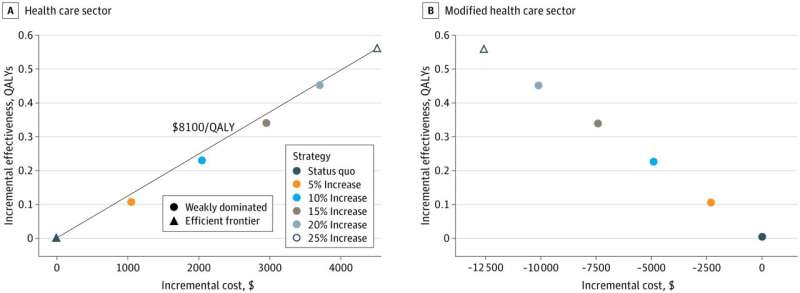
Incremental cost-effectiveness frontiers. Credit:JAMA Network Open(2026). DOI: 10.1001/jamanetworkopen.2025.55428
"Too many kidneys that could help patients are going unused," said Matthew Kaufmann, lead author and a researcher in the School of Public Health. "At a time when tens of thousands of Americans are waiting for a kidney transplant—and many older patients grow sicker or die before an organ becomes available—the U.S. transplant system may be missing opportunities to save lives."
Next steps could include updating policies to make it easier for transplant centers to use acceptable-quality kidneys, especially for older patients who may be willing to accept a slightly lower-quality organ in exchange for a shorter wait.
Publication details Matthew B. Kaufmann et al, Cost-Effectiveness of Acceptable-Quality Deceased Donor Kidneys for Transplant in Older Candidates, JAMA Network Open (2026). DOI: 10.1001/jamanetworkopen.2025.55428 Journal information: JAMA Network Open








Post comments