




































I. CBT-I: A Solid Starting Point, Not an Endpoint
Over the past 30 years, Cognitive Behavioral Therapy for Insomnia (CBT-I), supported by robust clinical evidence, has become the global “gold standard” for the treatment of chronic insomnia. Through cognitive restructuring and behavioral training, it has helped countless individuals break out of the vicious cycle of
Phase 1: the more you want to sleep
Phase 2: the more anxious you become
Phase 3: the harder it becomes to fall asleep.
But real-world needs go far beyond this:
Individuals who have suffered from long-term insufficient sleep but never sought medical help;
People whose clinical indicators appear normal yet whose daytime functioning is impaired;
Working professionals trapped in a high-pressure, late-night cycle;
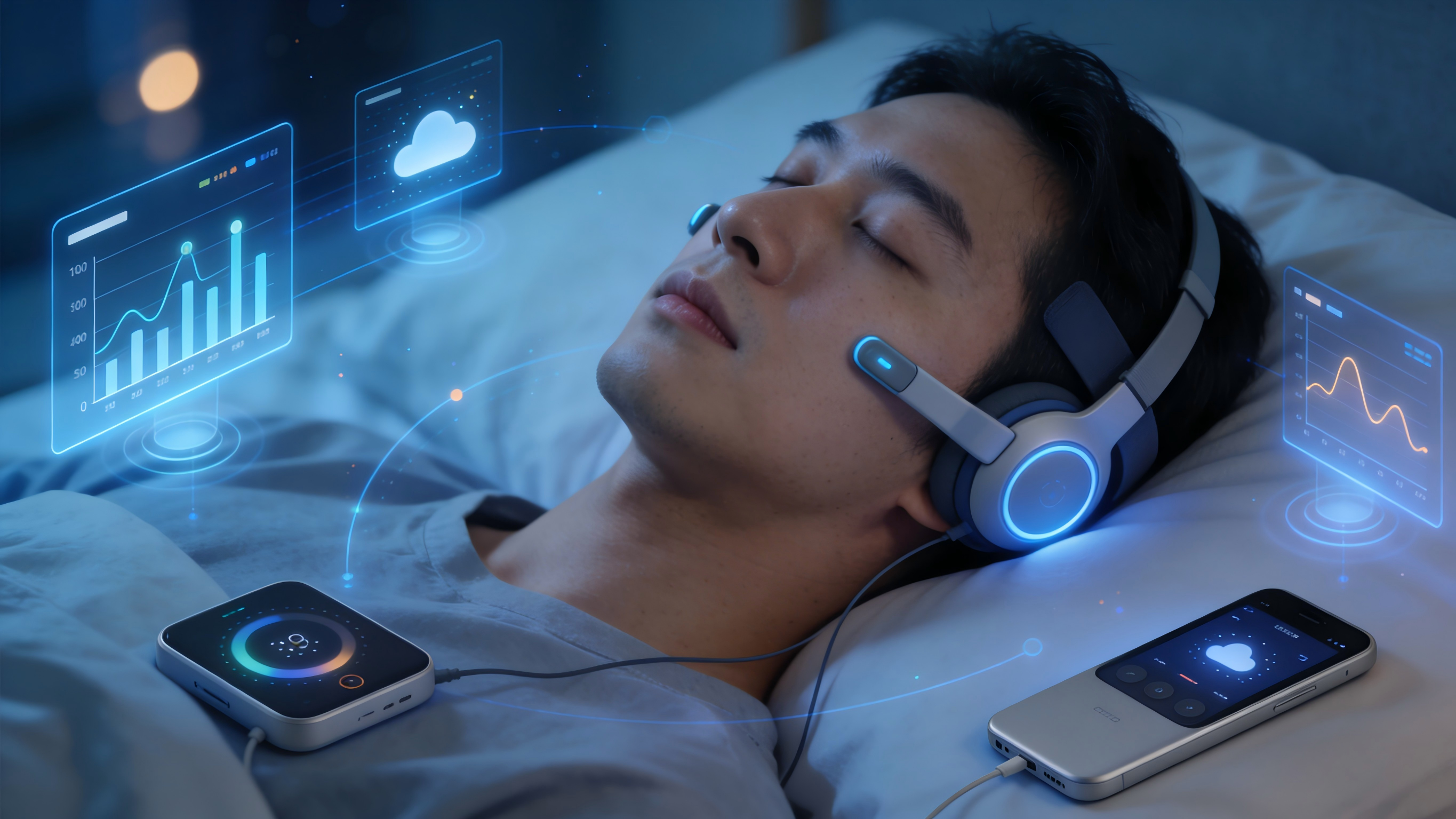
Tech users with plenty of sleep data but no idea how to act on it.
More importantly, sleep problems are often intertwined with emotional states, chronic diseases and environmental factors. A large part of the demand emerges in non-medical settings such as homes, workplaces, hotels and elder care facilities.
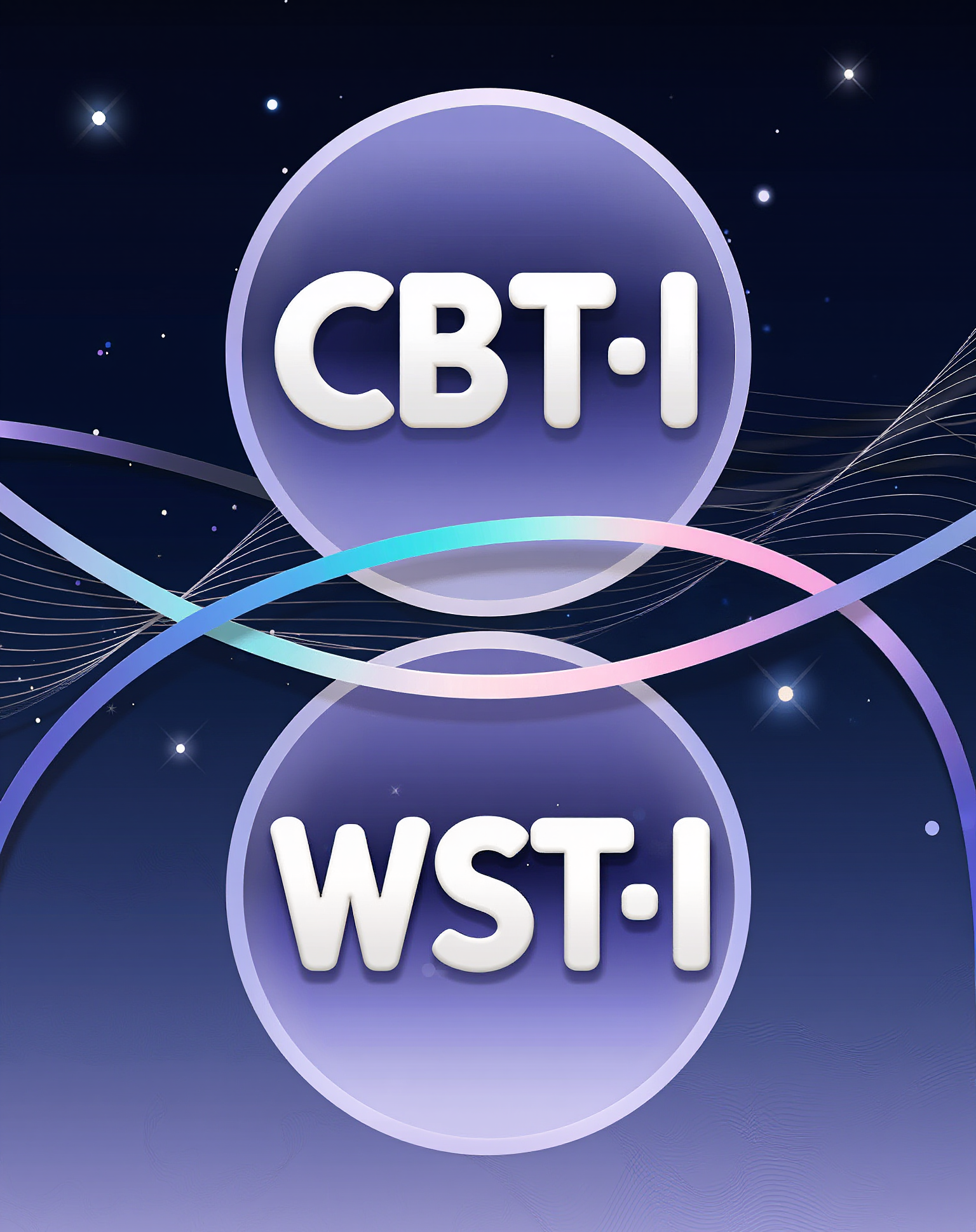
What we need is not just one intervention method, but a unified framework that connects individual needs with the industrial ecosystem, medical and non-medical scenarios, and theory with practice — WST-I was born out of this need.
II. WST-I: Definition, Positioning and Underlying Logic
(I) Definition and Positioning
WST-I: World Sleep Technology Integrative Framework
Grounded in CBT-I as its evidence-based foundation and rooted in the Holistic Health Hierarchy (3H), WST-I systematically integrates global traditional wisdom, lifestyle medicine and cutting-edge technologies. It builds an open framework that covers all dimensions of sleep health and connects individuals with the wider sleep health ecosystem.
WST-I is an integrated technological system for holistic sleep health. Its core lies in the dual positioning of “technology” and “integrative”:
Technology
The core elements that constitute the system;
Integrative
A systematic approach that links elements, connects scenarios and empowers people.
It is not merely a single therapy targeting insomnia. Instead, it is an ecological framework for all sleep scenarios and populations, supported by technology and with integration as its main pathway.
(II) Underlying Logic: The 3H Holistic Health Model
The 3H Holistic Health Model (Holistic Health Hierarchy) provides top-level guidance for WST-I. Its three core elements are:
Health
Sleep is deeply intertwined with emotions, metabolism, immunity and cognition. Improvements in sleep should be reflected not only in nighttime parameters, but also in daytime alertness, energy levels and long-term health outcomes.
Harmony
At its core, sleep is about the “alignment” of multiple relationships: the alignment of the biological clock with social rhythms, the balance between stress and recovery, and resonance between human beings and their environment. The root cause of many sleep problems lies in rhythm “disharmony.”
Humanity
Sleep difficulties often mirror tensions in a person’s relationship with self, others and the world. Beyond techniques and tools, individuals need to be understood and accepted, and to regain a sense of control and safety in the process of improvement.
Within the 3H framework, sleep is both a signal light for holistic health and a key entry point for health interventions. WST-I is systematically constructed on the basis of this understanding.
III. The Three-Tier Core Structure of WST-I
(I) Theoretical Tier — Scientific Foundation
WST-I integrates knowledge from multiple disciplines to provide a solid academic foundation for practice:
Core Foundation
Theories and clinical evidence from CBT-I and sleep medicine;
Scientific Support
Cutting-edge discoveries in sleep neurobiology and circadian rhythm regulation;
Life Sciences
Evidence-based findings related to sleep from nutrition, exercise science and lifestyle medicine;
Traditional Wisdom
Standardizable and testable bodies of experience drawn from traditional mind-body practices such as Traditional Chinese Medicine, Ayurveda, aromatherapy and mindfulness meditation.
(II) Practical Tier — Implementation Pathways
Scenario Integration
Medical Settings
Compatible with polysomnography (PSG), standardized scales and protocolized CBT-I interventions;
Community / Home Settings
Adapted to user self-monitoring and initial screening tools for sleep problems;
Connection Mechanism
Builds a closed-loop process of “daily management → professional assessment →referral.”
Tool Integration
WST-I incorporates a wide range of products and services into a unified framework and clarifies their roles within the intervention process:
At which stage are they applied?
Which behavioral adjustments do they support?
Which endpoint indicators are used to evaluate their value?
By quantifying the contribution of products and services within the overall solution, WST-I turns them into organic components of an integrated plan rather than isolated offerings.
(III) Talent Tier — Execution and Empowerment
World Sleep Associate (WSA) — Junior Sleep Specialist
Responsible for knowledge outreach, initial screening and lifestyle guidance, with clearly defined referral boundaries.
World Sleep Professional (WSP) — Intermediate Sleep Specialist
Implements WST-I protocols in institutional settings, interprets multidimensional data, dynamically adjusts interventions and builds collaborative interfaces with medical providers.
World Sleep Expert (WSE) — Senior Sleep Mentor
Leads the development of standards, project supervision, evidence-based research and iterative refinement of norms, thereby linking frontline practice with the cutting edge of the field.
IV. World Sleep Network: The Global Collaboration Platform for WST-I
The World Sleep Network is the global collaborative platform that hosts WST-I. Within this network, WST-I functions as an integrated sleep health technology system — rooted in theory, guided by practice and driven by talent — to achieve standardization, replicability and sustainability in sleep health.
The large-scale implementation of sleep health relies on the coordinated operation of five core modules:
Production
Product technologies and integrated solutions;
Education
Systems for ongoing learning and training;
Research
Cutting-edge science and evidence-based foundations;
Medical Care
Clinical practice and health management;
Service
User experience, delivery and continuous support.
As a hub for connection and coordination, the World Sleep Network links these five modules and promotes the efficient flow of solutions, tools and talent. Within this network, WST-I:
Upholds Academia
Connects “Research” and “Education” through the 3H model;
Connects Scenarios
Provides standardized implementation pathways for “Medical Care, Production and Service”;
Empowers the Center
Uses a tiered talent system to achieve replicability and scalability.
When these modules operate smoothly, standards become unified and interoperable, and technology and talent are continuously renewed in a virtuous cycle. In this way, the sleep health field can evolve into an efficient, actionable and truly integrated ecosystem.
Conclusion: Starting from WST-I, Moving Toward a Larger “World of Sleep”
WST-I is a new starting point — an open framework that academia, industry and service providers can jointly discuss, test and iteratively improve.
Written by / Worldsleep Network · WST-I Project Team








Post comments