




































byUniversity of Minnesota
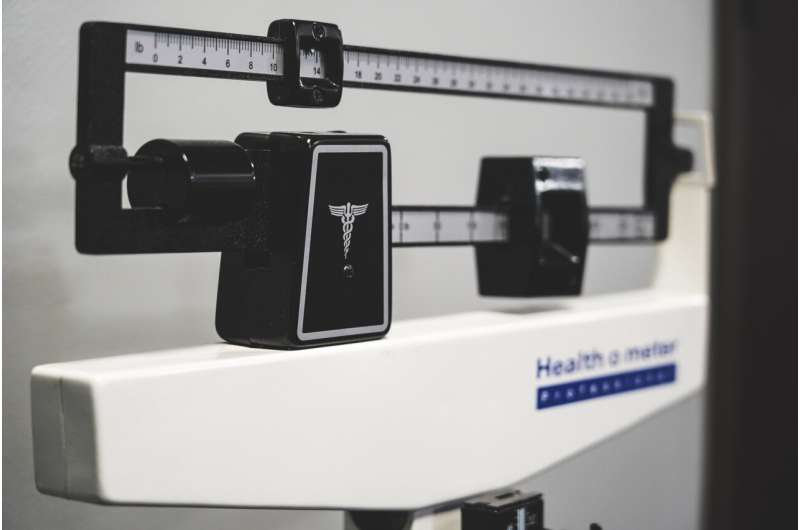
Credit: Unsplash/CC0 Public Domain
There are many reasons people avoid health care visits, and while much attention has been necessarily placed on financial barriers, avoidance stemming from weight bias and stigma has been largely overlooked.
A new study from the University of Minnesota, recentlypublishedinMedical Research Archives, reveals that weight-relatedstigmaplays a negative role inmedical careand can create barriers to access.
The researchers surveyed over 300 participants in order to discover shaming triggers during medical visits and ways to reduce these triggers. The team exclusively studied women, who often experience weight stigma at higher rates than men.
"It is critical for us to know why people are avoiding health care because they could be avoiding or delaying lifesaving preventive care. Weight stigma is one of the reasons people are avoiding care and this study helps us identify policy and procedure changes that could make a difference," said lead author Virginia Ramseyer Winter, an associate professor in the College of Education and Human Development School of Social Work.
They found:
"These factors are ones that health care systems and providers havedirect controlover and can remedy to improve health care experiences andhealth outcomes," said co-author Elizabeth O'Neill, an associate professor of social work at Washburn University. "Weight-inclusive practices can make a meaningful difference in women's health care satisfaction and utilization."
The researchers hope their findings will be used to implement policy and procedure changes in health care to create an environment that is welcoming for all people.
More information: Virginia Winter, Exploring Potential Solutions to Weight Stigma in Healthcare: A Mixed Methods Study, Medical Research Archives (2025). DOI: 10.18103/mra.v13i10.7010
Provided by University of Minnesota











Post comments