







byCase Western Reserve UniversityCredit: SHVETS production from PexelsResearchers at the Case Western Reserve School of Medicine have found that when compared to seven other anti-diabetic drugs,
by University of MinnesotaCredit: University of MinnesotaWhat if we could diagnose early-stage Alzheimer's disease (AD) by looking into a person's eyes?A retinal scan technique, developed
by Enrique Rivero,University of California, Los AngelesDr. David Reuben, Archstone Professor of Medicine and chief of the Division of Geriatrics in the David Geffen School of Medicine at UCLA. C
by Canadian Medical Association JournalCredit: CC0 Public DomainCanada's new national dementia strategy can be successful with sustained political will, adequate funding, measurable targets a
by Lund UniversityCredit: Pixabay/CC0 Public DomainResearchers at Lund University in Sweden have developed an algorithm that combines data from a simple blood test and brief memory tests, to pred
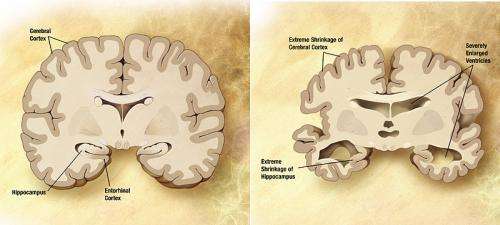
by Georgetown University Medical CenterDiagram of the brain of a person with Alzheimer's Disease. Credit: Wikipedia/public domain.In laboratory neuronal cultures, an FDA-approved drug used to
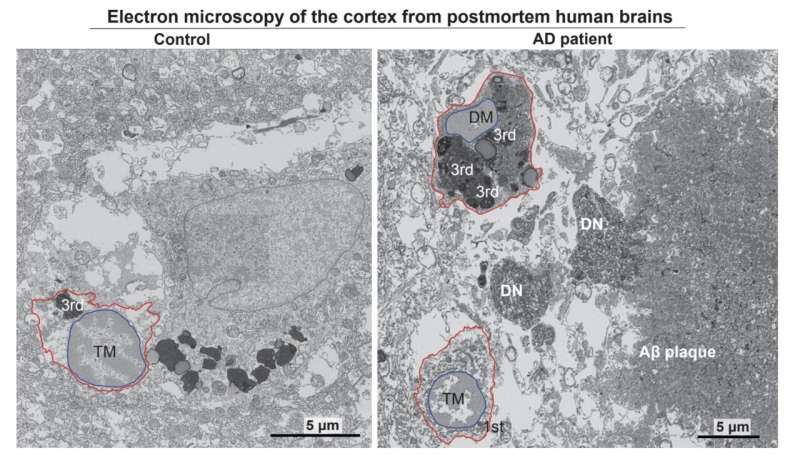
byCUNY Advanced Science Research CenterElectron micrographs show typical microglia in the prefrontal cortex of a 92-year-old healthy female (left) and dark microglia of a 91-year-old female pati
by Sebastian Walsh,The ConversationCredit: AI-generated imageA prominent childhood memory is of my grandparents living with and then dying from dementia. As is universal with dementia, there was
byVIB (the Flanders Institute for Biotechnology)Mouse cortex (in blue) transplanted with human neurons (in green). Credit: VIBThe mechanisms underlying intellectual disabilities or autism remain
by WileyCredit: CC0 Public DomainAs the population ages, the number of cancer patients with dementia has increased. A recent study published inGeriatrics & Gerontology International&nbs
by Paul Mayne,University of Western OntarioRobarts Research Institute scientists Vania and Marco Prado have found a gene, TRPM2, that could be a therapeutic target to assist in decreasing cognit