



























by Saarland UniversityCredit: CC0 Public DomainTrial participants who received a multinutrient formulation over an extended period of time showed a significantly less rapid deterioration in cogni
by University of California, San FranciscoCredit: Pixabay/CC0 Public DomainWhile research has shown that poor cardiovascular health can damage blood flow to the brain increasing the risk for deme
by St. Jude Children's Research HospitalCD8+T cells accumulate in AD and protect mice from AD-associated pathologies.a–c, scRNA-seq analysis of CD45int/+CD11b+(primarily mic
by University of BirminghamCredit: CC0 Public DomainA University of Birmingham report has concluded that national governments, health and social services, businesses, families and communities hav
(HealthDay)—Klotho-VS heterozygosity (KL-VSHET+status) is associated with a reduced risk for Alzheimer disease (AD) and β-amyloid (Aβ) burden in cognitively normal individuals aged older than 60
by Justin Jackson , Medical XpressTop and side views of GPR6 structures in different conformational states. Credit:Science Signaling(2024). DOI: 10.1126/scisignal.ado8741University of Sout
byRIKENA fluorescence micrograph of a CA1 in a mouse’s hippocampus. RIKEN researchers silenced the pyramidal cells in this region. Credit: Adapted fromNature Communications(2024). DO
by American College of PhysiciansCredit: Pixabay/CC0 Public DomainIn a new Annals 'Beyond the Guideline's feature, two experts review the available evidence about cognitive impairment to
by Public Library of ScienceModifiable risk factors—including hypertension, obesity, diabetes, low HDL cholesterol and sleep disorders—confer a higher risk of dementia for people in some minority
by Boston University School of MedicinePET scan of a human brain with Alzheimer's disease. Credit: public domainLiving your best life at 35, ignoring cholesterol and glucose levels, may impac
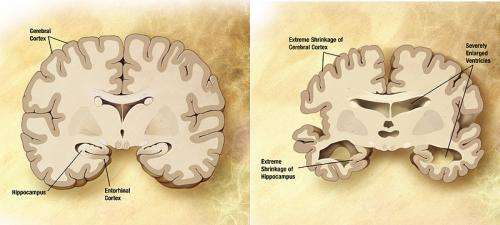
by ElsevierDiagram of the brain of a person with Alzheimer's Disease. Credit: Wikipedia/public domain.Investigators have wondered why the brains of some cognitively-intact elderly individuals