




























143

Neurology
Focuses on brain health.
Sub Categories on Neurology
Latest Articles
Snake venom may hold key to breaking down plaques that cause Alzheimer's disease

Snake venom may hold key to breaking down plaques that cause Alzheimer's disease

by Monash UniversityA toxic protein called amyloid beta is thought to play a key role in the onset of Alzheimer's disease. In healthy people, amyloid beta is degraded by enzymes as it forms.

Snake venom may hold key to breaking down plaques that cause Alzheimer's disease

by Monash UniversityA toxic protein called amyloid beta is thought to play a key role in the onset of Alzheimer's disease. In healthy people, amyloid beta is degraded by enzymes as it forms.
Researchers determine how the hippocampus generates and sustains oscillations

Researchers determine how the hippocampus generates and sustains oscillations

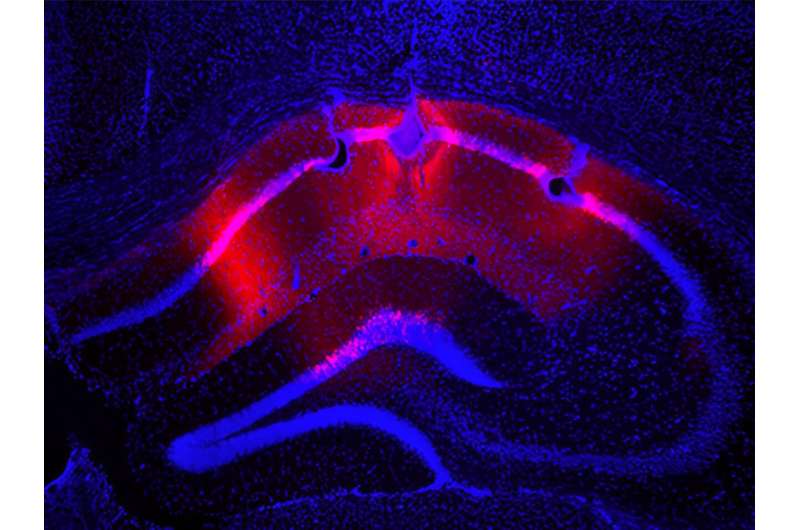
byRIKENA fluorescence micrograph of a CA1 in a mouse’s hippocampus. RIKEN researchers silenced the pyramidal cells in this region. Credit: Adapted fromNature Communications(2024). DO

Researchers determine how the hippocampus generates and sustains oscillations

byRIKENA fluorescence micrograph of a CA1 in a mouse’s hippocampus. RIKEN researchers silenced the pyramidal cells in this region. Credit: Adapted fromNature Communications(2024). DO
Revealing roles of dementia proteins in normal memory

Revealing roles of dementia proteins in normal memory

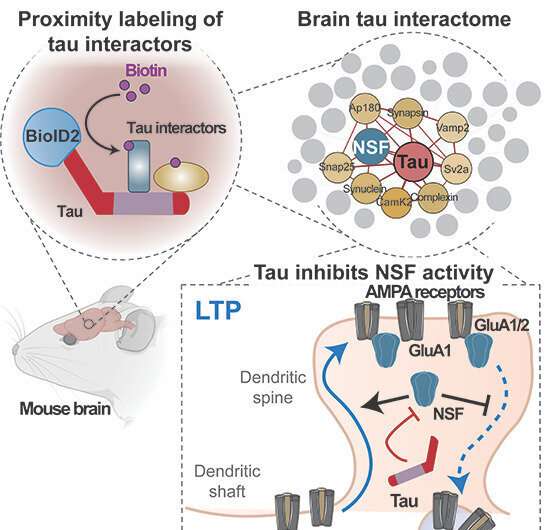
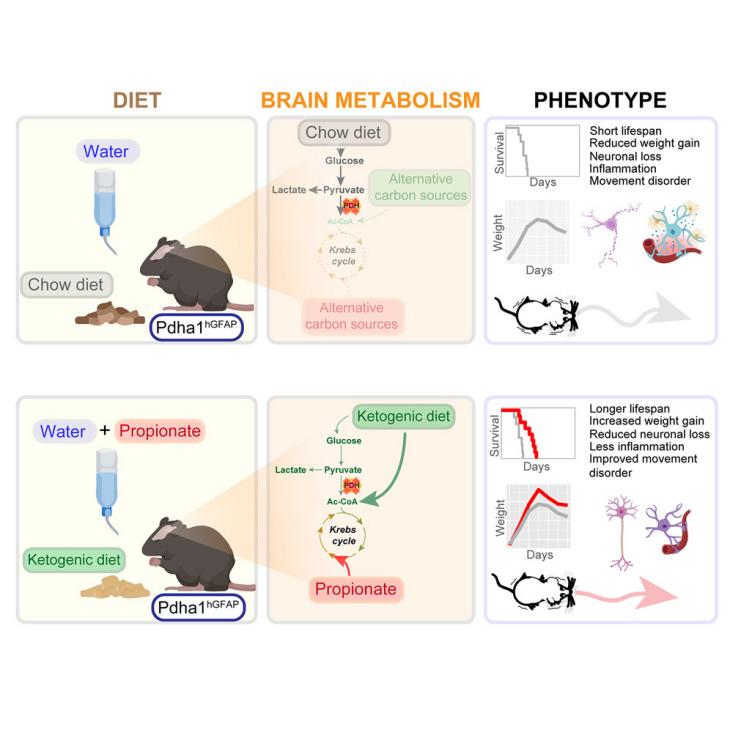
by Flinders UniversityGraphical abstract. Credit:The EMBO Journal(2022). DOI: 10.15252/embj.2021110242New research has revealed how the tau protein, a critical element in the formatio

Revealing roles of dementia proteins in normal memory

by Flinders UniversityGraphical abstract. Credit:The EMBO Journal(2022). DOI: 10.15252/embj.2021110242New research has revealed how the tau protein, a critical element in the formatio
Scientists discover new receptor for nerve growth factor—a promising target for treating pain

Scientists discover new receptor for nerve growth factor—a promising target for treating pain

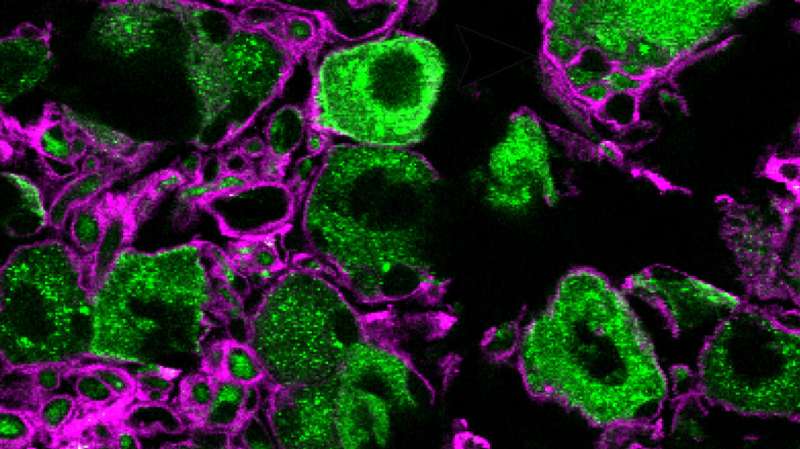
byNew York UniversityNerve growth factor receptor TrkA (in green) and co-receptor NRP1 (in purple) are coexpressed in the same nerve cells in mice. Credit: Bunnett LabResearchers at the NYU Pain

Scientists discover new receptor for nerve growth factor—a promising target for treating pain

byNew York UniversityNerve growth factor receptor TrkA (in green) and co-receptor NRP1 (in purple) are coexpressed in the same nerve cells in mice. Credit: Bunnett LabResearchers at the NYU Pain
Untangling tau—researchers find a 'druggable target' for treating Alzheimer's disease

Untangling tau—researchers find a 'druggable target' for treating Alzheimer's disease

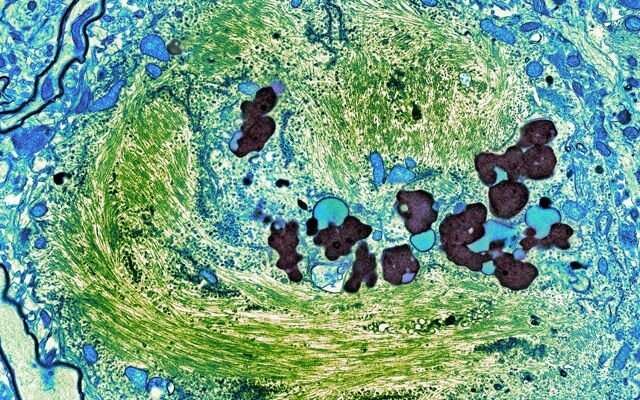
by University of California - San DiegoA micrograph by Thomas Deerinck of the National Center for Microscopy and Imaging Research at UC San Diego School of Medicine depicts tangles of tau protein

Untangling tau—researchers find a 'druggable target' for treating Alzheimer's disease

by University of California - San DiegoA micrograph by Thomas Deerinck of the National Center for Microscopy and Imaging Research at UC San Diego School of Medicine depicts tangles of tau protein
Brain blood flow resistance more common in older adults with cognitive problems

Brain blood flow resistance more common in older adults with cognitive problems

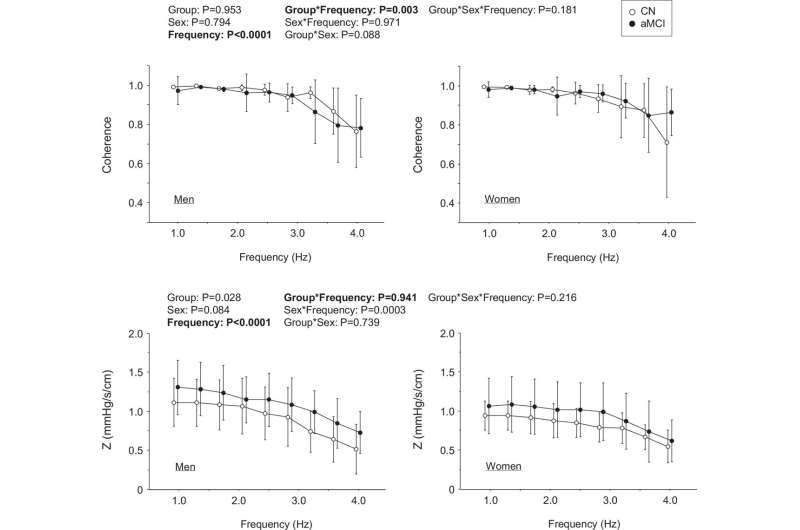
byAmerican Physiological SocietyComparisons of cerebrovascular impedance coherence (top) and modulus (Z, bottom) between cognitive normal subjects (CN) and patients with amnestic mild cognitive

Brain blood flow resistance more common in older adults with cognitive problems

byAmerican Physiological SocietyComparisons of cerebrovascular impedance coherence (top) and modulus (Z, bottom) between cognitive normal subjects (CN) and patients with amnestic mild cognitive
New insights into cellular processes after a stroke

New insights into cellular processes after a stroke

byMedical University of Viennaa) Illustration of study design, depicting brain regions sampled for snRNAseq. b) Uniform Manifold Approximation and Projection (UMAP) plot depicting 68616 nuclei a

New insights into cellular processes after a stroke

byMedical University of Viennaa) Illustration of study design, depicting brain regions sampled for snRNAseq. b) Uniform Manifold Approximation and Projection (UMAP) plot depicting 68616 nuclei a
Brain network mechanism causing spatial memory impairment revealed

Brain network mechanism causing spatial memory impairment revealed

by University of California, IrvineNew study, led by UCI School of Medicine's Kei Igarashi, PhD, found that remapping of place cells, a brain circuit function to discriminate distinct environ

Brain network mechanism causing spatial memory impairment revealed

by University of California, IrvineNew study, led by UCI School of Medicine's Kei Igarashi, PhD, found that remapping of place cells, a brain circuit function to discriminate distinct environ
New research offers hope for treating inherited peripheral neuropathies

New research offers hope for treating inherited peripheral neuropathies

by Uniformed Services University of the Health Sciences (USU)Treating S63del mice for 21 days with tadalafil or CYR119 restores myelin thickness and nerve conduction in sciatic nerves. Credit:Ce

New research offers hope for treating inherited peripheral neuropathies

by Uniformed Services University of the Health Sciences (USU)Treating S63del mice for 21 days with tadalafil or CYR119 restores myelin thickness and nerve conduction in sciatic nerves. Credit:Ce
Dementia creates listening issues in quiet, noisy environments

Dementia creates listening issues in quiet, noisy environments

by Acoustical Society of AmericaCredit: CC0 Public DomainListening to the spoken word in noisy environments is challenging for everyone. Acoustic studies show people with mild dementia struggle t

Dementia creates listening issues in quiet, noisy environments

by Acoustical Society of AmericaCredit: CC0 Public DomainListening to the spoken word in noisy environments is challenging for everyone. Acoustic studies show people with mild dementia struggle t
Brain's 'speedometer' could help solve part of dementia puzzle

Brain's 'speedometer' could help solve part of dementia puzzle

by University of ExeterCredit: Unsplash/CC0 Public DomainNearly one million people in the UK have dementia. People living with the most common form, Alzheimer's disease, can experience diffic

Brain's 'speedometer' could help solve part of dementia puzzle

by University of ExeterCredit: Unsplash/CC0 Public DomainNearly one million people in the UK have dementia. People living with the most common form, Alzheimer's disease, can experience diffic