





























by Albert Einstein College of MedicineFeeling stressed out increases the likelihood that elderly people will develop mild cognitive impairment—often a prelude to full-blown Alzheimer's diseas
by BioMed CentralGender-specific differences between the levels and structures of proteins present in the white matter and the mitochondria of the brains of men and women suffering from dementia
by IOS PressAn overlay of significant positive correlation of rCGM with WHtR in prodromal/early AD (n = 34) and CN (n = 55) adjusted for age, sex, and education. Color overlays show comparison of
by Uniformed Services University of the Health Sciences (USU)Treating S63del mice for 21 days with tadalafil or CYR119 restores myelin thickness and nerve conduction in sciatic nerves. Credit:Ce
by Chen Na,Chinese Academy of SciencesModel for ASI-RIM neuronal axis regulates systemic mitochondrial stress response via TGF-β signaling cascade. Credit: IGDBTransforming growth factor-beta (T
by University of Pittsburgh Schools of the Health SciencesCredit: Vera Kratochvil/public domainWhether they jog, swim, garden or dance, physically active older persons have larger gray matter vol
by University of EdinburghCredit: CC0 Public DomainFresh insights into damaging proteins that build up in the brains of people with Alzheimer's disease could aid the quest for treatments.A st
by The JAMA Network JournalsIn a study of deceased individuals, moderate seafood consumption was correlated with lesser Alzheimer disease neuropathology, and although seafood consumption was asso
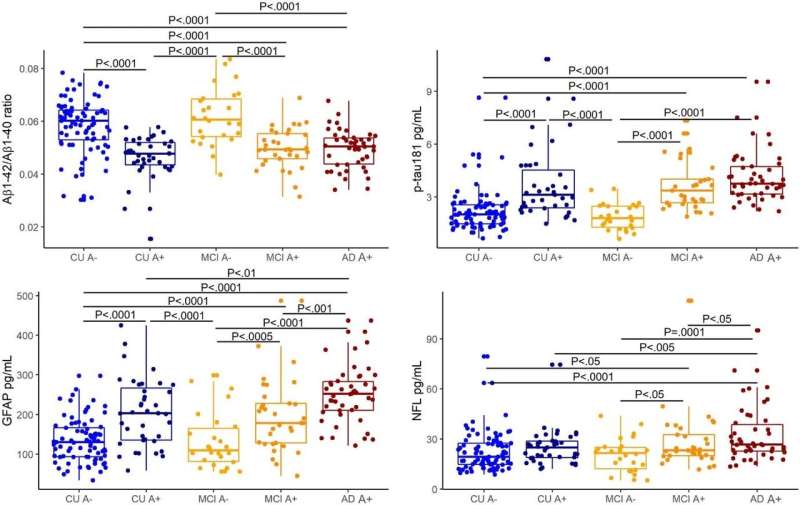
FEBRUARY 28, 2024by Global Alzheimer's Platform FoundationROC curves for prediction of brain PET or CSF amyloid positivity adjusted for age and apoE ε4 status with imputed values. Credit:Alz
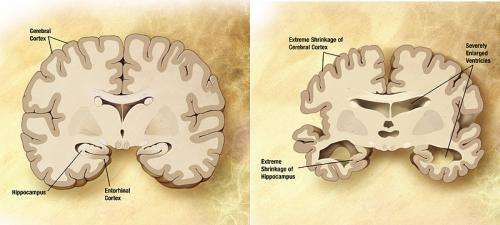
by Weber Shandwick WorldwideCredit: Public DomainAlzheimer's disease (AD), the most common type of dementia, causes the death of neurons and leads to shrinking of the brain. Patients with AD
by University of Texas at AustinResearchers developed DNA-based fluorescent sensors that can detect two different forms of iron (Fe2+and Fe3+) at the same time in cell cultures and in brain