



































by Lori Solomon
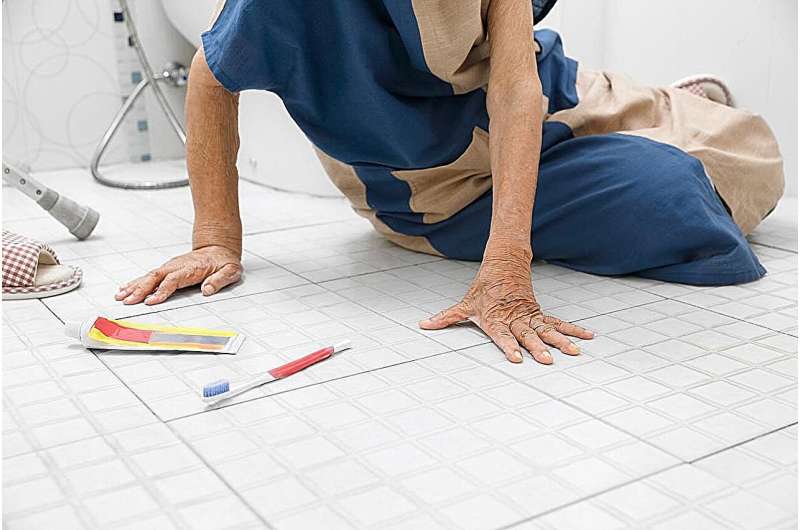
The association between falls and visual function is shaped by living in homes with environmental hazards, according to a study published online Dec. 11 inJAMA Ophthalmology.
Shu Xu, Ph.D., from the University of Michigan, Ann Arbor, and colleagues used data from theNational Health and Aging Trends Studyto identify 4,648 community-dwelling older adults who completed visual function tests and the home environment instrument in 2022. Differences in visual function, home environmental hazards, and falls were assessed.
The researchers found that home hazards includedno grab bars(47.0%), tripping hazards (9.5%), and broken flooring (4.5%), with 7.3% having two or more hazards. Mean distance visual acuity (DVA) was 0.10 logMAR and mean contrast sensitivity (CS) was 1.72 logCS. There was an association between worse DVA and CS with falling in homes with hazards, including no grab bars (DVA: odds ratio [OR], 1.14; 95% confidence interval [CI], 1.02 to 1.27; CS: OR, 0.91; 95% CI, 0.84 to 1.00), tripping hazards (DVA: OR, 1.29; 95% CI, 1.11 to 1.49; CS: OR, 0.87; 95% CI, 0.78 to 0.98), and broken flooring (DVA: OR, 1.47; 95% CI, 1.26 to 1.70; CS: OR, 0.79; 95% CI, 0.68 to 0.93). The association was strengthened with the presence of multiple hazards (DVA: OR, 1.31; 95% CI, 1.12 to 1.53; CS: OR, 0.93; 95% CI, 0.86 to 1.00).
"These findings underscore the potential importance of considering both intrinsic and extrinsic risk factors in fall prevention and highlight the potential for targeted strategies that include home safety interventions for individuals with poor visual function," the authors write.
Copyright © 2025HealthDay. All rights reserved.
More information Shu Xu et al, The Role of Home Hazards in the Association Between Visual Function and Falls in Older Adults, JAMA Ophthalmology (2025). DOI: 10.1001/jamaophthalmol.2025.5057 Journal information: JAMA Ophthalmology







Post comments