




































By Samuel Jeremic,Curtin University
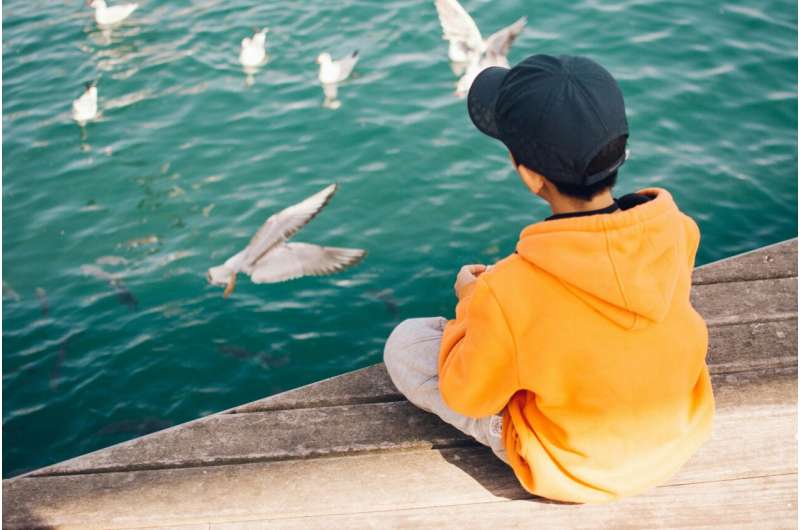
Credit: Huy Phan from Pexels
A new, large-scale Curtin Universitystudyhas found children who experience parental loss are twice as likely to develop a mental health disorder as those living with both parents.
Researchers used data from families across Australia and found 21.4% of children who experienced parental loss had a diagnosable mental disorder such as anxiety, depression or ADHD, compared with 10.8% of children who had not experienced parental loss.
"Parental Loss: Prevalence Estimates and Mental Health Impacts from the Second Australian Child and Adolescent Survey of Mental Health and Wellbeing" was published in theAustralian Journal of Psychology.
The study defined parental loss as the death of a parent, parental separation or having a parent in custody.
It found that by age 17:
Lead author Lauren Breen, a professor at Curtin's School of Population Health, said the findings highlighted the scale of the issue and the need for better support.
"Parental loss is more common than many people realize, and it has a clear and measurable impact on children's mental health," Breen said.
The research drew on national survey data from more than 6,300 Australian households with children ages 4 to 17, making it the first study to provide population-level estimates of different types of parental loss and their mental health impacts in Australia.
Breen said that while all forms of parental loss were linked to poorer mental health, losing a parent to death had the strongest impact.
"Children who had a parent die had the highest rates of mental disorders compared to any other group, at 28.8%," Breen said.
"For younger children in particular, the effects can be especially severe.
"This study reinforces longstanding evidence that parental bereavement is one of the most distressing experiences in childhood and is linked to a higher risk of mental health challenges."
Nonprofit Lionheart Camp for Kids supports grieving children and families. Its CEO and founder, Shelley Skinner, said losing a parent amplified the issues already facing children.
"Never before has navigating the outside world as a child or teen been more complex; when the complexities and tragedies of the outside world crash into your inner world, children are vulnerable to feelings of anxiety, risk-taking behavior and mental and physical illness," Skinner said.
"Many kids who experience the death of a family member will grow up to be happy and healthy and have normal and productive lives.
"At the same time, each member of the family needs tailored help as they support a child through bereavement."
By type of parental loss, the study found the proportion of children with a mental disorder was:
Despite this, Breen said many families struggled to access appropriate support.
"Grieving children and their families often face barriers like long waitlists, high costs and not knowing where to go for help," Breen said.
"Our findings highlight the need for better identification and support of children experiencing parental loss, including ensuring accessible and evidence-informed mental health services and improving how systems respond to grief.
"Understanding how common parental loss is is the first step. Now we need to make sure children who are going through these experiences are recognized early and connected to the support they need, such as psychological therapies, family-based support programs and better pathways for referral."
More information Lauren J. Breen et al, Parental loss: prevalence estimates and mental health impacts from the second Australian Child and Adolescent Survey of Mental Health and Wellbeing, Australian Journal of Psychology (2026). DOI: 10.1080/00049530.2026.2707204








Post comments