
































Provided by University of East London
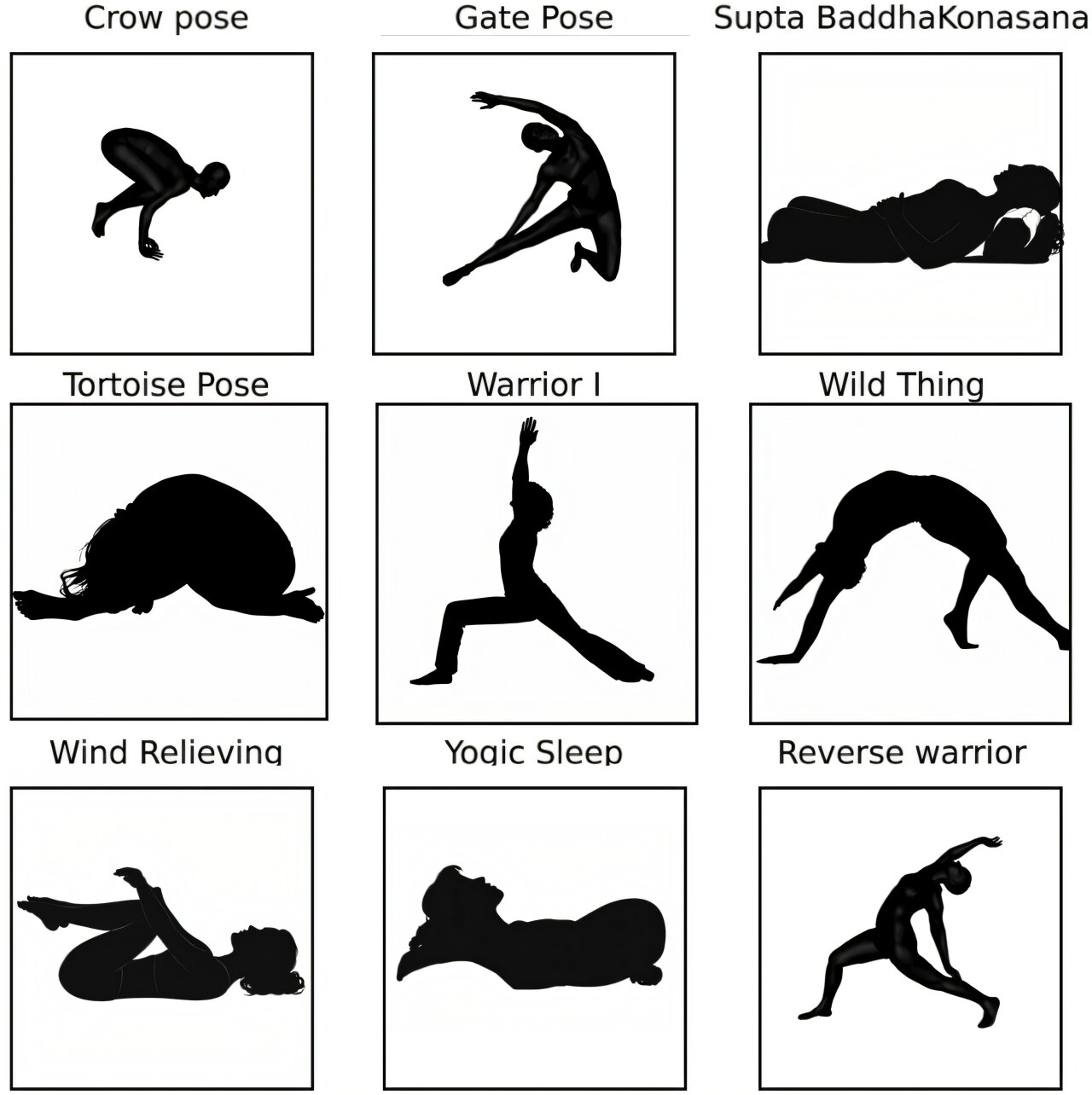
Example of yoga poses. Credit: Scientific Reports (2026). DOI: 10.1038/s41598-026-54558-1
A novel AI system capable of recognizing yoga poses with high accuracy could pave the way for more effective digital coaching tools, rehabilitation platforms and movement-monitoring applications.
A new study, co-authored by the University of East London (UEL), analyzed four novel AI models and their ability to identify yoga poses. The researchers found that their best-performing model, Hierarchical CoAtNet 1, achieved accuracy of more than 93% during testing, significantly outperforming previous models. The study is published in the journal Scientific Reports.
Dr. Laura Vanderbloemen, senior lecturer at UEL and co-author of the study, said, "This research shows how AI can be used to make movement-based coaching and rehabilitation more accessible.
"By recognizing yoga poses with a high degree of accuracy and providing feedback in real time, these systems could help support people who cannot easily access in-person instruction, whether because of their location, mobility challenges or cost. It demonstrates the potential for AI, computer vision and robotics to expand access to health and well-being tools for a wider range of people."
The AI model incorporates the natural hierarchical relationships between yoga poses in its learning. Rather than treating each pose as an isolated category, the AI model identifies broader pose families before learning about specific variations, similarly to how humans understand and categorize movement.
This system could have practical applications in the real world and deliver feedback in real time. The model processed images in approximately 16 to 17 milliseconds per batch under testing conditions and achieved real-time speeds of around 65 to 70 frames per second during streaming inference.
The researchers believe this model could support a wide range of applications that require accurate monitoring of physical activity, while providing feedback that yoga instructors, physical therapists and health care professionals could use to better understand posture quality and movement patterns and improve personalized coaching and rehabilitation.
The research was a collaborative effort involving researchers from the University of East London, Nirma University, Imperial College London and Doctor On Click, bringing together expertise in artificial intelligence, computer vision, digital health and movement science.
More information: Manav Barot et al, HierarchicalNets for multi level hierarchical classification of yoga poses, Scientific Reports (2026). DOI: 10.1038/s41598-026-54558-1









Post comments