




































byAmerican Association of Critical-Care Nurses
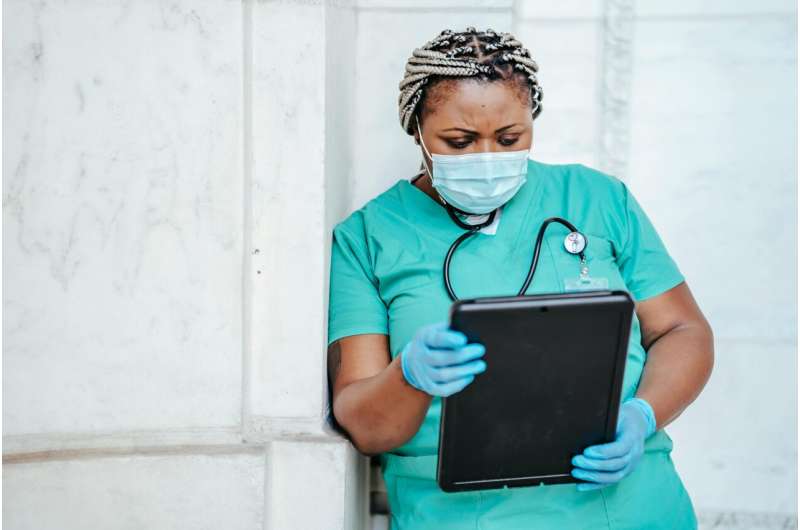
Credit: Laura James from Pexels
Inova, the leading nonprofit health system in the Northern Virginia and Washington, D.C. metropolitan area, developed a novel dietitian-led program for the bedside placement of feeding tubes for critically ill patients. The goals were to reduce nursing workload and optimize patient safety. In addition, the system adopted an electromagnetic sensor-guided feeding tube (EMFT) system that allows clinicians to visualize the tube's path on a monitor for real-time positioning at the bedside.
Inova has five acute care hospitals ranging in size from 237 to 923 beds. Systemwide, about 1,600 nasal feeding tubes are placed annually across all intensive care units (ICUs), including trauma, surgical-trauma, cardiovascular, medical-surgical and neurocardiovascular.
Historically, most were placed using traditional bedside techniques without real-time visualization by registered nurses at the bedside, and postpyloric tubes were placed infrequently by interventional radiology or endoscopy specialists, averaging fewer than 10 per year.
"Dietitian-led Feeding Tube Placement: Reducing Nursing Workload and Enhancing Patient Safety in the Intensive Care Unit" is published inCritical Care Nurse.
Authors Meagan Davis, RDN-AP, CNSC, and Jamie Grandic, RDN-AP, CNSC, are advanced practice registered dietitians at Inova. Davis serves as the regional clinical nutrition manager, while Grandic is senior director of clinical nutrition.
"Nurses have embraced the dietitian-led EMFT placement program as a true interprofessional partnership focused on achieving the safest possible feeding tube placement for their most acutely ill patients," Grandic said. "The positive outcomes from this initiative exceeded our expectations."
In the first year after implementation, 531 patients had feeding tubes placed using the EMFT technology. Of these, a registered dietitian nutritionist placed two-thirds (350) of the tubes, while registered nurses placed one-third (181). With each placement averaging an hour to complete, the new protocol saved approximately 350 nursing hours during the 12-month period.
The clinical results include the following:
The initiative began with a review of national guidelines, evidence and available technology, followed by a 10-day pilot of the technology in one ICU at each of Inova's five acute care hospitals, with vendor-supported training and supervision.
The systemwide EMFT placement program included development of a five-step tube placement process, training and competency requirements, practice guidelines and an education plan.
After a phased implementation that allowed for process improvements, the new technology and processes were implemented in designated ICUs in which the greatest number of patients were at risk for aspiration pneumonia and in which nurses could most benefit from having additional time for other nursing responsibilities.
Each facility had designated superusers of dietitians and nurses who served as a core placement team available to support colleagues as needed.
"This program reflects how innovation at Inova is driven by collaboration across disciplines to improve both patient safety and the experience of our care teams," Davis said.
"By combining advanced technology with specialized nutrition expertise, we were able to standardize care, reduce delays in treatment and give nurses more time to focus on the complex needs of critically ill patients."
About six months after initiating the new process, each hospital began expanding it beyond the ICU setting for patients who met criteria for postpyloric tube placement.
More information Meagan Davis et al, Dietitian-Led Feeding Tube Placement: Reducing Nursing Workload and Enhancing Patient Safety in the Intensive Care Unit, Critical Care Nurse (2026). DOI: 10.4037/ccn2026599








Post comments