




































byUniversity of Manchester
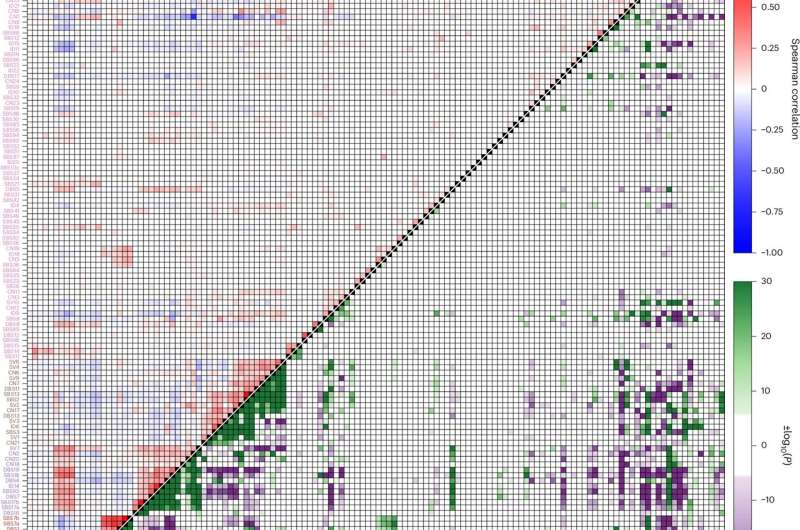
Relationship between SBS, DBS, ID, CN and SV signatures across cancers. Credit:Nature Genetics(2026). DOI: 10.1038/s41588-025-02474-x
A team of cancer genomics scientists from The University of Manchester and The Institute of Cancer Research, London, forensically examined the genetic make-up of tumors in 16 different cancers. Their findings, which have beenpublishedinNature Genetics, are the culmination of six years of research and could significantly increase the number of cancer patients eligible for targeted and immune-based treatments.
This study was co-led by Professor David Wedge at the Manchester Cancer Research Centre and Professor Richard Houlson from The Institute of Cancer Research. It usedwhole-genome sequencingdata from nearly 11,000 NHS patients with cancer, and is part of Genomics England's 100,000 Genomes Project, which is the largest single genomics study for cancer ever to be undertaken worldwide.
The researchers analyzed hundreds of millions of mutations in 11,000 tumors which covered the whole genome of a human being, which consists of more than three billion bases and includes around 20,000 genes. From this they were able to identify the mostcomprehensive mapto date of genetic "scars" left behind in cancer DNA.
In total, the team of "data detectives" cataloged 370 million mutations and assigned them to 134 distinct mutational "signatures," which are patterns of DNA damage that act like fingerprints of the processes that caused the cancer. Of these,26 signatureswere not previously included in the database of known signatures used by many scientists.
The most significant finding was that many more patients may benefit from precision therapies than currently recognized. The study identified large numbers of tumors with evidence of homologous recombination deficiency (HRD), which is a weakness in DNA repair that makes cancers vulnerable to PARP inhibitors and platinum-based chemotherapy. HRD was identified in 16% of breast cancer tumors and 14% of ovarian cancer tumors, so based on UK figures, researchers estimated that more than 7,700 breast cancer patients and over 1,000 ovarian cancer patients in the UK could benefit from HRD-targeted therapies, which is much greater than are currently identified through standard genetic testing for mutations in genes such as BRCA1/BRCA2 alone.
This study also supports the growing theory thattoxinsproduced by particular strains of E. coli in the gut could be the potential cause of the rise in early-onset bowel cancer in younger people. The team found this signature occurs more in younger patients than older patients, in contrast with several other signatures that tend to increase with a patient's age.
Professor David Wedge, professor of cancer genomics and data science at The University of Manchester said, "Every cancer develops because DNA is damaged over time. Different causes such as ultraviolet light, tobacco smoke or inherited gene faults leave different patterns in the genome. By reading these patterns we can now understand, in a larger proportion of cancers, what caused the cancer, when key mutations occurred, and which treatments are most likely to work.
"Until now, most testing has focused on mutations of a single base (or 'letter') in a cancer's DNA. By analyzing theentire genomeand examining more complex mutations that affect multiple bases, I hope our research contributes to better predictions of which treatment might benefit specific patients. This could enable better targeting of treatment to those patients most likely to benefit, given the genetic make-up of their tumors."
Professor Richard Houlston, head of cancer genomics at The Institute of Cancer Research, London, said, "The scale of this study was very large, as we analyzed samples from almost every tumor type. The quantity of data was enormous, and although laborious to work through, we have been rewarded with a very exciting outcome. This study provides one of the clearest demonstrations yet that reading the full genetic history of a tumor can unlock clues to better patient care. The future of cancer treatment lies not just in finding mutations, but in understanding the story they tell."
Professor Rob Bristow, Director of the Manchester Cancer Research Centre, a partnership formed in 2006 by The University of Manchester, Cancer Research UK and The Christie NHS Foundation Trust said, "This remarkable and comprehensive study demonstrates how Manchester is leading the charge in the field of big data genomics. The world-class research coming out of the Wedge lab is pioneering, and will transform our understanding of the human genome and the potential for better cancer treatments for our patients."
Publication details Andrew Everall et al, Comprehensive repertoire of the chromosomal alteration and mutational signatures across 16 cancer types, Nature Genetics (2026). DOI: 10.1038/s41588-025-02474-x Journal information: Nature Genetics








Post comments