


































by Michael E. Newman,Johns Hopkins University School of Medicine
Credit: Unsplash/CC0 Public Domain
According to the U.S. Centers for Disease Control and Prevention (CDC) and other sources, there are approximately 1.2 million people living with HIV in the United States, and another 1.2 to 2.2 million who are at highest risk for infection and could benefit from the preventive measure known as HIV pre-exposure prophylaxis (PrEP).
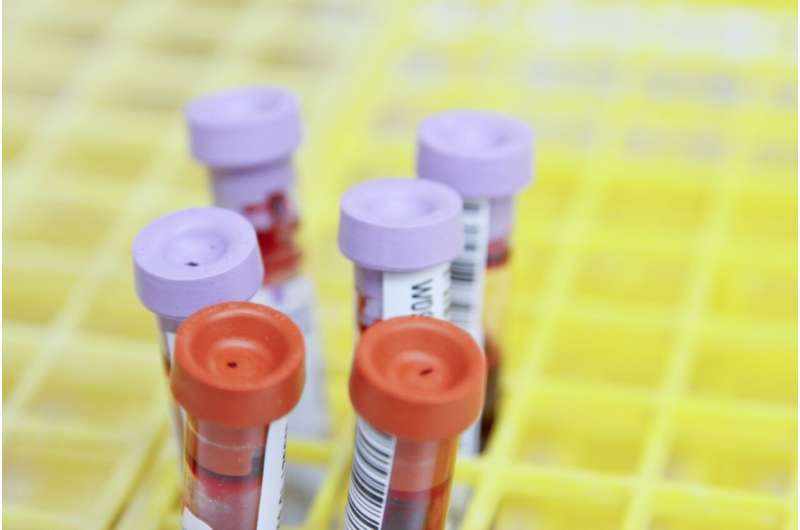
HIV viral load testing—a laboratory-based measurement of the amount of HIV in someone's blood—is used to diagnose HIV infection at its earliest stages, monitor the effectiveness of antiretroviral therapy (ART) in keeping the virus at undetectable levels, and assess if the virus has developed any resistance to ART.
However, one question about viral load testing has remained unanswered: Does knowing one's HIV viral load test result increase the "linkage-to-care" rates for seeking ART for an active infection or PrEP if not infected, but at high risk?
In a studypublishedtoday inJAMA Network Open, researchers at Johns Hopkins Medicine and CDC report that the answer may be no.
"We conducted a randomized clinical trial of 195 adults—including people who were living with HIV but not taking ART and people identified with risk factors [such as multiple sexual partners, evaluation for sexually transmitted infections or injection drug use] for acquiring HIV," says study lead author Matthew Hamill, M.B.Ch.B., Ph.D., M.P.H., associate professor of medicine at the Johns Hopkins University School of Medicine.
"We randomly assigned 98 people into the intervention group who received a next-day HIV viral load test and standard-of-care [SOC] HIV testing, and 97 people into the control group who only received SOC HIV testing. Then, we monitored them for 12 weeks to see if they sought care during that time, and if so, exactly when that happened."
Hamill says linkage to care is defined as a person seeking care for a diagnosed medical condition or to initiate preventive therapy. "For example, when a smoker joins a smoking cessation program or a pregnant woman starts seeing an obstetrician for prenatal care, that counts as linkage," he explains.
The study participants ranged in age from 27 to 47 years, with a median age of 36, and 39% were female, 57.4% were Black, 26.2% were white and 16.4% were other ethnicities. The majority of the participants (63.1%) were recruited between August 2021 and January 2023 from a Baltimore, Maryland, emergency department, with the rest (26.7%) enrolled via a social media campaign and other means.
The median time for participants to receive their test results was six hours forstandard-of-care testing(HIV antigen/antibody detection only) and 26 hours for viral load testing (quantifying the number of HIV particles in the blood sample).
"Overall, 93 participants of the 195 total, or 48%, attended the 12-week follow-up visit with one of our team members and 69, or 35%, had been linked to care by that time," says senior study author Yuka Manabe, M.D., professor of medicine at the Johns Hopkins University School of Medicine and director of the Center for Innovative Diagnostics for Infectious Diseases.
"We found there was no difference in linkage to care rates between the groups, suggesting that knowing the results of a viral load test does not significantly improve the rates by which people seek treatment or prevention care for HIV."
However, Manabe says that one subgroup of those receiving viral load testing—the participants living with HIV—did have higher linkage-to-care rates, even if it took a day to get results.
Hamill and Manabe suspect that linkage-to-care rates would be higher overall if people got their viral load results sooner than a day after testing.
"That's one of the things we hope to study in future clinical trials: Does more immediate feedback on viral counts sway people to start treatment or preventive care right away?" says Hamill. "We also want to see if it helps to offer PrEP treatment immediately after testing shows a person is HIV negative. It's likely more effective than saying 'Come back in a week when your lab results are ready.'"
More information Matthew M. Hamill et al, Next-Day HIV Viral Load Test Result and Linkage to Care Among Persons Living With or at Risk of HIV, JAMA Network Open (2025). DOI: 10.1001/jamanetworkopen.2025.48380 Journal information: JAMA Network Open









Post comments