




































by Melissa Rohman,Northwestern University
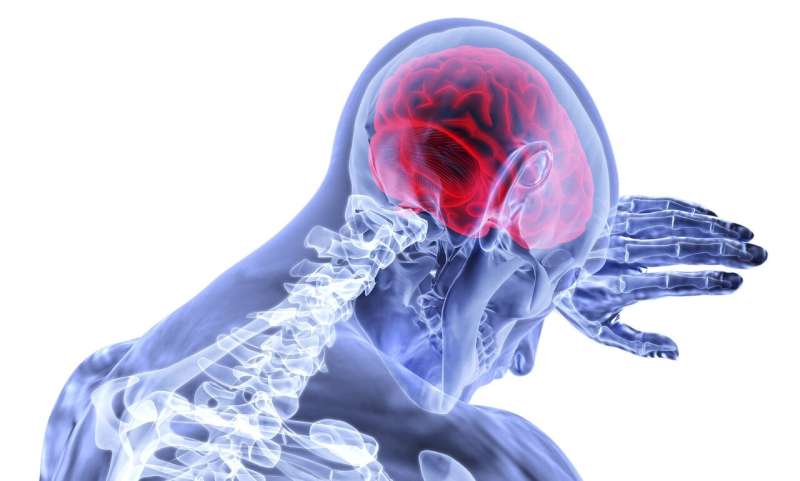
Credit: CC0 Public Domain
Northwestern Medicine scientists have discovered that light plays a key role in how animals perceive environmental threats, findings that have the potential to improve the understanding of risk avoidance behaviors and related disorders in humans, according to a studypublishedinNature Communications.
"We have to constantly decide whether we are going to take a risk or are we going to be safe, and we're drawing on our past experiences to make those calculations, whether it's in a familiar or an unfamiliar environment. What this study is telling us is that environmental lighting conditions seem to somehow be tuning that response in ways that we didn't know existed until now," said Tiffany Schmidt, Ph.D., associate professor of Ophthalmology and of Neurobiology in the Weinberg College of Arts and Sciences, who was senior author of the study.
An animal's survival depends on scanning their surrounding environment for threats to their safety, as well as recalling past experiences to determine whether a threat is likely to reappear. How this visual information, specifically environmental light, shapes this threat-avoidance behavior has previously remained unknown.
"We were very interested to see how light is not used just to detect things in the environment, but how animals and humans can use that information and modify their behavior in the near future," said Marcos Aranda, Ph.D., a research associate in the Schmidt laboratory and lead author of the study.
In the study, the scientists studied how mice behaved when exposed to a threatening stimulus in the same environment.
First, the mice were exposed to threatening stimuli and then taken out of the environment. When the mice were placed back in the same environment two days later with different lighting conditions, the scientists found the mice avoided the threat-associated area.
Next, the scientists manipulated a type of retinal neuron in the mice, calledmelanopsin-expressing intrinsically photosensitive retinal ganglion cells. Melanopsin, a photopigment, plays a role in non-image-forming behaviors.
The scientists found that when these mice were put back into the environment, the mice revisited and explored the threat-associated area, suggesting that light helps the mice determine whether an environment is still dangerous based on past experiences, Schmidt said.
"Animals without melanopsin are just exploring the arena like nothing bad ever happened," Schmidt said. "It was clearly not about how well they saw the threat; it was about whether they could recall that there was a threat in the first place."
In addition to improving the understanding of long-term threat avoidance behavior, the findings may have implications for studyingPTSDand generalized anxiety disorder in humans, in which revisiting previously threatening environments can cause stress and impact behavior, according to the authors.
"When you are in certain environments in which you receive a threat and you revisit those environments, we know that light can influence the way that we behave in those situations," Aranda said.
"Given that we also found and characterized the circuit by which that is happening, that opens up future studies to see how the same regions in the human brain are also being affected in PTSD and generalized anxiety, for example."
Publication details Marcos L. Aranda et al, Light tunes long-term threat avoidance behavior in male mice, Nature Communications (2026). DOI: 10.1038/s41467-026-69564-0 Journal information: Nature Communications








Post comments