




































Provided by Osaka Metropolitan University
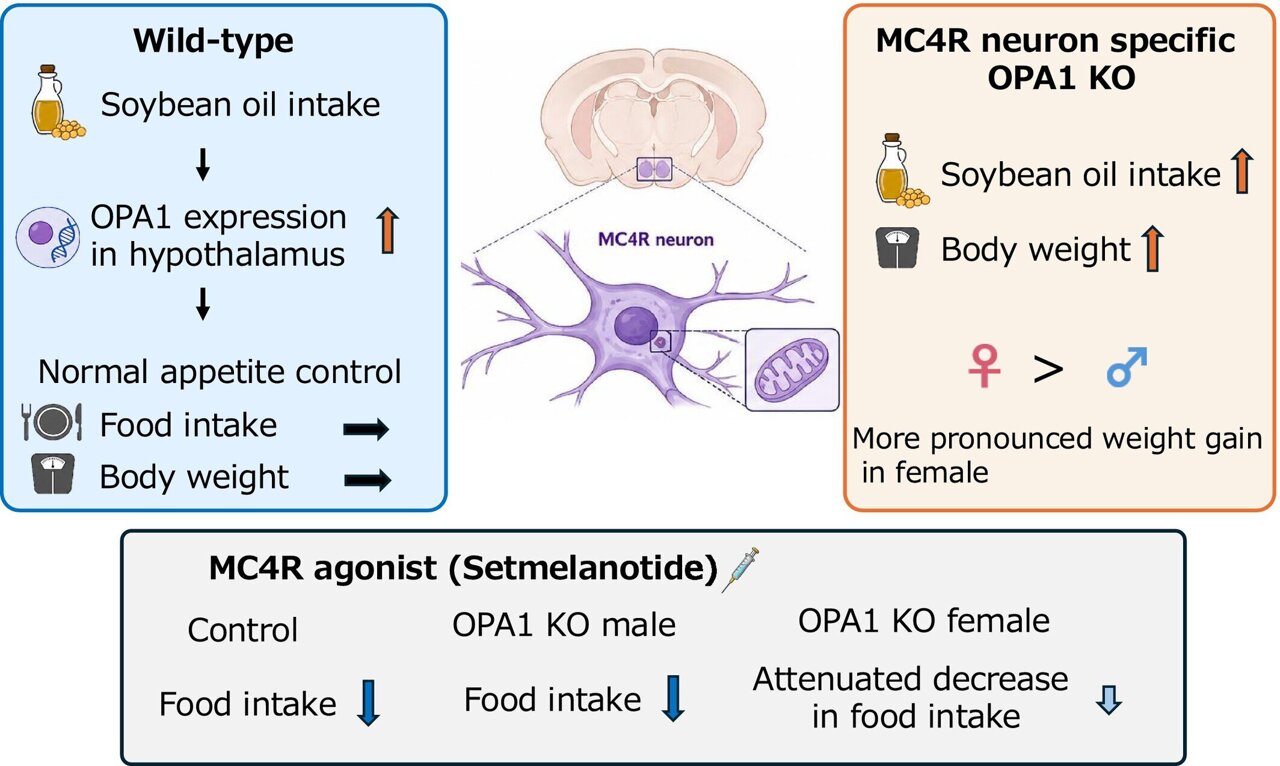
Graphical abstract. Credit: The FASEB Journal (2026). DOI: 10.1096/fj.202600452r
Obesity is a global health concern that can contribute to diabetes, cardiovascular disease and other metabolic disorders. While many health conditions can lead to obesity, an increasingly worrying cause is found on grocery shelves: high-fat foods. These foods are known to be hard to resist and can promote overeating.
For many, this can be mistaken for a stomach problem, but research has found that appetite is neurologically based. Despite this, the neural mechanisms linking the regulation of appetite and body weight to dietary fat intake remain unclear.
Building on this food for thought, a research group led by Professor Shigenobu Matsumura from Osaka Metropolitan University's Graduate School of Human Life and Ecology investigated the role of optic atrophy-1 (OPA1), a mitochondrial fusion protein found in hypothalamic MC4R neurons that help maintain mitochondrial function and energy metabolism.
Using wild-type and MC4R neuron-specific OPA1 knockout mice, the team examined OPA1's regulatory effects on appetite control and body weight by providing soybean oil freely as a dietary fat source. The findings were published in the FASEB Journal.
The researchers found that soybean oil increased OPA1 expression in male wild-type mice but not in females. The mice lacking OPA1 showed increased food intake, age-related weight gain and the development of obesity. When given free access to both standard chow and soybean oil, the mice consumed more fat and gained weight, with the effects particularly pronounced in females.
The team also examined the effects of setmelanotide, an anti-obesity MC4R agonist. While the drug effectively suppressed appetite in both control and OPA1-deficient male mice, its appetite-suppressing effect was significantly reduced in OPA1-deficient females.
"Our findings provide key insights into the mechanisms underlying obesity from the perspective of neuronal energy metabolism,"
Matsumura said. "The sex differences observed in OPA1 responses and obesity susceptibility may help inform the development of obesity treatments that take them into account, as well as future personalized medicine approaches."
More information: Shigenobu Matsumura et al, OPA1 in MC4R Neurons Regulates Dietary Fat Intake and Body Weight in Mice, The FASEB Journal (2026). DOI: 10.1096/fj.202600452r











Post comments