




































byKarolinska Institutet
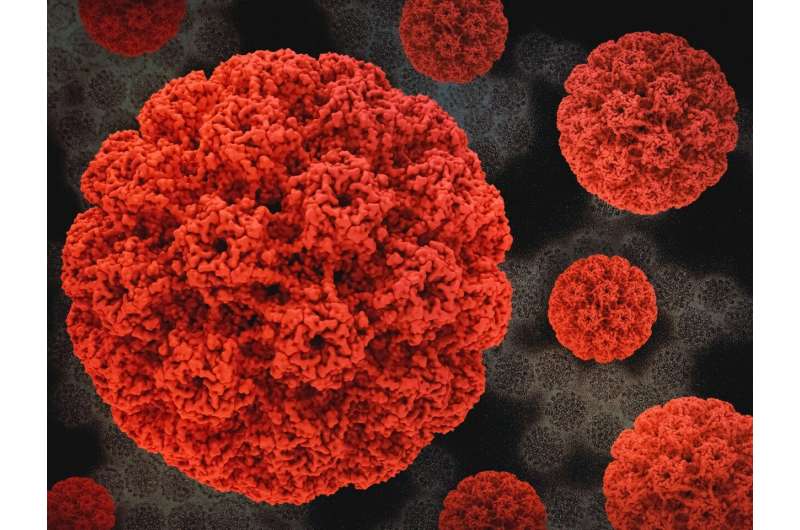
Credit: Unsplash/CC0 Public Domain
Girls who are vaccinated against HPV are not only well protected against cervical cancer; they are also less likely to develop severe precancerous lesions of the vulva and vagina, particularly if they were vaccinated before the age of 17.
This is shown in the study,"Quadrivalent human papillomavirus vaccine and high-grade vulvovaginal lesions,"from Karolinska Institutet published inJAMA Oncology.
In Sweden, all children inmiddle schoolare offered vaccination against human papillomavirus (HPV), which protects against cervical cancer, among other things. HPV can cause high-grade, precancerous lesions and cancer in different parts of the genital area.
Researchers at Karolinska Institutet have now shown that thequadrivalent HPV vaccine, which protects against HPV types 6, 11, 16 and 18, can be linked to a reduced risk of high-grade lesions of the vulva and vagina.
The study is based on data from more than770,000 womenborn between 1985 and 1998 and living in Sweden between 2006 and 2022. The researchers used Swedish health registries to follow the participants over time. They compared the incidence of high-grade lesions of the vulva and vagina in women who had received at least one dose of the HPV vaccine and women who had not been vaccinated.
After adjusting for factors such as age, education, income and maternal medical histories, the results showed that the risk of these severe lesions was 37% lower in vaccinated women than in unvaccinated women. The protection was strongest in women who were vaccinated before the age of 17, who had a 55% lower risk compared to unvaccinated women.
"Our study is the largest of its kind to investigate the link between HPV vaccination and serious diseases of the vulva and vagina," says the study's first author, Yunyang Deng, postdoctoral researcher at the Department of Medical Epidemiology and Biostatistics, Karolinska Institutet.
"The results highlight the importance of offering the HPV vaccine to girls at an early stage in life, before they become sexually active."
The researchers now plan to investigate how effective different types of HPV vaccines are and how long the protection lasts.
"We also want to study the vaccines' effect on otherHPV-related cancers, including in men," says Jiayao Lei, assistant professor at the Department of Medical Epidemiology and Biostatistics and the Center for Cervical Cancer Elimination at the Department of Clinical Science, Intervention and Technology, Karolinska Institutet, who led the study.
The research was conducted in collaboration with the Public Health Agency of Sweden and Karolinska University Hospital.
More information Yunyang Deng, et al. Quadrivalent human papillomavirus vaccine and high-grade vulvovaginal lesions, JAMA Oncology (2025). DOI: 10.1001/jamaoncol.2025.5511 Journal information: JAMA Oncology
Provided by Karolinska Institutet








Post comments