



































by Amani Gardner,University of Exeter
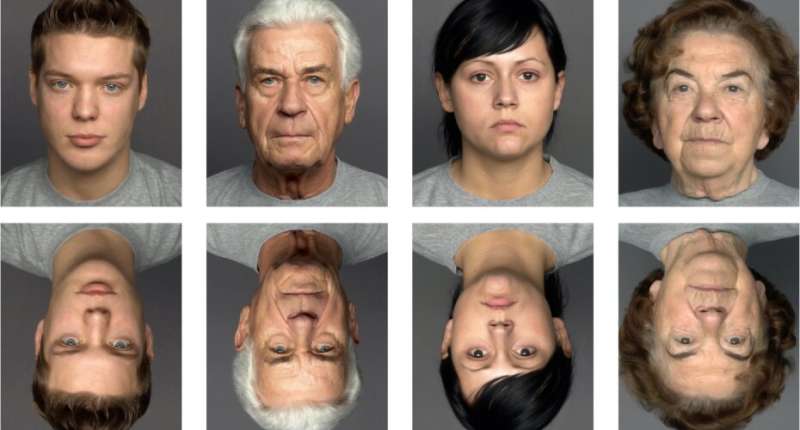
Credit: University of Exeter
GenZ's are better at recognizing people within their own age group than those outside it, according to new research.
Researchers from the University of Exeter examined the Own-Age Bias (OAB), a well-documented tendency for people to better recognize faces from their own age group. They found that older adults were equally good at recognizing both older and younger faces, whereas younger adults struggled to recognize older faces.
Ciro Civile, Associate Professor in Cognitive and Biological Psychology at the University of Exeter, said, "Since older participants have been young, they've developed the ability to process the information in younger faces and recognize them. As they then age, they learn to process and recognize older faces. On the other hand, younger participants have only developed the ability to recognize the faces of their own age group."
The study involved two groups: 19–30-year-olds and 69–80-year-olds. Participants were shown a series of unfamiliar faces, which were later mixed into a larger set of new faces. They were then asked to identify which faces they had seen before.
The researchers then inverted the images to see how this would affect the groups' ability to recognize faces and saw no difference between the two groups. Because neither group has real-world experience with upside-down faces, the findings suggest thatperceptual expertise—the ability to recognize and interpret sensory information, through practice—is responsible for the own-age bias.
The results help to rule out explanations that the reduced ability of the younger group to recognize older people's faces is due tonegative stereotypesor ageism (i.e., stereotypes, prejudice, and discrimination based on age).
Professor Civile said, "Understanding the younger groups' difficulty recognizing older people is important for situations such aseyewitness testimony, where a person's age can influence their accuracy in identifying suspects outside their age group. Our findings suggest that expertise or training can improve recognition of differently age individuals."
The paper is published inPerceptionentitled "Testing the Own-Age Bias in face recognition among younger and older adults via the Face Inversion Effect"
More information Testing the own-age bias in face recognition among younger and older adults via the Face Inversion Effect, Perception (2025). DOI: 10.1177/0301006625140 Journal information: Perception







Post comments