


































byJustin Jackson, Medical Xpress
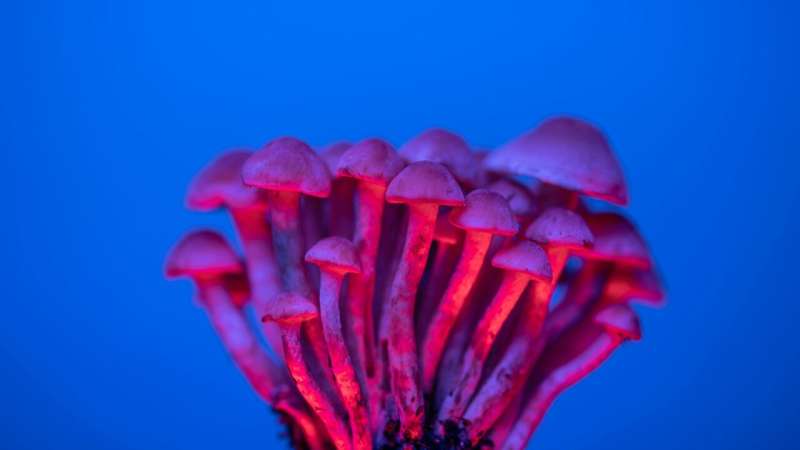
Credit: Marek Piwnicki from Pexels
In a review of previous studies, McMaster University researchers observe a stronger signal for psilocybin as a treatment for obsessive-compulsive disorder than cannabinoids.
Obsessive-compulsive disorder involves persistent, intrusive thoughts and repetitive mental or physical behaviors, and requires long-term treatment to alleviate symptoms. The ethology of the disorder appears complex, involving multiple biological pathways. Imbalances in centralserotonin, dopamine, and glutamate activities are widely thought to play a causative role, placing neurochemistry at the center of many treatment strategies.
First-line treatment includes selective serotonin reuptake inhibitors and cognitive behavioral therapy using exposure and response prevention. Roughly 40–60% of patients remain unresponsive to psychotherapy or pharmacotherapy, alone or combined, placing many people in the category of treatment-resistant OCD.
Interest in psychedelics has returned to psychiatric research within the past decade with a focus around potential effects on neural circuits tied to compulsive behavior, anxiety regulation, and affective processing.
In the study, "New treatments for OCD? Evidence for cannabinoids and psychedelics,"publishedin theJournal of Psychiatric Research, researchers conducted a comprehensive scoping review to evaluate evidence associated with psilocybin in obsessive-compulsive disorder, including treatment-resistant obsessive-compulsive disorder.
Published and gray literature were included, and reports covered cannabinoids plus psychedelic compounds such as psilocybin, lysergic acid diethylamide (LSD), N,N-dimethyltryptamine (DMT), and methylenedioxyphenethylamine. Much of the available record comes from cross-sectional surveys and case reports, with some small clinical trials and very few controlled trials.
Strainprint Smartphone Application reporting tracked 1,810 cannabis use sessions over 31 months among 87 users who used prescribed medicinal cannabis for OCD. Session logs recorded reductions in intrusive thoughts in 89.6% of sessions, reductions in compulsions in 95.4% of sessions, and reductions in anxiety in 93.8% of sessions, alongside worsening rates of 3% for intrusions, 2.3% for compulsions, and 1.9% for anxiety.
Average before-and-after comparisons for inhaled sessions reported a 49% reduction in intrusions, a 60% reduction in compulsions, and a 52% reduction in anxiety.
Higher CBD concentration and higher CBD doses predicted greater reductions in compulsions only. Pre-cannabis ratings of intrusive thoughts and compulsions did not change significantly across time and sessions, while pre-cannabis anxiety ratings showed significant reduction over time.
Italian outpatient reporting followed 70 people with DSM-5 primary OCD and grouped participants as current users, past users, and non-users. Substance use to manage OC symptoms was reported by 30% of the sample, and 10% reported cannabis use for that purpose. Only 10% of lifetime and current cannabis users reported cannabis reducing OC symptoms. Worsening of OC symptoms was reported by 23.3% of cannabis users, attributed mainly to increased general anxiety.
International retrospective self-report reporting enrolled 174 participants with OCD across France, Canada, Belgium, the United States, and Switzerland who reported at least one psychedelic use.Classic psychedelicswere reported as the only category associated with significant positive changes in OCD symptoms.
Duration reports split, with 33% reporting improvements lasting more than 3 months and 33% reporting improvements lasting less than 1 week after psilocybin and or LSD use. A relationship was reported between intensity and pleasantness of acute psychedelic effects and degree of symptom improvement.
Clinical reporting for psilocybin included a case report, a variable-dose cohort, and later controlled and presented findings. A 33-year-old male with treatment-resistant OCD received 0.25 mg per kg of psilocybin reported as 19.4 mg, and the Yale-Brown Obsessive Compulsive Scale (YBOCS) scores were reported as decreasing from 23 pre-dose to 2 at 48 h post-dose and dropping to 0 at 12 weeks post-dose, with a patient statement of feeling "OCD-free" one year later.
Variable-dose reporting in 9 treatment-resistant OCD patients described acute YBOCS reductions during the 24-h testing period after at least one dose for every participant, with reductions ranging from 23% to 100%, and 88.9% maintained at least a 25% decrease at 24 hours post-ingestion for at least one dose, while 66.7% maintained at least a 50% decrease at 24 h post-ingestion for at least one dose. Dose-response testing in that cohort reported no significant dose effect on the compulsive scale.
Within-subjects reporting compared a 10 mg synthetic psilocybin dose to a 1 mg active control dose in 18 adults with moderate-to-severe OCD, with doses separated by four weeks in fixed order. Survey scores at 1, 2, and 4 weeks after the10 mg dosewere significantly better than baseline, with the greatest reduction at 1 week and d = 1.12.
LSD-assisted psychotherapy reporting described two treatment-resistant OCD patients receiving 1–5 doses of LSD in the 100–200 μg range. Remission was reported for one patient and no improvement was reported for the other.
Research constraints, a few case reports, and small clinical trials limit actionable clinical interpretations based on the current state of psychedelic study. Clinical evaluations so far indicate a lack of evidence supporting cannabinoids as treatments for OCD. Psilocybin carried a stronger signal in treatment-resistant OCD.
Similar positive psilocybin signals have been seen in PTSD, anxiety and depression studies, a cluster of ailments that include symptoms of persistent, intrusive thoughts. OCD adds another reason for researching further, with randomized controlled trials, larger sample sizes, adequate control conditions, and longer follow-up periods to address long-term medical effectiveness of the "magic mushroom."
© 2025 Science X Network
More information Michael Van Ameringen et al, New treatments for OCD? Evidence for cannabinoids and psychedelics, Journal of Psychiatric Research (2026). DOI: 10.1016/j.jpsychires.2025.11.021 Journal information: Journal of Psychiatric Research








Post comments