




































By Oregon Health & Science University
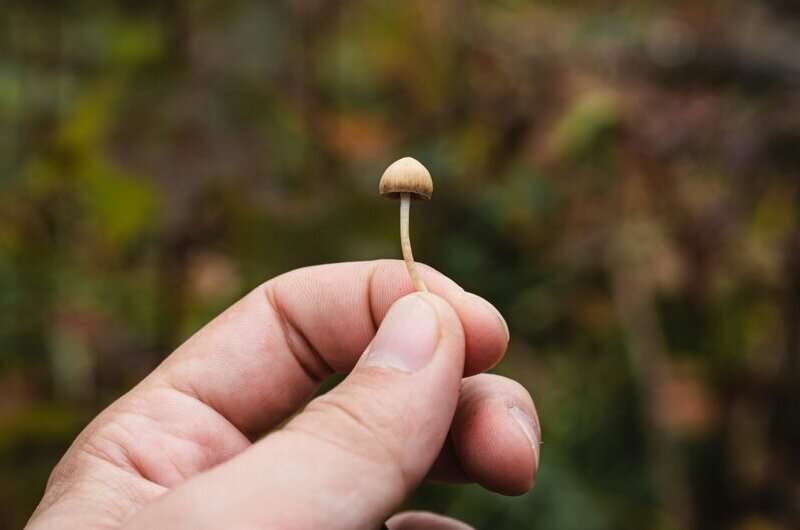
Credit: Unsplash/CC0 Public Domain
People participating in an Oregon Health & Science University-led study of state-regulated psilocybin services reported relief from symptoms of anxiety, depression and post-traumatic stress disorder—with almost two-thirds declaring the experience to be among the most meaningful of their lives.
The findings, published today in the journalJAMA Network Open, represent the first multisite study of Oregon's legalized psilocybin market, approved by voters in 2020.
"Safety was very similar to what we've seen with psychedelics in clinical settings," said lead author Todd Korthuis, M.D., professor of medicine (general internal medicine and geriatrics) in the OHSU School of Medicine. "That's important because there was a big question around whether safety in carefully controlled psilocybin clinical trials would translate into real-world use."
Oregon voters approved anonmedical wellness model, making state-licensed access to mind-altering "magic mushrooms" available for people 21 and older starting in 2023.
Senior co-author Adrianne R. Wilson-Poe, Ph.D., a scientist at the Legacy Research Institute and, with Korthuis, co-director of the Oregon Psychedelic Evaluation Nexus, noted that participants reported lasting benefits with few adverse events.
"This paper is going to be cited for decades," she said. "This is the first large-scale study to monitor the safety and mental health symptoms of real people in the real world."
The study enlisted 346 people who joined licensed facilitators for a single session using psilocybin between November 2024 and June 2026. Participants reported their state of mind at baseline and at one week, one month and three months after a single psilocybin session at 24 licensed service centers in Oregon.
Participants reported their experiences through a web-based portal, with 90% continuing to do so through three months.
The findings will be presented today as part of the Psychedelic Innovation Summit in Portland, co-hosted by OHSU and the Healing Advocacy Fund.
"These early results reveal psilocybin's potential to improve health in people accessing these services here in Oregon," said OHSU President Shereef Elnahal, M.D., who previously served as undersecretary for health in the U.S. Department of Veterans Affairs.
"The study also provides important insight for policymakers considering programs that permit psychedelics for the treatment of mental health conditions, including PTSD and substance use disorders affecting America's military veterans."
Korthuis noted that psilocybin isn't appropriate for people with psychosis or bipolar disorder or who are pregnant. However, he was struck by the low incidence of adverse events among participants in the study. Only seven participants reported the experience as harmful three months after their use of psilocybin.
"This may be a reflection of clients who were healthier overall than clinical trial participants," Korthuis said. "The results demonstrate it's safe for people receiving state-regulated psilocybin experiences."
In contrast to previous clinical studies examining safety and effectiveness in treating moderate-to-severe depression, only about half of participants in the Oregon study reported symptoms of moderate-to-severe depression beforehand. Even so, most participants reported improvements in their mental health, wellness and life satisfaction following their psilocybin session.
"Just because something isn't a medical model doesn't mean you can't have mental health benefits," Korthuis said. "Still, people with serious mental health or medical conditions should talk with their health care providers before seeking services."
Previous research, including imaging of the brain, indicates physiological changes that may help people reset how they process information and view themselves, he said. More than 20,000 people have accessed Oregon–licensed psilocybin services to date, seeking improved general health and wellness along with the potential to change their perspective, according todata trackedby the Oregon Health Authority.
Wilson-Poe said the survey platform developed through this research initiative, approved by OHSU's Institutional Review Board, can be easily adapted to measure outcomes from other forms of psychedelics beyond Oregon—especially as other states consider policies to expand access. OPEN has already expanded to Colorado, the second state to approve regulated psilocybin services.
"It can give us an apples-to-apples comparison," she said.
In Oregon, a major barrier to access is the cost, which ranges from hundreds to thousands of dollars for a session involving a state-licensed facilitator. In addition, several counties have opted not to permit psilocybin service centers, at least in part because of concerns about the safety of psychedelics, whether they're used medicinally or recreationally.
"Those counties may find this data reassuring, as may policymakers considering similar measures in other states," Korthuis said.









Post comments