



































From CBT‑I to WST‑I: A New Starting Point for Global Sleep Integration Systems
Abstract
Cognitive Behavioral Therapy for Insomnia (CBT‑I) is one of the core evidence‑based approaches for the non‑pharmacological management of chronic insomnia. However, contemporary sleep‑related challenges extend far beyond diagnosable insomnia, involving complex interactions between lifestyle, mental health, comorbid conditions, and environmental factors—spanning both medical and non‑medical settings.
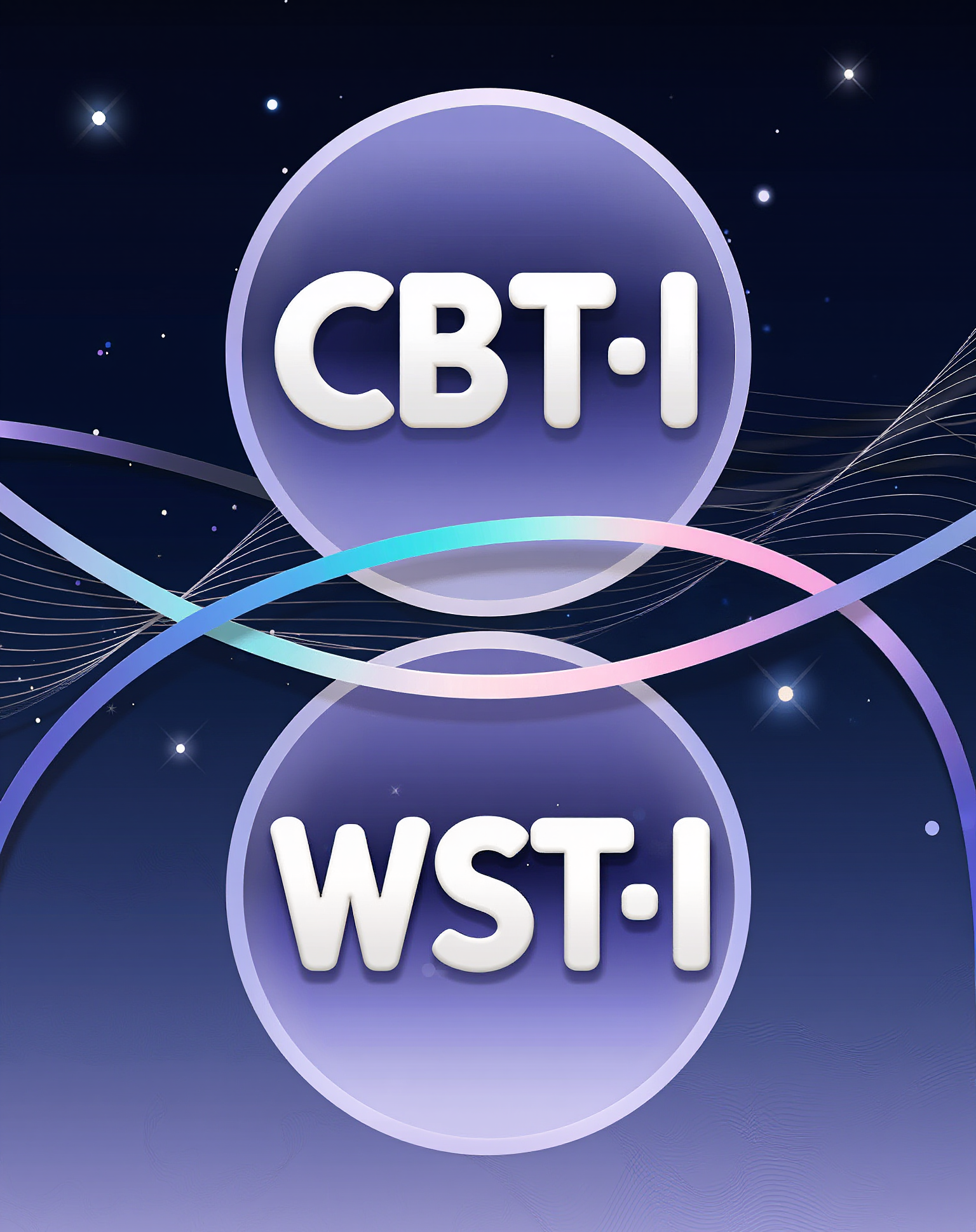
This paper introduces WST‑I (World Sleep Technology‑Integrative) as a conceptual and practical framework designed to:
Build upon the evidence base of CBT‑I;
Embed sleep interventions within a broader 3H Holistic Health Model (Health, Harmony, Humanity);
Provide a structured way to integrate theories, technologies, products, and services across the sleep ecosystem.
WST‑I is not framed as a new narrow‑scope therapy, but rather as an integrative technology system and coordination framework that seeks to connect individual sleep health with industry, research, education, clinical practice, and service delivery.
Introduction: CBT‑I as a Solid Foundation, but Not the Whole System
Over the past three decades, Cognitive Behavioral Therapy for Insomnia (CBT‑I) has emerged as a central consensus approach in guidelines for the non‑pharmacological management of chronic insomnia.
By systematically addressing sleep‑related maladaptive thoughts and behaviors, CBT‑I has helped countless individuals break the vicious cycle:
“The more I try to sleep → the more anxious I become → the less I can sleep.” |
Backed by robust clinical evidence, CBT‑I is widely recognized as the “gold standard” for the non‑pharmacological treatment of chronic insomnia.
Yet, today’s sleep‑related challenges are far more pervasive:
A large number of people experiencechronic sleep restriction without meeting formal diagnostic criteria;
Some have near‑normal objective sleep metrics but still report unrefreshing sleep and daytime fatigue;
Many grapple with the combined burdens of stress, irregular schedules, suboptimal diet, stimulant use, and screen exposure;
Sleep tracking technologies are growing in popularity, yet users often lack guidance on translating data into meaningful improvements.
Furthermore, modern sleep problems often arise from theinterplay of sleep, emotion, chronic disease, and environment, with a significant portion of demand originating in non‑medical settings such as homes, workplaces, schools, hospitality, and long‑term care facilities.
In this context, relying on asingle clinical technique is inadequate. What is needed is a more comprehensive integrative framework that connects:
Individual needs with the broader sleep ecosystem;
Medical and non‑medical settings;
Theoretical models with real‑world application.
To address this gap, Worldsleep – World Sleep Network proposes:
WST‑I: World Sleep Technology‑Integrative |
WST‑I:
Draws on CBT‑I as a key evidence‑based component;
Is grounded in the 3H Holistic Health Model;
Seeks to systematically integrate traditional wisdom, lifestyle medicine, and emerging technologies into an open, ecosystem‑focused framework.
In other words:
WST‑I is an integrative technology system for sleep health— |
The 3H Holistic Health Model: A Higher‑Level Map for Sleep
Prior to developing WST‑I, the Worldsleep team developed an overarching conceptual framework from a holistic health perspective:
3H Holistic Health Model (Holistic Health Hierarchy) |
This model provides a macroscopic framework for understanding the role of sleep within overall health.
2.1 Health
Sleep is not merely “hours spent asleep.” It is closely linked to:
Emotional regulation;
Metabolic and cardiovascular function;
Immune competence;
Cognitive performance and long‑term brain health.
Meaningful improvements in sleep should be reflected not only in nighttime metrics, but also in:
Daytime alertness and functioning;
Emotional well‑being;
Physical vitality;
Reduced long‑term health risk profiles.
2.2 Harmony
The essence of healthy sleep lies in alignment and balance:
Between intrinsic biological rhythms and social schedules;
Between stress load and recovery processes;
Between individuals and their light, sound, temperature, air quality, and bedding environments.
In many cases, the core issue is not simply “insomnia” but achronic misalignment between internal rhythms and external demands. Restoring such harmony is a prerequisite for sustainable sleep health.
2.3 Humanity
Sleep problems often reflect tensions in a person’s relationship with:
Themselves;
Others;
The broader world.
Metrics and technologies alone are insufficient. People also need to experience empathy, understanding, and support, and to regain a sense of safety and agency in the process of improving sleep.
Within the 3H model, sleep is both:
A sensitive indicator of holistic health, and
A practical entry point for health‑promoting interventions.
WST‑I is conceived as a way to operationalize “sleep” along this holistic map.
WST‑I: An Integrative Framework Linking Individual Sleep Health and the Sleep Ecosystem
WST‑I is designed as a multi‑source, open, and collaborative integrative framework, encompassing four interrelated layers:
3.1 Theoretical Layer – Multi‑Source Integration
WST‑I seeks to integrate multiple knowledge streams:
Core foundation:
CBT‑I and established sleep medicine theories and clinical evidence;
Scientific support:
Advances in sleep neurobiology and circadian rhythm research;
Lifestyle extension:
Evidence from nutrition, physical activity, and lifestyle medicine related to sleep;
Wisdom supplements:
Sleep‑related, standardizable and testable components from traditional and modern mind–body practices, such as:
- Traditional medical systems,
- Ayurveda,
- Aromatherapy,
- Mindfulness and meditation, etc.
These are not treated as equivalent “therapies,” but as sources of potentially useful modules that can be integrated and evaluated within a unified framework.
3.2 Technology Layer – Bridging Clinical and Everyday Contexts
The technology layer focuses on bridging clinical and everyday applications:
Clinical settings:
Compatibility with polysomnography (PSG), validated questionnaires, and standardized CBT‑I protocols;
Community / home settings:
Use of sleep diaries, wearable data, and brief screening tools asself‑management and health promotion instruments, not as diagnostic tools;
Referral interface:
Clear definition of red‑flag criteria and referral pathways from non‑medical support to medical evaluation and treatment, ensuring safety and role clarity.
3.3 Product Layer – From Single Products to Components of Solutions
In WST‑I, products are positioned not as isolated solutions, but as components within structured intervention programs:
Key questions include:
At which stage of a multi‑week program is a given product relevant?
With which behavioral adjustments should it be combined?
By which outcome metrics should its contribution be assessed?
Through such design, therole and added value of each product in a comprehensive solution can be quantified, supporting a shift from “selling devices” to “designing coherent intervention pathways”.
3.4 Service & Talent Layer – WSA / WSP / WSE Competency System
To make WST‑I learnable, applicable, and scalable, a tiered competency structure is proposed:
WSA – World Sleep Associate (introductory)
- Basic sleep education, preliminary screening, and lifestyle advice;
- Ability to recognize red‑flag symptoms and recommend medical consultation.
WSP – World Sleep Practitioner (intermediate)
- Implementation of WST‑I‑based programs in organizational settings (e.g., workplaces, hotels, elder care, wellness centers);
- Basic data interpretation and adjustment of non‑pharmacological modules;
- Collaboration and referral interface with health professionals.
WSE – World Sleep Expert (advanced)
- Curriculum development, project supervision, research participation, and contribution to standards and guidelines;
- Connecting front‑line practice with policy and industry development.
This structure is explicitly non‑medical in scope and is intended to complement, not replace, clinical roles.
Worldsleep: Enabling WST‑I to Circulate Across the Sleep Ecosystem
Even the best framework requires an ecosystem to operate within. One of the core aims of Worldsleep – World Sleep Network is to serve as a coordination and connectivity platform for the WST‑I framework.
From a systems perspective, effective sleep health implementation depends on five core modules working together:
Industry: Products, technologies, and integrated solutions;
Education: Continuous learning and professional training;
Research: Basic, clinical, and real‑world evidence;
Medical: Clinical practice and health management;
Service: User experience and long‑term support.
Any missing or weak link in this chain constrains overall impact.
Worldsleep’s role is to:
Connect these five modules into a more coherent system;
Provide a shared framework (WST‑I) as a common reference for collaboration;
Facilitate the circulation of methods, tools, and talents across settings and regions.
Within this network:
Upstream (research & education):
3H and WST‑I provide structural reference points for study design, curriculum development, and professional discourse;
Downstream (clinical & applied settings):
WST‑I informs how non‑pharmacological interventions, products, and digital tools can be structured into practical pathways for medical and non‑medical services;
At the centre (training & replication):
The WSA / WSP / WSE system supports the development of a skilled workforce capable of implementing and iterating WST‑I in real‑world contexts.
When these modules are aligned, and WST‑I serves as a shared integration framework, the sleep field can evolve toward a more connected, efficient, and sustainable ecosystem.
Conclusion: WST‑I as an Open Starting Point
In this position paper, WST‑I is presented as:
An integrative technology framework,
Grounded in CBT‑I and the 3H Holistic Health Model,
Designed to link individual sleep health with the broader sleep ecosystem.
It is not proposed as a replacement for existing clinical guidelines or therapies, but as an open, evolvable structure for:
Organizing existing knowledge and practices,
Designing multi‑dimensional interventions,
Facilitating cross‑sector collaboration.
Future work will involve:
Empirical testing of WST‑I‑aligned programs in different populations and settings;
Refinement of its components based on data;
Ongoing dialogue with clinicians, researchers, educators, industry partners, and service providers worldwide.
WST‑I is thus intended as a starting point for global collaboration on integrative sleep health, rather than a finished answer.
Worldsleep – World Sleep Network · WST‑I Initiative
Disclaimer: This document is intended for academic, professional and industry discussion on sleep health integration. It does not constitute medical diagnosis or treatment advice. Individuals with persistent or severe sleep problems should consult qualified healthcare professionals. |







Post comments