



































Provided by British Medical Journal

Credit: MART PRODUCTION from Pexels
Healthy sleep patterns in midlife are linked to longer working life expectancy, findings from a large study of working-age men and women suggest. The study was published online in Occupational &
Environmental Medicine.
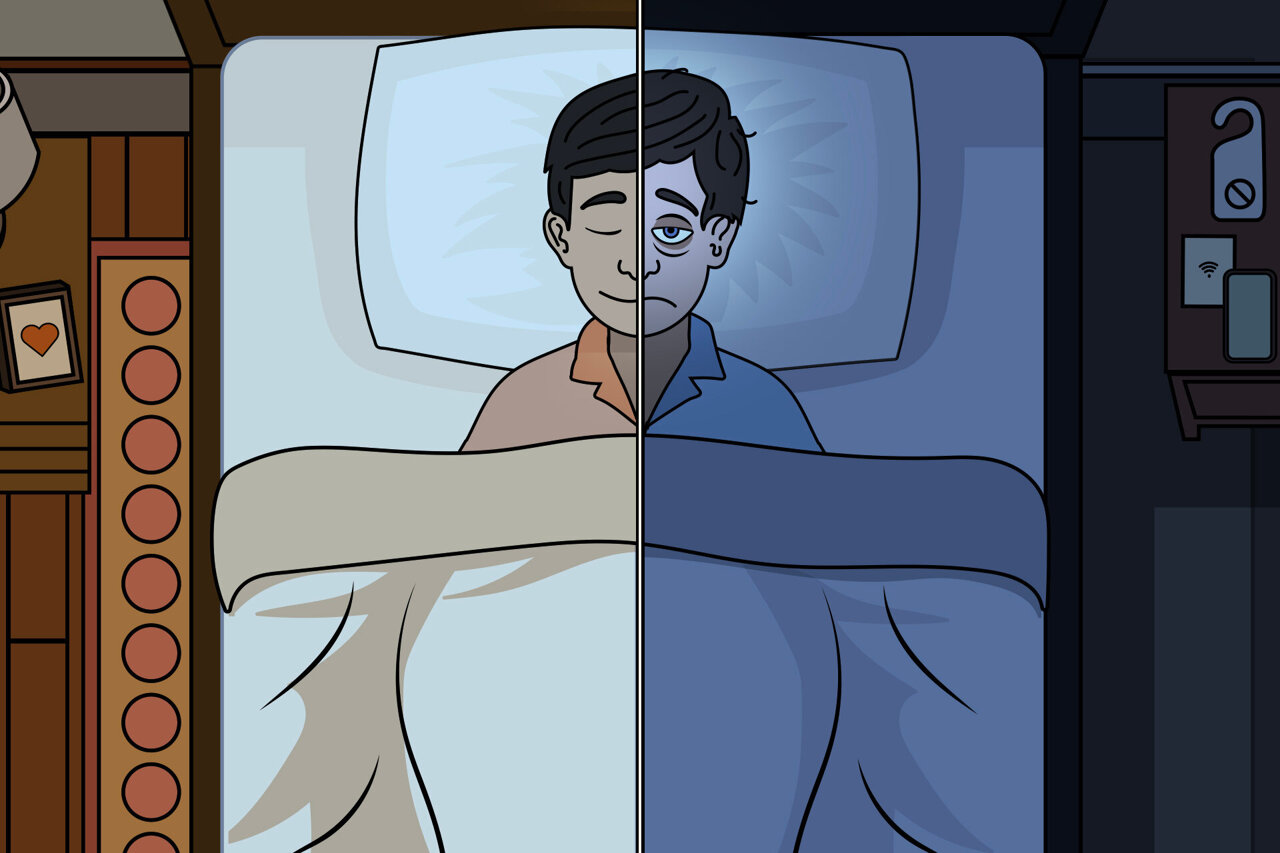
Very disturbed sleep or long sleep—9 or more hours a night—at age 50 or older was associated with a subsequent reduction in workforce participation of around 9 months, the findings indicate.
Statutory retirement ages have been rising in more than half of the Organisation for Economic Cooperation and Development (OECD) countries in response to aging populations. As such, people are expected to remain in the workforce longer, the researchers explain.
Various studies have looked at the timing and reasons for exiting the workforce, such as early retirement and retirement due to disability and poor health, but none has looked at whether adequate, good-quality sleep might contribute to longer working careers, they add.
They therefore wanted to explore the relationship between sleep patterns and working life expectancy, defined as the average number of years a person is expected to remain working at a certain age—in this case, from age 50 to age 68.
They drew on data from two observational studies: the Finnish Public Sector (FPS) study, involving 70,339 public-sector employees in 2000–16 (80% women); and the Health and Social Support (HeSSup) study, which includes a random sample (6,071) of Finnish working-age adults in 1998–2013 (54% women).
Information on sleep was obtained from responses to the first survey participants completed after turning 50. Usual nightly sleep length was categorized as short (under 7 hours), mid-range (7–8½ hours) and long (9 or more hours).
Sleep disturbances included difficulties falling or staying asleep, waking
up too early and nonrestorative sleep during the preceding 4 weeks. These were categorized as none (never to 1 night/week), moderate (2 to 4 nights/week) and severe (5–6 nights/week to nearly every night).
Workforce participation was ascertained from linked data from the Earnings and Accrual Register, which is maintained by the Finnish Centre for Pensions.
Analysis of the data showed that compared with those with no sleep disturbances, those with moderate sleep disturbances could expect to work nearly 5 fewer months and those with severe sleep disturbances 8 fewer months, irrespective of sex and job type, defined in 3 broad categories: professional, intermediate and routine.
Reporting no sleep disturbances was associated with a working life expectancy of 13 years 5 months. Moderate sleep disturbances were associated with a working life expectancy of 13 years, and severe sleep disturbances with one of 12 years 10 months.
The longest working life expectancy (nearly 14 years) at age 50 was observed among professional women with no sleep disturbances; the shortest was observed among men in routine jobs with severe sleep disturbances (nearly 12½ years).
Short and mid-range sleep lengths were both associated with a working life expectancy of 13 years 2 months; long nightly sleep length was associated with a working life expectancy of 12 years 5 months among FPS participants.
Compared with those sleeping 7–8½ hours a night, nightly sleep of 9 or more hours was associated with a working life expectancy of around 9 fewer months among FPS participants and just over 30 fewer months among HeSSup participants.
There was no clear evidence of differences between those with mid-range and short sleep patterns, regardless of sex and job type.
But there was a difference in working life expectancy between the most advantaged (those in professional jobs or with a high level of education and no sleep disturbances or short/mid-range sleep length) and the most disadvantaged (those in routine jobs or with a low level of education and severe sleep disturbances or long sleep length) in both groups.
This difference was approximately 1 year 5 months in the FPS group and 5 years in the HeSSup group.
Among 50-year-old FPS participants, the longest working life expectancy of around 13 years 7 months was observed among men and women with professional jobs and short nightly sleep.
Among 50-year-old HeSSup participants, the longest working life expectancy of around 11½ years was observed among highly educated women.
The shortest working life expectancy, around 6 years 5 months, was observed in both groups among men in routine jobs or with a low level of education and long nightly sleep.
This is an observational study, and as such, no firm conclusions can be drawn about cause and effect. The researchers also acknowledge that they weren't able to account for other potentially influential factors, such as physical and mental health, underlying health conditions, risky health behaviors and working conditions such as shift work.
But they conclude: "Promoting sleep health and providing support for managing sleep disturbances at midlife may be especially important for those with a lower socioeconomic status when aiming to increase workforce participation with advancing age.
"This could include cognitive behavioral therapy for insomnia delivered by occupational health services or workplace interventions, such as educational or health promotion interventions for sleep."
More information: Sleep disturbances and sleep duration as predictors of working life expectancy among adults aged 50 years and older in Finland, Occupational and Environmental Medicine (2026). DOI: 10.1136/oemed-2025-110766








Post comments