




































By Hoani Smith, Conrad Goodhew,, The Conversation
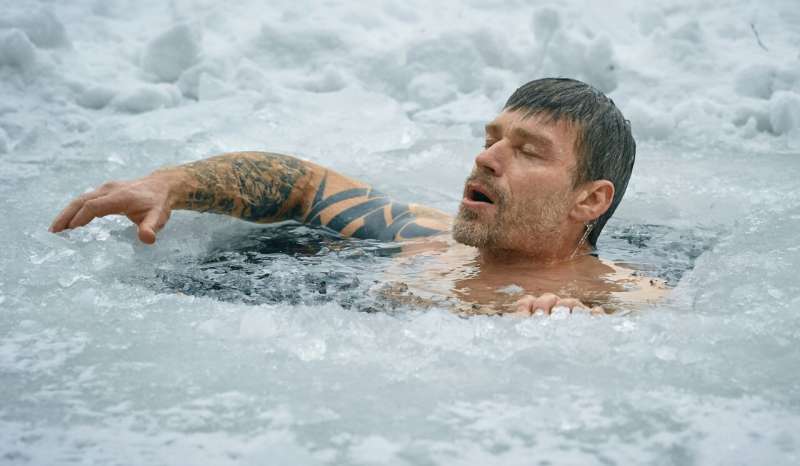
Credit: Unsplash/CC0 Public Domain
The internet's obsession with "maxxing" has turned almost every aspect of self-improvement into a trend.
Young men now swap tips on optimizing everything from sleep and appearance to testosterone, longevity and mental performance.
Male fertility has increasingly been drawn into that world, too. Social mediais awash with adviceranging from sensible lifestyle changes to more questionable suggestions, such as icing the testicles, eating raw garlic and taking long lists of supplements.
Saunas and ice bath "cold plunges" have become especially popular, promoted as ways to boost testosterone, improve sperm health and increase the chances of conception.
But how much of this advice is actually supported by evidence? And could some of these popular wellness practices have the opposite effect of that intended?
One of the biggest misconceptions behind many of these claims is that testosterone and fertility are essentially the same thing. They aren't.
Testosterone is essential for normal male reproductive function. However, higher blood testosterone—as many online wellness claims promise—does not automatically produce healthier sperm or improve the likelihood of conception.
In fact, taking testosterone can suppress sperm production. The American Urological Association and American Society for Reproductive Medicineadviseagainst testosterone therapy for men interested in current or future fertility.
The distinction between testosterone and fertility is also important when it comes to saunas and cold plunges, which are often touted to benefit both.
Saunas or cold plunges may indeed improve sleep, reduce stress or support general well-being. But those benefits should not be confused with evidence of improved fertility.
The more important question is whether heat or cold actually affects sperm quality and the likelihood of conception.
Why? Because the testes sit outside the body for a reason: Sperm production works best below core body temperature.
Alarge 2024 studyfollowed more than 15,000 Chinese men and analyzed over 28,000 semen samples.
Exposure to extreme temperatures was associated with poorer semen quality, including lower sperm concentration, total count and motility. While hot weather and sauna use are clearly different, the findings support broader evidence that heat can disrupt sperm production.
Perhaps the strongest evidence on saunas comes froman Italian longitudinal study, in which 10 healthy men completed two 15-minute Finnish sauna sessions each week at 80–90°C (176–194°F) for three months.
Their sperm count and motility declined, alongside changes in mitochondrial function and sperm DNA packaging. Reassuringly, these changes had reversed six months after they stopped using the sauna.
Another U.S.–led studyfollowed couples trying to conceive. Hot baths and hot tubs alone had little effect on pregnancy rates. But men with greater cumulative exposure to multiple heat sources had moderately lower chances of conception.
If heat can impair sperm production, it might be assumed that cold exposure must improve fertility. Current evidence doesn't support that conclusion.
Asystematic reviewby Australian researchers found cold-water immersion may reduce muscle soreness and aid short-term recovery after strenuous exercise. Another Australian–led2025 reviewalso reported possible benefits for stress, sleep and quality of life.
Although the evidence was limited by small studies and inconsistent methods, neither review found evidence that cold-water immersion improves testosterone, sperm quality or pregnancy rates.
Targeted scrotal coolinghas been investigatedas a treatment for male infertility, but that is very different from immersing the whole body in cold water. Nor is there evidence that applying ice after a sauna reverses the effects of heat exposure.
So, while cold plunges may help recovery after exercise, they shouldn't be viewed or promoted as a fertility hack.
Wellness claims about optimizing female fertilityare also widespread, although they are usually framed around "hormone balance," "egg quality" or fertility optimization rather than the male-oriented world of maxxing.
The scientific evidence, however, is much less developed. A2024 systematic reviewby U.S. researchers found the reproductive effects of heat remain underexplored, with little evidence from human studies.
Likewise,research on cold exposure and female reproductive functionis largely based on animal studies, meaning we still do not know whether cold-water immersion affects ovulation, egg quality or conception in women.
Pregnancy raises separate questions, so anyone who is pregnant or has concerns about their reproductive health should seek advice from an appropriately qualified health care professional.
But for most healthy adults, an occasional sauna or cold plunge is unlikely to determine whether they can have children.
As with many wellness trends, the problem isn't necessarily the practice itself. It's the tendency to assume one claimed benefit automatically leads to another.
A sauna may support relaxation or sleep. A cold plunge may aid alertness and exercise recovery.
But piling one wellness trend on top of another, without evidence to support it, doesn't necessarily improve health. And in some cases, particularly when it comes to fertility, people may only be "maxxing" what they least intend to.










Post comments