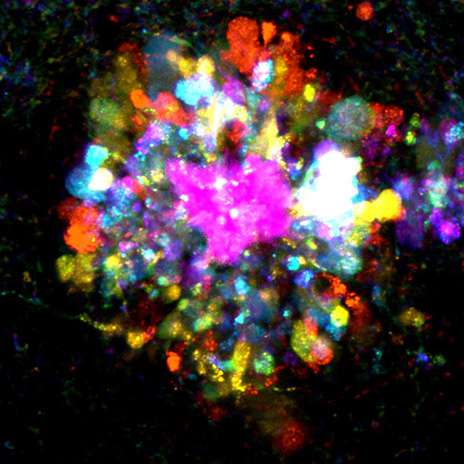





























by Ingrid Fadelli , Medical XpressColor-coded responses to different visual stimuli. a, Activations to achromatic high-SF gratings (in cycles per degree). Yellow, SF11; purple, SF15; orange, SF18. b,
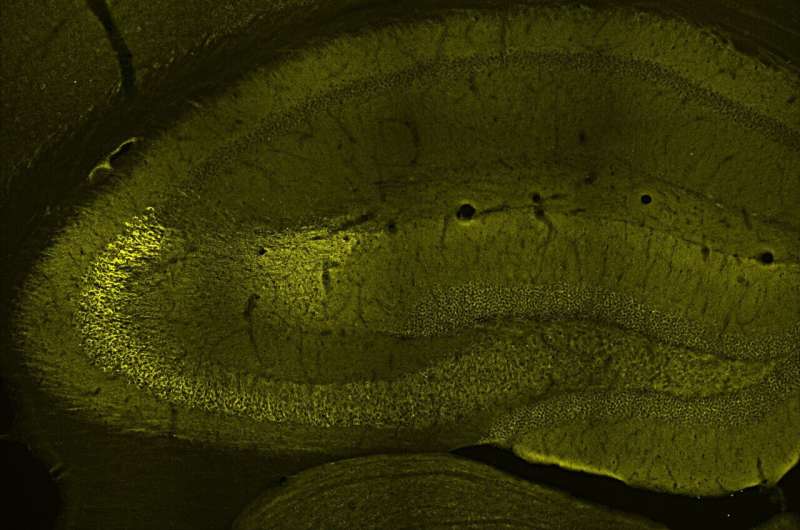
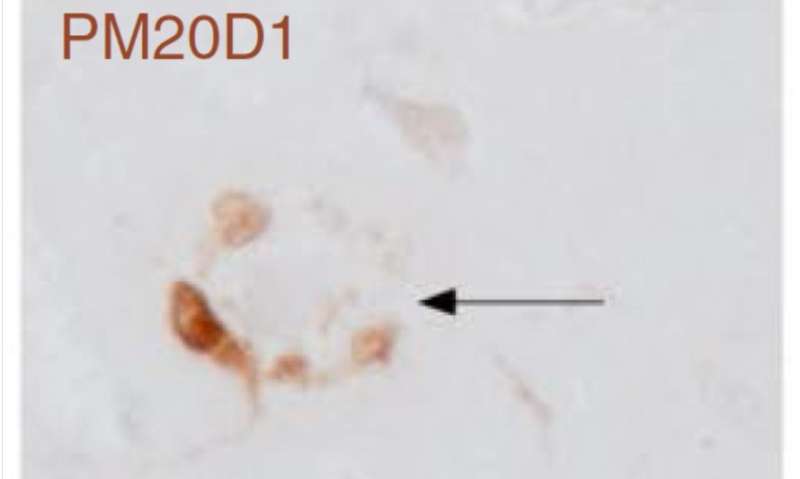
by IDIBELL-Bellvitge Biomedical Research InstituteExample of cells of a patient with advanced Alzheimer's with an altered PM20D1 gene. Credit: IDIBELLAn article published inNature Medic
bySalk InstituteTwo images of nerve endings in the amygdala (where fear signals are received and interpreted). On the left, there are no labels and two distinct vesicles in the nerve endings can
by University of HelsinkiCredit: Pixabay/CC0 Public DomainA study conducted at the University of Helsinki and the Helsinki University Hospital (HUS) suggests that the APOE4 allele may also increa
by Gladstone InstitutesVarious pills. Credit: WikipediaScientists from the Gladstone Institutes have discovered that salsalate, a drug used to treat rheumatoid arthritis, effectively reversed tau
byUniversity of TorontoCredit: Pixabay/CC0 Public DomainResearch published by a team of researchers from the University of Toronto in collaboration with colleagues from the University of Alberta
byHoward Hughes Medical InstituteBenchmarking Rastermap on simulated data with multiplexed neural activity. Credit:Nature Neuroscience(2024). DOI: 10.1038/s41593-024-01783-4Neuroscie
by University of California, San FranciscoCredit: CC0 Public DomainResearchers and caregivers have noted that excessive daytime napping can develop long before the memory problems associated with
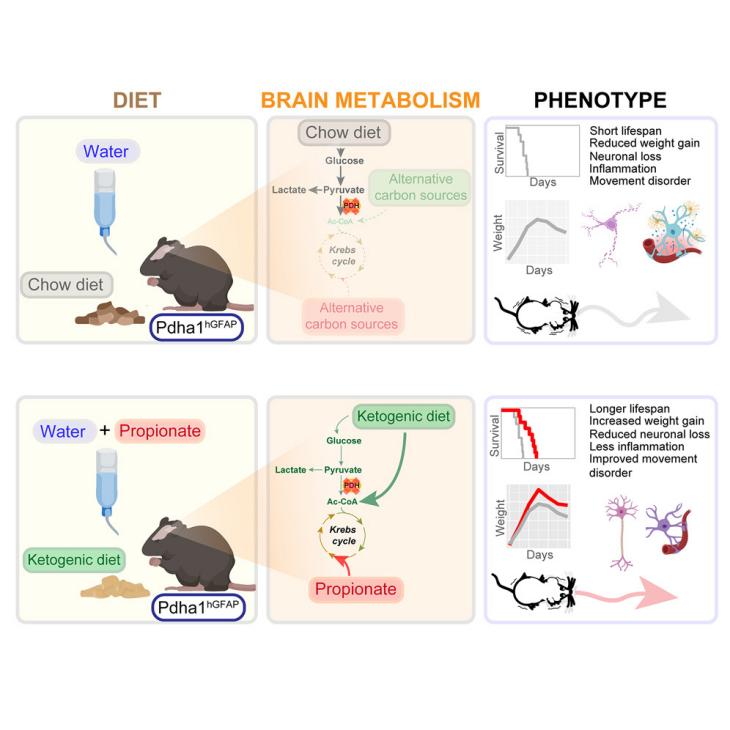
byChildren's Hospital of PhiladelphiaCredit: CC0 Public DomainDiagnosing the genetic cause of a disease can aid in finding therapies and directing treatment, but often these diagnoses occur
by Thomas E Cope,The ConversationHarmful tau protein spreads through networks.Alzheimer's disease is a devastating brain illness that affects anestimated 47m peopleworldwide. It
by Marilynn Marchione and Matthew PerroneIn this Dec. 12, 2019 photo provided by Biogen, a scientist works on Alzheimer's disease research in a laboratory at the drugmaker's headquarters in Ca