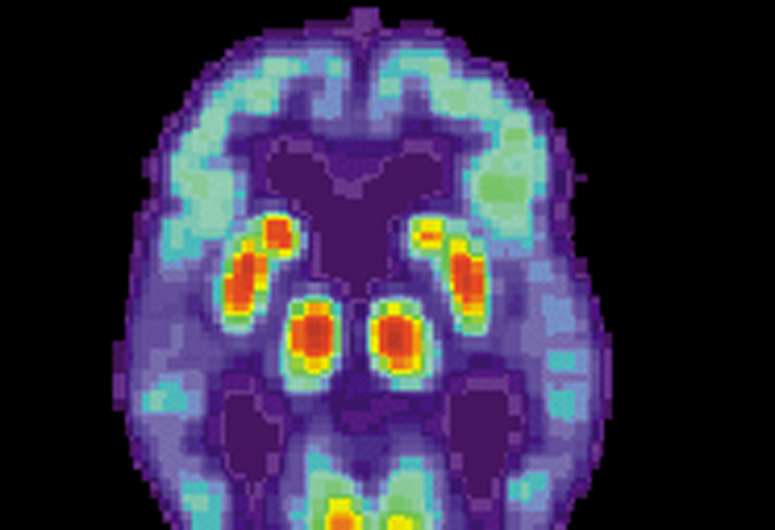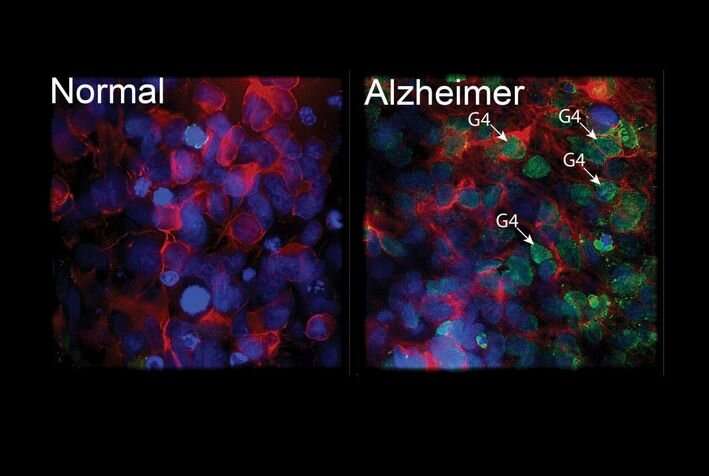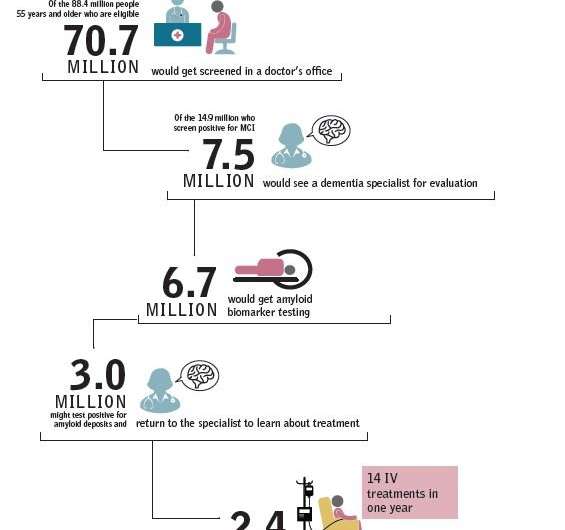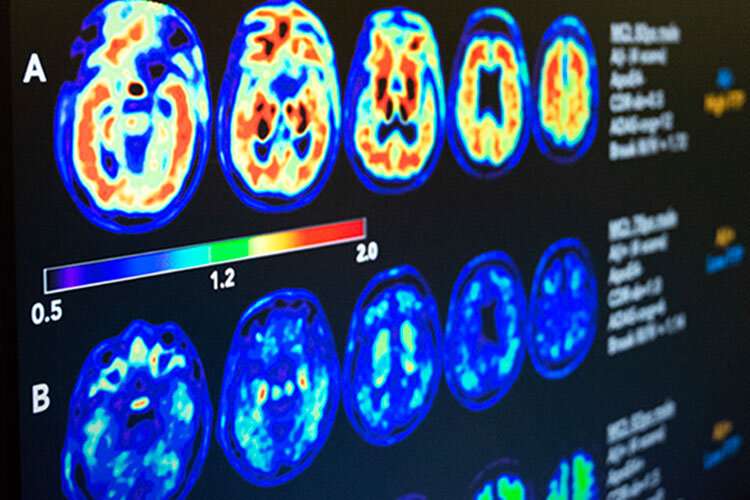






























by Kim Irwin,University of California, Los AngelesDiagram of the brain of a person with Alzheimer's Disease. Credit: Wikipedia/public domain.Alzheimer's disease, long thought to be a sin
by University of BirminghamCredit: CC0 Public DomainA University of Birmingham report has concluded that national governments, health and social services, businesses, families and communities hav
by University of CambridgeCredit: CC0 Public DomainInflammation in the brain may be more widely implicated in dementias than was previously thought, suggests new research from the University of C
by University of California, San FranciscoCredit: Pixabay/CC0 Public DomainWhile research has shown that poor cardiovascular health can damage blood flow to the brain increasing the risk for deme
by BioMed CentralDiagram of the brain of a person with Alzheimer's Disease. Credit: Wikipedia/public domain.A larger brain volume could indicate a reduced risk of memory decline according to
by Universitaet TübingenAmyloid proteins (plaques, blue) in the cerebral cortex of a mouse model of Alzheimer’s disease, surrounded by cortical immune cells (microglia, green). Activated microgli
by Elana GotkineFor older veterans, residence within more disadvantaged neighborhoods is associated with an increased risk for dementia, according to a study published online July 19 inJAMA Neur
byCity University LondonCredit: Unsplash/CC0 Public DomainPatients with learning disabilities experience significant barriers to accessing health care in England, according to a new study.Analys
by Jacqueline Pumphrey, Oxford Science Blog,Oxford UniversityWe probably all know someone who has dementia. By 2025, there will be 1 million people affected by it in the UK. Alzheimer's dise
by Mary Loftus,Emory UniversityThe Lowman family (several members of whom can be seen in this old family photo, above) recalls touching moments from more than a decade of caring for their mother
by Society for NeuroscienceHealthy adults carrying the gene APOE4—the strongest known genetic risk factor for Alzheimer's disease (AD)—may struggle to adapt their brain activity to increasing