




























by Salk InstituteMice that have formed a social hierarchy get placed in a box where they compete for a food reward. Salk scientists can use brain readouts to accurately predict which animal will
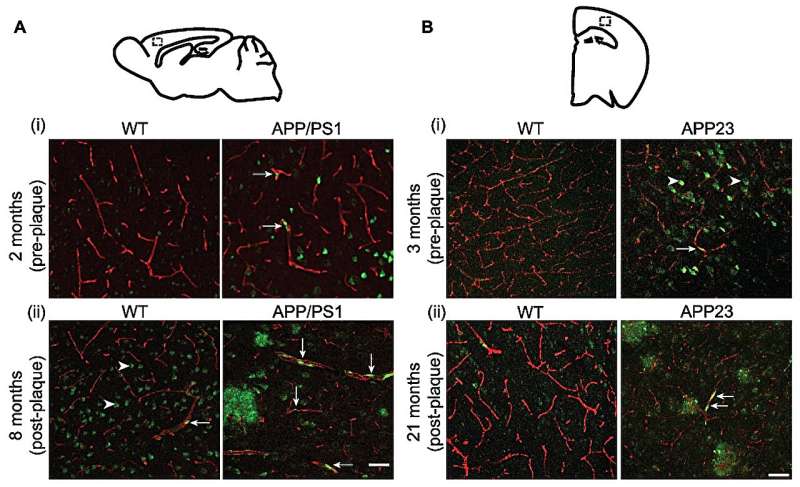
by RIKENNeprilysin (red) and Aβ (green) levels in the hippocampus of Alzheimer's disease model mice. Top: control. Bottom: after being fed diazoxide. After diazoxide treatment, neprilysin lev
byOxford University PressCredit: Anna Shvets from PexelsA paper titled "Deep Learning and Transfer Learning for Brain Tumor Detection and Classification" published inBiology Meth
by American Academy of NeurologyCredit: CC0 Public DomainA number of studies have suggested that eating a healthy diet may reduce a person's risk of dementia, but a new study has found that t
by Leigh Hopper,University of Southern CaliforniaCredit: CC0 Public DomainAn Alzheimer's diagnosis in a sibling raises the risk of a shortened lifespan in other family members—even those wit
by German Cancer Research CenterCredit: CC0 Public DomainIn symptom-free individuals, the detection of misfolded amyloid-β protein in the blood indicates a considerably higher risk of Alzheimer&#
byDuke UniversityCredit: Pixabay/CC0 Public DomainCuriosity paradoxically increases people's patience for an answer, while simultaneously making them more eager to hear it, finds a new study
by Florida Atlantic UniversityMahmoud Seifallahi (seated) and Behnaz Ghoraani, Ph.D., reviewing walking performance using a depth camera, which can detect and track 25 joints of body movement. Cr
by Scott Dance, The Baltimore SunWhat could be one of the first treatments to delay or prevent Alzheimer's disease received a big boost from the National Institute on Aging, which is putting up $7
by Jeremy Deutchman,University of Southern CaliforniaCredit: Pixabay/CC0 Public DomainAlzheimer's disease and the urgent need for more effective treatments have been making headlines this ye
by Salk InstituteA fruit fly brain showing male-specific tachykininergic neurons (magenta), which make the neuropeptide tachykinin, and neurons that express TkR86C (green), which receive tachykin