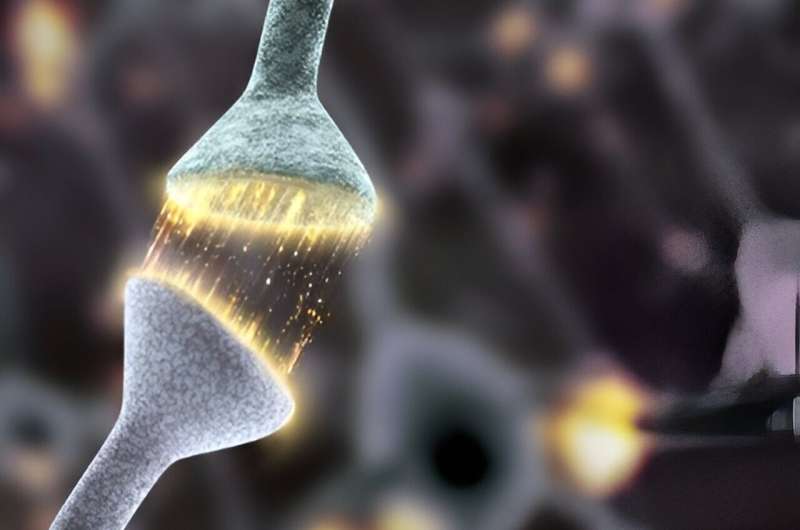





























by IOS PressP. gingivalisbacteria (arrows), after invading a neuron, causes damage to the cellular infrastructure and synapses. Credit: Cortexyme, Inc.Cortexyme, Inc., a clinical stage biop
by Society of Nuclear Medicine and Molecular ImagingSex Modulates the ApoE ε4 Effect on 18F-AV-1451 Tau PET. Credit: Paranjpe M, Liu M, Paranjpe I, et al.The strongest genetic risk factor for Alzheime
byUniversity of JyväskyläAn early network (A) including the ventrolateral prefrontal cortex (VLPFC) and posterior temporal cortex (PTC) responded to movement boundaries followed by a (B) network
by University of ZurichBrown-colored A-beta plaques in the cerebral cortex in Alzheimer's disease. Credit: University Hospital ZurichUp to now Alzheimer's disease has not been recognized
by Columbia University Medical CenterA new and comprehensive study by investigators at the Celiac Disease Center at Columbia University Medical Center has found that celiac patients are at no inc
byVIB (the Flanders Institute for Biotechnology)Hippocampal neurons with staining for endosomes (turquoise and purple) and lysosomes (yellow). When the PSEN2 gene is absent or carries a familial
by University of FloridaTodd Golde, M.D., Ph.D., director of the UF Center for Translational Research in Neurodegenerative Disease and a professor in the UF College of Medicine's department o
by Brigham and Women's HospitalCredit: Unsplash/CC0 Public DomainAlzheimer's is a debilitating neurodegenerative and neuroinflammatory disease that is difficult to treat. Most existing th
FEBRUARY 9, 2024by Bill Snyder,Vanderbilt UniversityIllustration of the triple-wise correlation network model. Credit:Science Advances(2024). DOI: 10.1126/sciadv.adi0616By mapping br
by National Institutes of HealthPET scan of a human brain with Alzheimer's disease. Credit: public domainThe first published data from the Anti-Amyloid Treatment in Asymptomatic Alzheimer'
by Jason Clement,McGill UniversityCredit: Unsplash/CC0 Public DomainFor decades researchers have known that Alzheimer's disease (AD) causes the atrophy of a system of neurons and synapses hi