




























by Ecole Polytechnique Federale de LausanneCredit: Pixabay/CC0 Public DomainIf you had to estimate the number of people in a room, without counting them one by one, by nature you would overcount
by University of New South WalesCredit: Pixabay/CC0 Public DomainResearch led by UNSW Sydney's Center for Healthy Brain Aging (CHeBA) has confirmed treating symptoms of depression is most eff
by King's College LondonCredit: CC0 Public DomainA new paper published today in the journalAlzheimer's & Dementia: The Journal of the Alzheimer's Associationfound that
by Medical College of Georgia at Augusta UniversityDr. Zsolt Bagi with coauthors Katie Anne Fopiano, AU graduate student, and Dr. Yanna Tian, who just earned her graduate degree from AU and has s
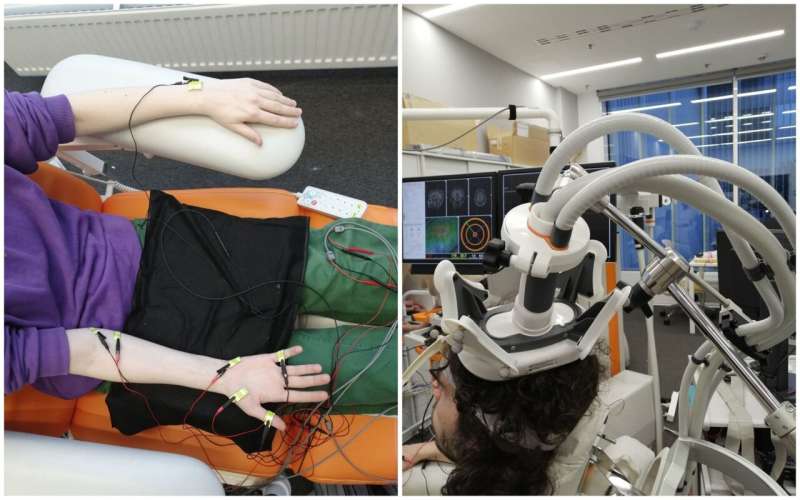
by Marla Broadfoot,Mayo ClinicCredit: Public DomainToday, neurostimulation is used to treat avariety of human disorders, including Parkinson's disease, tremor, obsessive-compulsive dis
by David Pulgar,Virginia Commonwealth UniversityRavi Hadimani, Ph.D., associate professor of mechanical and nuclear engineering, leads a team of researchers who seek to use TMS to excite or inhi
by Georgetown University Medical CenterSkeletal formula of trans-resveratrol. Image: WikipediaResveratrol, given to Alzheimer's patients, appears to restore the integrity of the blood-brain b
by John Spizzirri,Argonne National LaboratoryFigure 1. Experimental design for dopamine connectomics. (A) Adeno-associated viruses (AAVs) expressing Cre-dependent Apex2 were bilaterally injected
byGeorge Institute for Global HealthCredit: Pixabay/CC0 Public DomainA new analysis involving over 13,000 people has found changes to blood vessels in the brain that can increase the risk of str
by Suzanne Leigh, University of CaliforniaA set of 16 brain PET scans, with orange areas representing Alzheimer's progression. Credit: UC San FranciscoUC San Francisco experts say that we have rea
by Washington University School of MedicineCredit: CC0 Public DomainAfrican-Americans may be twice as likely as Caucasian Americans to develop Alzheimer's disease, but nobody knows why becaus