






















bySociety for NeuroscienceCredit: Juan Pablo Serrano Arenas from PexelsExperiencing adversity before the age of 18 is unfortunately quite common. Nearly two thirds of young people experience at
by Nicholas Weiler,Stanford UniversityActin filaments (cyan) and an actin regulatory protein (magenta) in a differentiating oligodendrocyte. Credit: Brad Zuchero and Andrew OlsonNew research fro
by Bond UniversityCredit: David Wagner/public domainShowing photos of Queenslander houses to people with brain disorders could predict their risk of becoming lost during everyday outings.Thetest
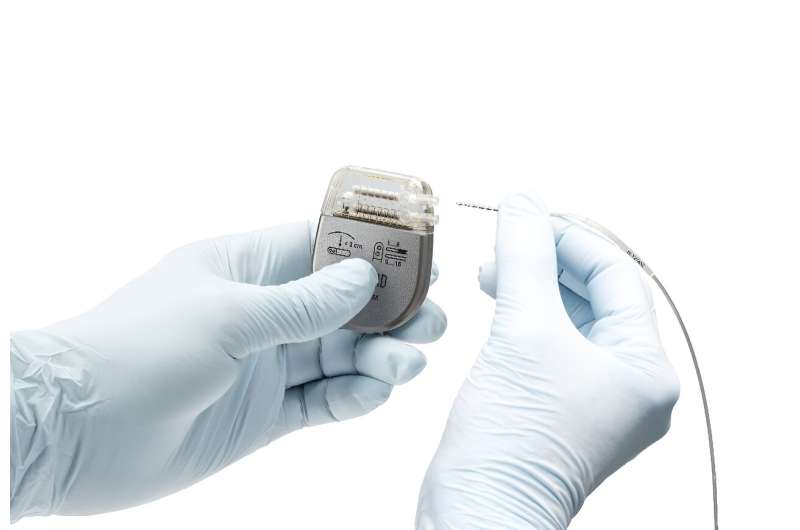
by Lucie AUBOURGThe Dutch company Onward developed a device that takes signals from a brain implant and uses them to stimulate a paralyzed patient's spinal cord, thus restoring lost movement.A par
by University of New South WalesCredit: CC0 Public DomainThe ARC Centre of Excellence in Population Ageing Research (CEPAR), in collaboration with Neuroscience Research Australia (NeuRA), has rel
byAmerican Academy of NeurologyCredit: Unsplash/CC0 Public DomainA changing climate may be linked to growing death and disability from stroke in regions around the world, according to a study pu
by Kim Krieger,University of ConnecticutThe image on the left (A) shows four optic nerves that have been crushed. Live nerve tissue glows green in this image, while damaged nerve tissue is dark.
by Eleftheria Kodosaki and Deborah Alawode,The ConversationCredit: AI-generated imageDespite affecting55 million people worldwide, Alzheimer's disease still has no cure. But recent adv
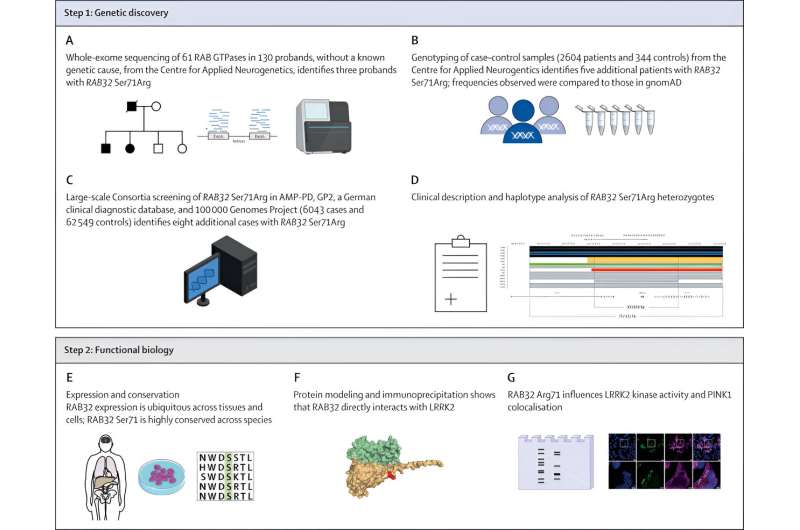
by Matthew Farrer,The ConversationSchematic outline of the methodological framework used in the study. Credit:The Lancet Neurology(2024). DOI: 10.1016/S1474-4422(24)00121-2Parkinson&
by Jeff Renaud,University of Western OntarioCredit: Ketut Subiyanto from PexelsSo little is understood about the dialogue between the body and the brain. It might seem obvious that our physical
by Jennifer McManamay,University of VirginiaUVA professor Gustavo Rohde's technique uses mathematical equations to extract mass transport information from medical images, creating new images