






























by University of Southern CaliforniaCredit: University of Southern CaliforniaRetain a sharp, healthy brain and reduce your risk of Alzheimer's disease by following five simple rules. Some of
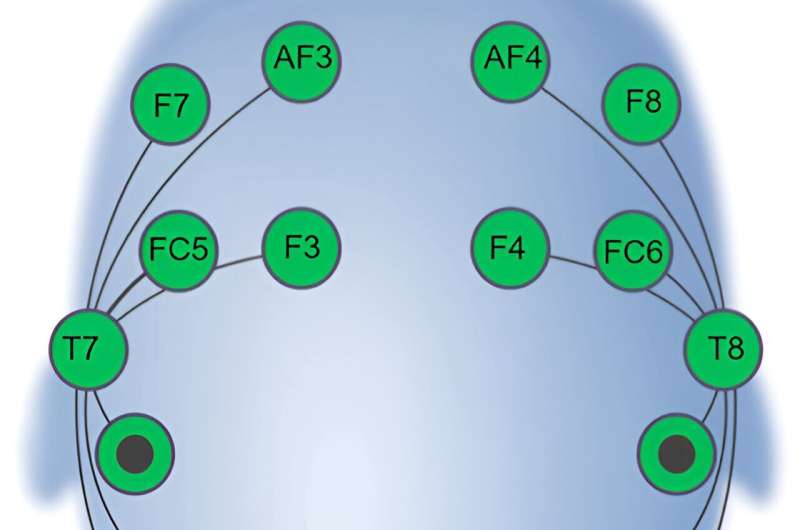
byDrexel UniversityEPOC X Electrode Montage (adapted from Williams et al., 2023). Credit:Frontiers in Neuroergonomics(2024). DOI: 10.3389/fnrgo.2024.1340732As people age, their brain
by University of WashingtonPET scan of a human brain with Alzheimer's disease. Credit: public domainAlzheimer's is a disease of aggregation. Neurons in the human brain make a protein call
byUniversity of VermontProfessor Ruth Fabian-Fine has mentored groups of summer research students for years in her ongoing work studying the neurology of spiders. Credit: St. Michael's Colle
by WileyCredit: Pixabay/CC0 Public DomainChronic psychosocial stress—which involves a pathway called the hypothalamic-pituitary-adrenal axis (HPA axis)—may contribute to the development of Alzhei
bySainsbury Wellcome CentreCartoon of a rat playing a game involving risk. Credit: The image was created with the assistance of AI (DALL·E 3)Neuroscientists have uncovered a key brain area in ra
by Cara MurezTwo new studies using CRISPR gene editing offer potential new treatments for Alzheimer's disease."A pipeline of potential new treatments offers hope for the Alzheimer's and d
by University of MinnesotaConceptual model: Intersection of social determinants of health and dementia caregiving. Credit:Alzheimer's & Dementia(2023). DOI: 10.1002/alz.13437U
by Adrianna MacPherson,University of AlbertaCredit: Pixabay/CC0 Public DomainResearchers are striving to make earlier diagnosis of Alzheimer's dementia possible with a machine learning (ML)
byUniversity of California, Los AngelesCredit: Pixabay/CC0 Public DomainResearchers have for the first time identified degeneration-associated "molecular markers"—observable changes in
by Kim Krieger,University of ConnecticutHuman chromosomes (grey) capped by telomeres (white). Credit: PD-NASA; PD-USGOV-NASAShort telomeres in midlife are associated with a higher risk of develo