



































by Fabricio Pamplona,The Conversation
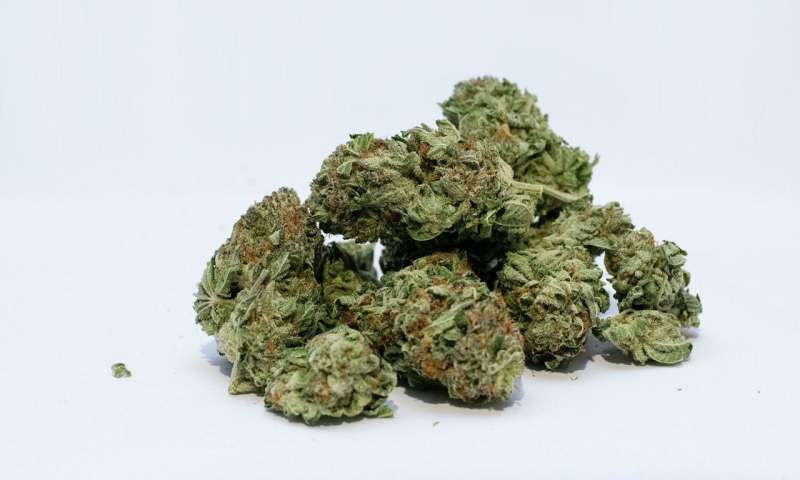
Credit: CC0 Public Domain
As the world's population ages, the number of people living with dementias such as Alzheimer's disease increases. Given the lack of curative treatments and the limited effectiveness of available medications, interest in new therapeutic approaches is growing. Among them are cannabinoids from the cannabis plant.
A small new Brazilian study published in the internationalJournal of Alzheimer's Diseaseinvestigated the effects of microdoses of cannabis extract on patients with mild Alzheimer's disease. The results found positive effects, without the associated "high" of cannabis.
The study, led by professor Francisney Nascimento and colleagues at the Federal University of Latin American Integration (UNILA), recruited 24 elderly patients (60–80 years) diagnosed with mild Alzheimer's. It evaluated the effects of daily use of an oil prepared from cannabis extract containing THC and CBD in similar proportions and extremely low concentrations (0.3 mg of each cannabinoid). These sub-psychoactive doses do not cause the "high" associated with recreational use of the plant.
The extract used was donated byABRACE, Brazil's biggest patient association and had no contribution from cannabis companies or other funding sources.
"Microdosing" is a term usually associated with recreational use of psychedelics. Given the size of the dose, it would be easy to question whether it could have any effect at all.
Doses below 1 mg of the cannabinoid compounds are not frequently reported in the literature of clinical practice. However, the researchers' decision to use microdosing did not come out of nowhere. In 2017, the group led byAndreas ZimmerandAndras Bilkei-Gorzohad already demonstrated thatvery low doses of THCrestored cognition in elderly mice, reversing gene expression patterns and brain synapse density in the hippocampus to levels similar to those of young animals.
Subsequently,other studies in micereinforced that the endocannabinoid system, which is important for neuroprotection and regulates normal brain activity (ranging from body temperature to memory), undergoes a natural decline during aging.
Inspired by these findings, the group initially tested microdosing of cannabis extract ina single patient with Alzheimer's disease for 22 months. They found cognitive improvement, assessed using the Adas-Cog scale, a set of tasks using things like word recall to test cognitive function. This triggered the decision to run a more robust clinical trial in human volunteers to verify the cognitive-enhancement effects observed in the volunteer. The second study was a properlycontrolled randomized and double-blinded clinical trial.
Several clinical scales were used to objectively measure the impact of cannabis treatment. This time, the improvement was observed in themini-mental state exam (MMSE) scale, a widely used scale for assessing cognitive function in patients with dementia. It's a validated set of questions that are asked to the patient, with the aid of an accompanying person (typically a family member of helper). After 24 weeks of treatment, the group receiving the cannabis extract showed stabilization in their scores, while the placebo group showed cognitive deterioration (worsening of Alzheimer's symptoms).
The impact was modest but relevant, patients using cannabis microdosing scored two to three points higher than their placebo counterparts (full points on the MMSE is 30). In patients with preserved or moderately impaired cognitive function, it may be unrealistic to expect major changes in a few weeks.
Cannabis extracts did not improve other non-cognitive symptoms, like depression, general health or overall quality of life. On the other hand, there was no difference in adverse side effects. This was likely due to the extremely low dose used.
This result echoes findings frommy 2022 studywhich found a reduction in endocannabinoid signaling during aging, meaning aging brains are more prone to cognitive degradation without the protection of the cannabinoids. Among other mechanisms,cannabinoidsseem to protect cognition by reducing drivers of inflammation in the brain.
The biggest obstacle to the acceptance of cannabis as a therapeutic tool in brain aging is perhaps not scientific, but cultural. In many countries, the fear of "getting high" deters many patients and even healthcare professionals. But studies such as this show there are ways to get around this problem by using doses so low they do not cause noticeable changes in consciousness, but which can still modulate important biological systems, such as inflammation and neuroplasticity.
Microdoses of cannabis can escape the psychoactive zone and still deliver benefits. This could open the door to new formulations focused on prevention, especially in more vulnerable populations, such as elderly people with mild cognitive impairment or a family history of dementia.
Despite its potential, the study also has important limitations: the sample size is small, and the effects were restricted to one dimension of the cognition scale. Still, the work represents an unprecedented step: it is the first clinical trial to successfully test the microdose approach in patients with Alzheimer's disease. It is a new way of looking at this plant in the treatment of important diseases.
To move forward, new studies with a larger number of participants, longer follow-up times, and in combination with biological markers (such as neuroimaging and inflammatory biomarkers) will be necessary. Only then will it be possible to answer the fundamental question: can cannabis slow down the progression of Alzheimer's disease? We have taken an important step towards understanding this, but for now, the question remains unanswered.
This article is republished fromThe Conversationunder a Creative Commons license. Read theoriginal article.
Key medical concepts Alzheimer's Disease Mini-Mental Status Exam
Provided by The Conversation










Post comments