




































byNature Publishing Group
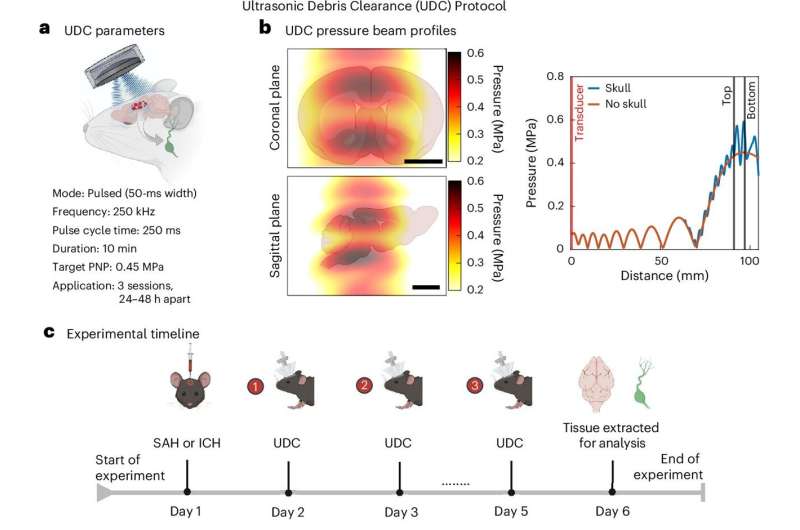
a, Schematic of the FUS protocol (250 kHz, 0.45-MPa peak negative pressure (PNP), 25% duty cycle, 50-ms pulse width) efflux experiment.b, Simulated ultrasound pressure beam profiles and effect of the skull on the intracranial profile.c, Timeline of SAH and ICH experiments. Credit:Nature Biotechnology(2025). DOI: 10.1038/s41587-025-02866-8
A low-intensity ultrasound treatment clears neurotoxic debris from the brains of mice with induced bleeding that resembles a hemorrhagic stroke, according to a studypublishedinNature Biotechnology.
If clinical trials in humans show similar positive outcomes, this method could offer a safe and simple way to treat hemorrhagic stroke—and potentially Alzheimer's and other traumatic brain injuries—without surgery or drugs, the authors suggest.
When waste products such asblood cellsor other debris build up in the brain, they can trigger inflammation and damage nerve cells. Impaired debris clearance has been linked to strokes,head injuries, and diseases such as dementia. Surgical approaches to hemorrhagic stroke can improve outcomes, but they are invasive and require rapid access to specialized stroke centers. Althoughdrug therapiesare being investigated, so far none have been approved.
Researcher Raag Airan from the Stanford University School of Medicine and colleagues designed an ultrasound therapy to enhance clearance of brain debris and tested it in two mouse models of hemorrhagic stroke (subarachnoid and intracerebral/intraparenchymal). Theultrasound treatmentcleared more than half of the red blood cells from the brain and appeared to shuttle them to the deep cervical lymph nodes, which help remove waste products.
In both stroke models, ultrasound-treated mice had less brain inflammation and nerve cell damage than untreated mice. In the intracerebral model, treated mice performed better in tests of survival, symptoms, and behavior. They lived longer, had less brain swelling, recovered their body weight better, and scored higher in corner-turning and grip-strength tests. The treatment was also more effective and safer than an experimental drug therapy previously shown to improve brain debris clearance in mice.
The authors designed their ultrasound protocol to meet current safety guidelines for ultrasound exposure and are planningclinical trials. If these trials prove successful, the authors suggest that non-invasive ultrasound could one day provide therapeutic benefit in hemorrhagic stroke and potentially in other brain conditions that involve build-up of neurotoxic debris.
More information: Matine M. Azadian et al, Clearance of intracranial debris by ultrasound reduces inflammation and improves outcomes in hemorrhagic stroke models, Nature Biotechnology (2025). DOI: 10.1038/s41587-025-02866-8 Journal information: Nature Biotechnology
Provided by Nature Publishing Group









Post comments