




































By Sanjukta Mondal
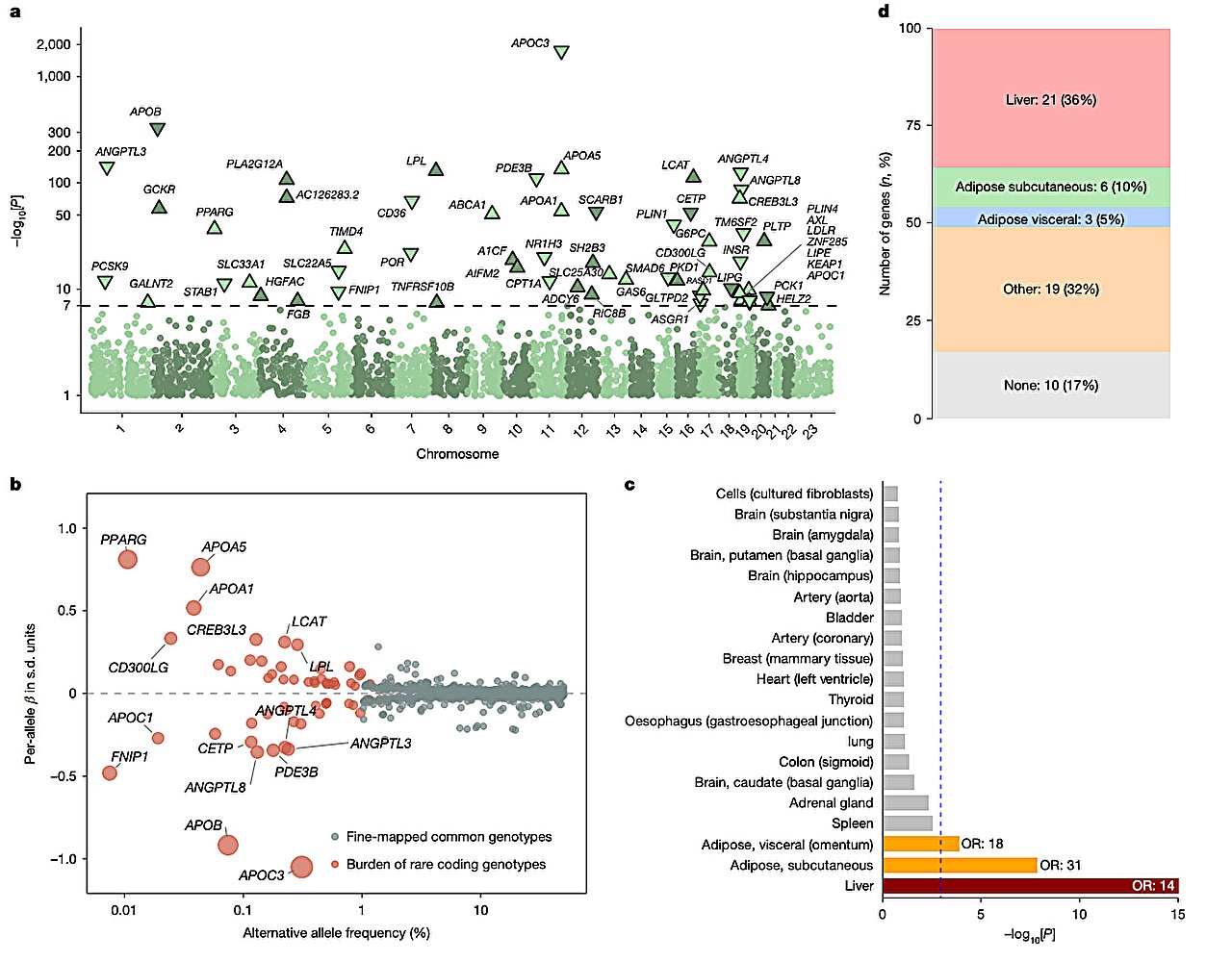
Interplay of genes identified in the exome-wide analysis of TG:HDL ratio and overview of their role in energy metabolism. Credit: Nature (2026). DOI: 10.1038/s41586-026-10864-2
There are people around us who can maintain their weight despite what they eat. This has led scientists to believe that a person's metabolism and tendency toward obesity may have genetic factors behind them. A large study sequencing the genomes of more than 1 million people across three continents, found genetic clues that could drive this tendency. The findings are published in Nature.
They used exome sequencing to identify the specific parts of DNA responsible for building proteins, looking for rare gene variants and their associations with the ratio of triglycerides to HDL cholesterol (TG) in the blood (TG: HDL), a marker linked to several heart and metabolic risk factors and diseases.
They pinpointed 59 genes associated with this marker that help regulate how the body balances, stores and burns energy. One of the major players is the FNIP1 (folliculin-interacting protein 1) gene, which essentially acts as a brake on energy expenditure, stopping cells from burning too much energy.
About 1 in 7,000 people carry a rare, naturally occurring genetic mutation that switches off one copy of the FNIP1 gene. This anomaly appeared to come with its share of metabolic advantages, including significant protection against obesity and liver fat, a more favorable distribution of body fat and around 60% lower odds of cardiometabolic disease, among others.
Study of over 1 million people links rare mutations in FNIP1 variants to better metabolic health. Credit: Nature (2026). DOI: 10.1038/s41586-026-10864-2
Growing global crisis
The trifecta of noncommunicable diseases—diabetes, obesity and cardiovascular disease—is becoming one of the biggest health challenges of our time, straining lives and health systems alike. Cardiovascular disease remains one of the leading causes of death worldwide, claiming an estimated 19.8 million lives in 2022. In the U.S. alone, almost half of all adults are living with high blood pressure.
Over 72% carry an unhealthy weight, and more than half are already dealing with type 2 diabetes or prediabetes. This growing burden of chronic illness calls for finding new ways to treat these diseases at their source.
Disruptions in energy metabolism, which is central to how the body uses and stores fat and sugar, can drive the progression of these conditions.
Scientists have known for some time that a person's metabolic rate and energy storage traits are partly heritable. However, studying rare genetic variants that could drive these strong biological effects is difficult because so few people carry any given variant, making very large data sets necessary to detect them.
Associations with TG:HDL ratio in the exome-wide analysis and tissue enrichment for the identified genes. Credit: Nature (2026). DOI: 10.1038/s41586-026-10864-2
Decoding the metabolic genes
In this study, the researchers built a massive data set that allowed them to identify meaningful patterns in genetic variants associated with healthier metabolism. The team collected genetic data and health records from 1,032,116 people across 11 study groups spanning North America, Europe and Asia.
To read the participants' DNA, they focused specifically on the exome, the 1% of our DNA that contains the instructions for making proteins. Then they looked at TG: HDL in their blood and matched those results with advanced diagnostic data. Using a powerful software program called REGENIE, they searched for genetic variants associated with higher or lower TG: HDL.
The study showed that a simple blood measurement like the TG: HDL ratio, which is the ratio of triglycerides to HDL, the "good" cholesterol, can act as a highly accurate indicator of full-body metabolic health. A higher TG: HDL ratio was strongly associated with excess body fat, dangerous fat buildup around vital organs, insulin resistance and higher blood pressure.
Fifty-nine independent genes were found to directly shape how the body balances energy, stores fat and manages metabolism. Nearly all of them operate in the liver and fat tissue, the body's core metabolic hubs. Of these, 23 genes—close to 40%—already had drugs targeting them, either approved or being tested in clinical trials.
They found that carriers of the rare FNIP1 gene variant had a very healthy metabolic profile. Compared with noncarriers, they showed lower levels of blood fats, including triglycerides and bad cholesterol; lower body weight and body-fat percentage; and a healthier distribution of body fat. They also had lower blood sugar and significantly less fat stored in the liver.
To confirm that switching off FNIP1 was actually driving these benefits, the researchers silenced the gene directly in human liver cells. The cells immediately started turning on genes that break down fat and clear out cell waste.
The researchers then tested the effect in mice by disabling the FNIP1 pathway in the liver. Even when fed a high-fat, high-sugar junk-food diet for up to 30 weeks, these mice were strongly protected against weight gain and fat buildup in the liver.
The results identify FNIP1 as a key player in how the human body manages energy and metabolic biomarkers. Researchers are hopeful that blocking it therapeutically could eventually be used to tackle heart disease, obesity and diabetes.
More information: George Hindy et al, FNIP1 variants are associated with favourable metabolism in 1 million humans, Nature (2026). DOI: 10.1038/s41586-026-10864-2










Post comments