




































by Jared Marsh,University of California, San Francisco
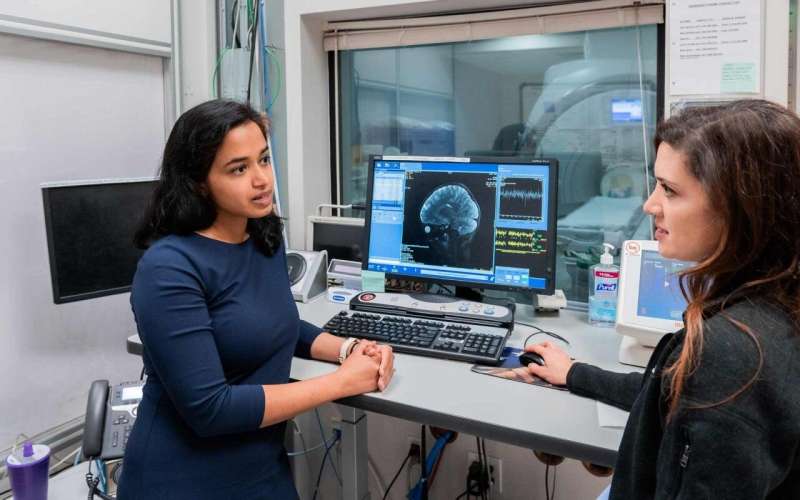
Shabnam Peyvandi, MD, MAS (right), is a pediatric cardiologist at UCSF Benioff Children’s Hospitals and senior author of the study that found that babies who did not respond to increased oxygen and had a severe type of congenital heart disease had significantly smaller brain volumes. Credit: Marco Sanchez
For decades, it was impossible for clinicians to know which babies with major heart defects might eventually have developmental abnormalities, like ADHD and learning differences. Now, by adapting a simple and safe oxygen test, UC San Francisco researchers believe they can identify those most at risk, potentially leading to early detection and life-changing treatments.
Heart defects, also known ascongenital heart disease(CHD), are the most common type of birth defect in the U.S., affecting nearly 40,000 births per year. Babies with CHD commonly experienceabnormal brain development—such as brain injuries and smaller brain volumes—which are strongly correlated with developmental abnormalities.
A new study, led by researchers at UCSF Benioff Children's Hospitals, examined the brains of babies with CHD. By giving extra oxygen to pregnant women and their babies before birth, researchers were able to measure the response in the fetal brain's blood vessels—a marker of brain health.
Brain MRI performed before birth and shortly after birth showed that babies with CHD who did not respond normally to the increased oxygen in the womb were more likely to have brain injuries than those who responded. The study,publishedin theJournal of the American Heart Association, also found that babies who did not respond to the increased oxygen and had a severe type of CHD had brain volumes that were significantly smaller than those who responded.
The figures below are of brain development at 40 weeks of gestation (at-term). The left shows "normal" fetal brain development without congenital heart disease, while the right shows less defined development withhypoplastic left heart syndrome(HLHS), a type of congenital heart disease.
"Although funding lags forpregnant womenand their babies with heart defects, increased federal funding could turn research into early treatments that optimize brain development for children most at risk for developmental complications, and offer hope to families," said Shabnam Peyvandi, MD, MAS, a pediatric cardiologist at UCSF Benioff Children's Hospitals and senior author of the paper.
To treat babies with CHD and abnormal brain development, pediatric heart and brain specialists currently focus on the post-birth period. However, many babies with CHD have less developed brains before birth and incur brain injuries after birth.
These early injuries are leading researchers at UCSF's Pediatric Heart and Brain Research Group to explore treatments before birth in hopes of preventing damage before it begins. While the extra oxygen test, known as maternal hyperoxia, can be used to help identify which children are most at risk, researchers still don't know which interventions might protect and grow fetal brains.
"Now that we can better identify children at risk, we need to prioritize nature and nurture to truly optimize brain health among children with heart defects by identifying neuroprotective interventions before birth, including resources for mothers," said Peyvandi.
More information: Mariam Taleb et al, Fetal Cerebrovascular Response to Maternal Hyperoxia Testing and Association With Brain Growth and Postnatal Brain Injury in Congenital Heart Disease, Journal of the American Heart Association (2025). DOI: 10.1161/jaha.125.042014 Journal information: Journal of the American Heart Association
Provided by University of California, San Francisco









Post comments