




































byAmerican Heart Association
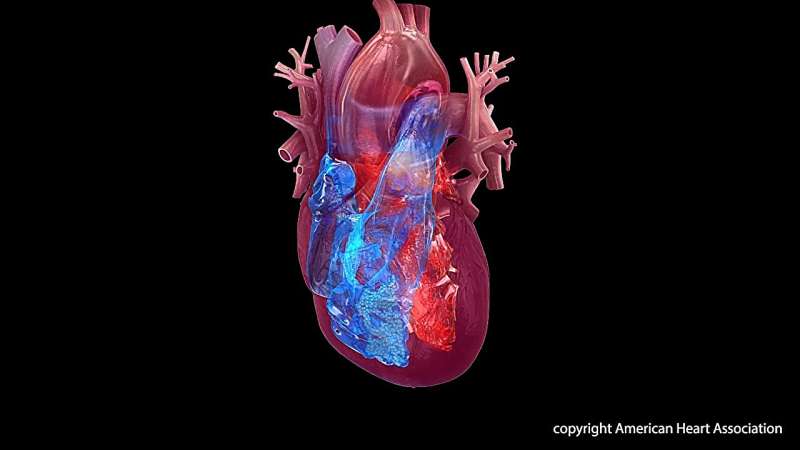
Heart chambers illustration. Four chambers of the heart: right atrium, right ventricle, left atrium, left ventricle. Credit: American Heart Association
A quality improvement program helped reduce "bad cholesterol" (LDL or low-density lipoprotein) levels among military veterans who have heart and blood vessel disease, according to a preliminary late-breaking science presentation at the American Heart Association'sScientific Sessions 2025, held Nov. 7–10, in New Orleans.
"Heart disease and stroke are the leading causes of death among veterans, and elevatedlow-density lipoproteinis a major risk factor for both. While there are medications that work well to lower this bad cholesterol, two-thirds of veterans withheart diseasedo not have cholesterol treated to goal," said study author Luc Djoussé, M.D., a research health scientist (cardiovascular epidemiologist) at Massachusetts Veterans Epidemiology Research and Information Collaborative (MAVERIC), the Boston VA Medical Center and an associate professor of medicine at Harvard Medical School, all in Boston.
"Lowering LDL cholesterol reduces the chances of having another heart attack or stroke. For veterans, keeping LDLcholesterol levelslow leads to better heart health and reduceshealth care costs. This shows how important it is for veterans to manage their cholesterol levels in order to have longer, healthier lives."
This study investigated if the quality improvement program would expand the use of cholesterol-lowering medications, improvepatient adherenceto taking these medications and/or increase the percentage of veterans meeting an LDL-cholesterol goal of below 70 mg/dL.
The study identified barriers to lowering cholesterol, including poor medication adherence among veterans, gaps in health information and education support for veterans and professionals on cholesterol management andlifestyle changes, and staffing shortages at Veterans Affairs health care centers.
The quality improvement program addressed these issues with a multipronged approach: health care coaches, multidisciplinary teams, engagement lists for at-risk veterans, improved medication prescribing practices and health information and resources about cholesterol and lifestyle management.
"We were surprised to see similar reductions in LDL levels among veterans ages 75 and older. This is important because fewer older adults have been included in previous clinical trials of LDL cholesterol medications. This knowledge, if confirmed by ongoing large trials amongolder adults, could change clinical practice for this age group," Djoussé said.
The study's strengths include the large number of participants—veterans of various ages and races, both men and women, which means the results may be more widely applicable to the general population. In addition, the use of a health coach and simple, inexpensive approaches can lead to a significant improvement in cholesterol management.
Limitations include that the program was not designed to evaluate its impact on heart attacks or strokes, so its impact cannot be directly tied to those events. Also, participating veterans were not required to give blood samples at frequent intervals, so researchers relied on LDL cholesterol measurements taken as part of routine clinical care.
"For patients, our study results mean participation in thequality improvement programincreased the likelihood of improvement in cardiovascular health. Many tools and strategies used in VALOR-QI were simple, inexpensive and accessible to clinicians and patients at each point of care. This is important for sustainability within the VA system and could lead to adoption of these strategies throughout the vast VA system and also non-VA health care systems," Djoussé said.
Provided by American Heart Association









Post comments