




































byAmerican Heart Association
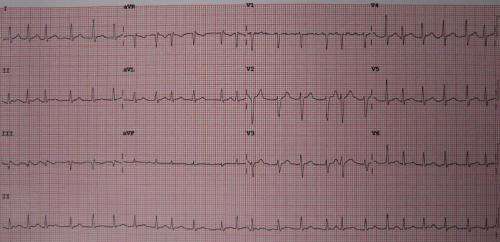
A 12 lead ECG showing atrial fibrillation at approximately 150 beats per minute. Credit: James Heilman, MD/Wikipedia/CC BY-SA 3.0
New research found a simplified clot-preventing medication regimen following stent placement in adults with atrial fibrillation was just as safe and effective in preventing strokes, heart attack and death, when compared to a standard year-long treatment regimen, according to a preliminary late-breaking science presentation Saturday at the American Heart Association'sScientific Sessions 2025. The meeting, held Nov. 7–10 in New Orleans, is a premier global exchange of the latest scientific advancements, research and evidence-based clinical practice updates in cardiovascular science.
This study included adults withatrial fibrillation(AFib), a common heart rhythm disorder, who received a stent in a heart artery to improve blood flow. Standard treatment after astent implantationis a prescription for two clot-preventing medications for one year, however, these medications can also increase the risk of serious bleeding, explained study author Yohei Sotomi, M.D., Ph.D., director of the Osaka Cardiovascular Conference Multicenter Clinical Research Lab in the Department of Cardiovascular Medicine at University of Osaka Graduate School of Medicine in Osaka, Japan.
The two medications included a direct oral anticoagulant, such as dabigatran, rivaroxaban, apixaban and edoxaban to help prevent strokes; and a P2Y12 inhibitor, such as clopidogrel or prasugrel, to prevent clots in the stent.
In this study, the OPTIMA-AF trial, researchers explored if using both medications for one month among people with AFib who received a stent would be equally safe and effective as 12 months of treatment, while helping to reduce bleeding risk associated with the medications.
"Previous studies confirmed that using two anti-clotting agents instead of three reduced bleeding, however, no study has tested whether the duration of dual therapy could be safely shortened to just one month," Sotomi said. "Our study is the first to show that a one-month strategy is both safe and effective, offering real-world benefits for patients and doctors."
Researchers studied more than 1,000 adults in Japan who had AFib and received a stent in a heart artery. After thestent placementprocedure, half of the study participants were prescribed both types of medications for one month, then only the direct oral anticoagulant for the remaining 11 months. The other half of participants continued dual therapy for 12 months.
Participants were followed for one year to monitor if they had a stroke, heart attack or died. Researchers also analyzed how many participants had bleeding complications such as gastrointestinal bleeding.
The analysis found:
"These results may help doctors feel more confident in prescribing shorter durations of dual antithrombotic therapy after stenting among some patients with AFib," Sotomi said. "By reducing the length of time individuals are exposed to combination therapy, we can lower the risk of bleeding—a serious concern for manyolder adults—without increasing their risk of stroke or heart attack."
Up to 1 in 10 people who receive a stent also have AFib, a disorder that increases stroke risk by five-fold and can lead to blood clots, heart failure and death, Sotomi said. According to the American Heart Association 2025 Heart and Strokestatistics, an estimated 5 million adults in the U.S. have AFib, and it is predicted that more than 12 million people in the U.S. will have it by 2030.
The study was conducted in Japan, so its findings may not directly apply to people in other countries. Another limitation is that study participants mostly had stable heart disease, so results may not apply to patients with higher risk for blood clots. In addition, only about 20% of the study population were women, so generalizability to women is limited.
Study details, background and design:
Provided by American Heart Association










Post comments