



































byWiley
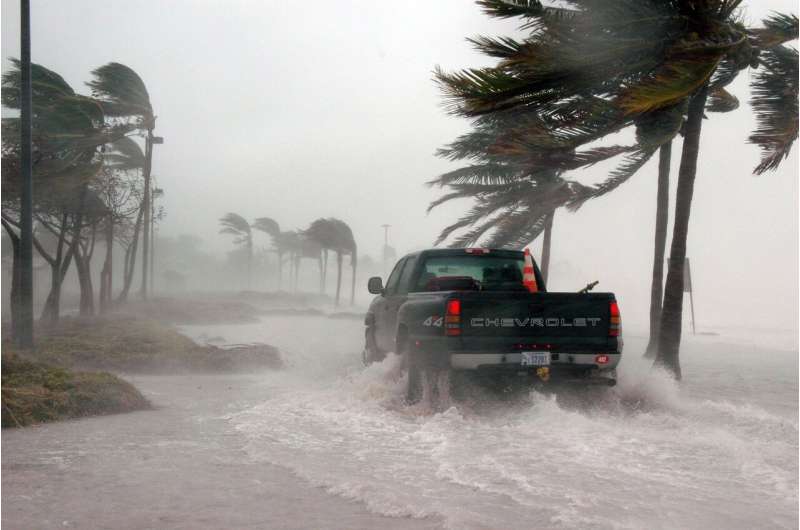
Credit: Pixabay/CC0 Public Domain
Severe weather events have long-term health consequences for vulnerable older adults, according to a study in theJournal of the American Geriatrics Societybased on data following Hurricane Harvey.
When they analyzedMedicare claims datafor nearly 1.8 million fee-for-service beneficiaries aged ≥65 years in Texas and Louisiana, investigators found that older adults who lived through high rainfall during Hurricane Harvey had a 3% elevated risk of dying within one year of the hurricane.
Mortality risk was highest among those with chronic health conditions requiring regular care, including chronic kidney disease and Alzheimer's disease and related dementias. The largest number of attributed deaths was among the Alzheimer's disease and related dementias population: an estimated 1,245 deaths in the year following Hurricane Harvey.
Also, Black and Hispanic/Latino populations experienced 6% and 13% higher mortality risks, respectively, than other groups, highlighting disparities in vulnerability to disasters.
"These findings add to the evidence that disasters don't just cause short-term disruptions. They expose and magnify the underlying fragilities in our health system," said corresponding author Sue Anne Bell, Ph.D., of the University of Michigan.
"For older adults who rely on consistent care, even a temporary breakdown can have lasting consequences."
More information Variation in One-Year Mortality Following Severe Weather Exposure among Older Americans, Journal of the American Geriatrics Society (2025). DOI: 10.1111/jgs.70237 Journal information: Journal of the American Geriatrics Society
Provided by Wiley







Post comments