


































byThomas Jefferson University
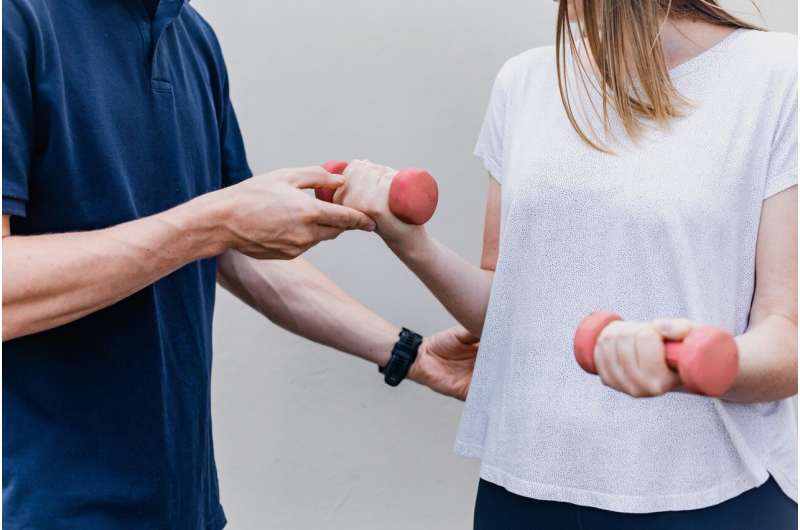
Credit: Unsplash/CC0 Public Domain
Traumatic brain injury (TBI) increases the risk of developing neurodegenerative diseases. Physical activity decreases this risk through improving cognitive health. In a recent study appearing inFrontiers in Rehabilitation Sciences, Amanda Rabinowitz, Ph.D. and her team at Jefferson Moss Rehabilitation Research Institute have developed anapproachto increasing physical activity in TBI patients to decrease cognitive decline.
"Traditional exercise programs for TBI patients are 'one size fits all,' making it difficult for people with varying injury severity to benefit," says Tessa Hart, Ph.D., first author on the study. "Our program is designed to meet people where they are, regardless of the type of brain injury."
In their program, a therapist works virtually with TBI patients to develop physical activity goals, ranging from gardening to going to the gym. Regular text messages from a chatbot,RehaBot, remind patients to complete their physical activity.
"Patients we've interviewed see the value in the study and are excited to continue. No one has dropped out either," Dr. Hart says. "The program has the potential to help people with TBI developlong-lasting, healthy physical activity habitsto improve cognitive function."
The team plans to use asmartwatch trackerto measure the impact of improved physical activity, emotional function, sleep and pain management.
Dr. Hart notes, "Everyone with TBI is unique, with their own unique set of challenges and goals. We wanted our approach to be just as unique, and hope patients will experience success."
"The more we learn about the science behind TBI, the more evidence we have that we can improve a wide variety of issues people with TBI struggle with," says Dr. Rabinowitz, who is also part of Sidney Kimmel Medical College.
More information Tessa Hart et al, Increasing physical activity in moderate-severe traumatic brain injury: protocol for a two-stage randomized controlled trial of a remote, mHealth-enhanced intervention, Frontiers in Rehabilitation Sciences (2026). DOI: 10.3389/fresc.2026.1656326







Post comments