




































by David Bradley,Inderscience
Credit: Pixabay/CC0 Public Domain
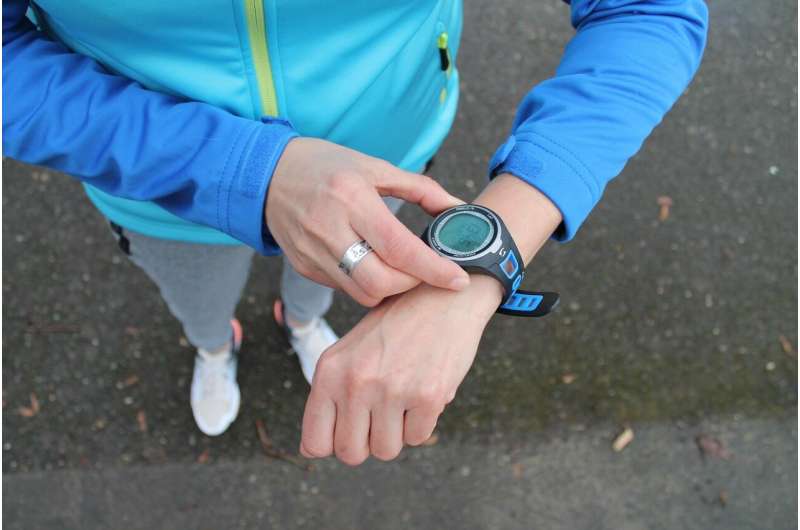
Researchers have developed an enhanced wearable motion-tracking system that could improve the accuracy of fitness trackers used to monitor exercise and training. The team provides details in an articlepublishedin theInternational Journal of Data Mining and Bioinformatics.
Current wearable devices often show inconsistencies in heart rate monitoring and can miscalculate calories burned, speed and distance traveled. Such inaccuracies limit their usefulness for health-conscious consumers, particularly athletes and their coaches, who need precision.
The new work aims to improve both data collection and sensor calibration. Researchers usedfuzzy algorithms—computational methods designed to handle uncertain or variable information—to analyze real-time exercise data. They also applied filtering techniques to remove noise and improve data quality before calibrating the device's sensors.
In their tests, they found that measurements of heart rate, calorie expenditure, movement speed and distance closely matched those obtained throughstandard laboratory procedures.
The researchers suggest that their main advance lies in combining improved sensor calibration with more sophisticated data processing. This allows the device to generate a more reliable picture of an athlete's training performance in real time.
The findings could be used beyond competitive sports to help users develop personalized fitness programs for health monitoring and injury prevention by giving them more dependable information about their physical activity.
More information Fangrong Wu et al, Application of wearable motion tracking devices in training, monitoring, and evaluation, International Journal of Data Mining and Bioinformatics (2026). DOI: 10.1504/ijdmb.2026.153896










Post comments