




































By Kristina P. Brant,, The Conversation
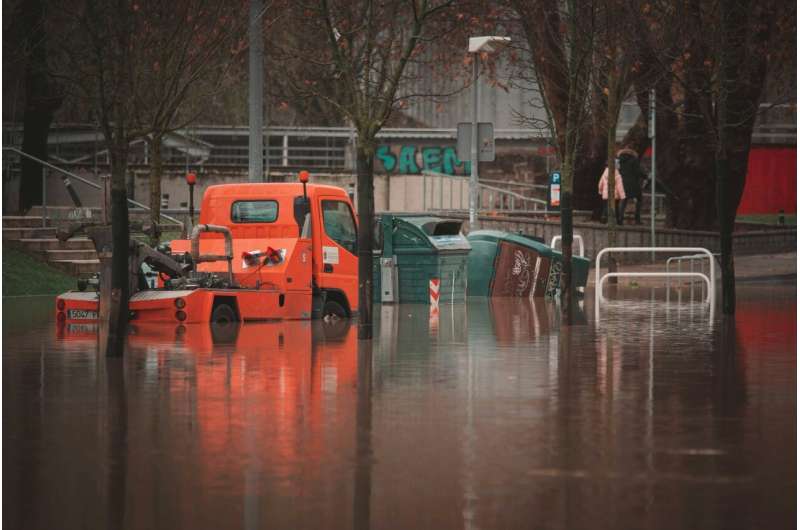
Credit: Unsplash/CC0 Public Domain
When she went to sleep on July 27, 2022, McKayla wasn't worried about thestorm that was ragingoutside her trailer in southeastern Kentucky. Intense storms were frequent in summer. While the creek in front of her home would often rise, water never came close enough to be a concern.
But at 6:30 a.m. the next morning, one of her children rushed into her room in a panic. McKayla ran to the window to see their neighbors' belongings floating by. "I started waking the kids up," she recalled. "But by that point, there was absolutely no way we could have gotten out. From 6:40 to 7:10 a.m., the water had just started coming through the house. At 7:10 a.m. we were standing on my kitchen counter."
Her oldest son busted a hole in the ceiling, cutting the trailer's tin roof back with scissors. McKayla pushed the kids up onto the roof before hoisting herself up. They stayed on the roof for hours until a National Guard boat rescued them.
The devastation was vast. McKayla lost her home and everything in it.
She had been in recovery from a substance use disorder when the flood hit, and the trauma and instability upended her recovery.
"I started using drugs again," she told me while participating in astudy I led about the effects of disasters on drug use. I'm not using her real name here to protect her privacy.
"It was just one of those things. I lost everything I had," she said. "There was nothing in the house that was savable."
McKayla's story is more common than people may realize.
When flooding hits rural areas like Appalachia, it can weaken support systems that have taken years to build. At the same time, residents in drug or alcohol recovery are under extraordinary stress from the loss of homes, jobs and sometimes friends and family.
In our recent study, Mengjun Ge, Zhen Lei and I assessedhow floods might increase substance use-related harms. We found large increases in overdose deaths in flood-damaged areas and evidence that the harm continues for years.
For the past decade, I have been studying substance use disorder and recovery in rural Appalachia, which has long been considered anepicenter of the overdose crisis.
The region has seenhigh rates of overdose deathsdue to theproliferation of prescription opioids in the 2000sand thesubsequent spread of heroin and synthetic opioids such as fentanylin the 2010s.
West Virginia, for example, had thehighest overdose mortality rateof any state from 2014 to 2024. When overdose death rates peaked in 2023, the state saw 81.9 overdose deaths per 100,000 residents, compared with the national rate of 31.3 deaths per 100,000 residents.
Access to treatment hasexpanded considerablyin recent years, and substance use-related harms have finallystarted to decline.
But in rural communities especially, resources that help people recover from substance use disordersare still limited. For example, while nearly two-thirds of West Virginia's counties areconsidered ruralby the federal Office of Management and Budget, only 18% of West Virginia's 140certified recovery housesfor people seeking recovery from addiction are in rural counties.
Looking at data from 2000 to 2017, my colleagues and I found that severe floods, which we defined as floods that received a presidential disaster declaration and caused at least one fatality, were associated with anincrease in opioid overdose deathsin rural Appalachian counties.
The elevated risk didn't subside quickly. We found that during the 10 years following a severe flood, the annual overdose death rate in flood-hit counties was 26% higher than in similar unaffected counties. That amounts to 2.6 more deaths per 100,000 residents per year.
These effects add up over time. A total of 11,744 opioid overdose deaths were officially recorded in rural Appalachia from 2000–2017. By comparing overdose rates in flooded and nonflooded counties, we estimate that 1,368 of those deaths wereconnected to the devastating impacts of severe floods.
These effects were also not uniform across communities. We found that flood damage most affects individuals withno more than a high school educationand those in counties defined by the Appalachian Regional Commission aseconomically distressed. These groups see the largest increase in overdose death risk following floods.
To understand why overdose deaths increased after flood damage, we talked with people who were working in fields such as substance use treatment and harm reduction when the2022 floodthat destroyed McKayla's home hit their areas.
They described how the flood disrupted access to treatment, recovery andharm reduction services, either because people could not travel to services or because facilities themselves flooded. They also talked about the stress people faced after losing jobs and homes and the lasting trauma from widespread devastation in their communities. People displaced from their homes were often separated from their social support networks.
They described how these factors led some people in recovery, like McKayla, to use drugs again and led to drug use among people who had never used before, especially when theydidn't have easy access to mental health care. Such drug use also got riskier when people lost access to tools such asnaloxoneandfentanyl test stripsthat help prevent overdoses and related deaths.
Together, these factors interacted to increase the risk of overdose death, both immediately and longer term.
Our study underscores thelong-term impact of natural disasterson mental health and drug use. But we also found ways communities can try to keep substance use treatment and recovery services operating in the toughest circumstances.
We heard stories of methadone providers traveling to patients' homes in ATVs to bring them into the clinic for treatment. Harm reduction providers used boats to deliver naloxone, food and water to flooded homes. Primary care providers and community health workers visited emergency shelters to provide counseling and ensure people had access to their medications.
After their experience with adestructive flood in the same region in 2021, care providers said they were more prepared to help people when the 2022 flood hit because of what they had learned.
Ensuring treatment providers have contingency plans for patients amid a disaster and including these providers in community disaster preparedness and recovery planning are two key steps that could help limit future harm elsewhere.
Additionally, policies and programs thatmake substance use treatment more flexible—such as supporting the use oftelehealthormobile clinics—would allow providers to adapt after a disaster and lower barriers to treatment in rural communities.
Ultimately, local support services and family helped McKayla enter recovery again and rebuild her life after the flood. Infusing disaster preparedness into substance use treatment and recovery services could prevent others from experiencing the instability that McKayla faced in the first place.











Post comments