



































byUniversity College London
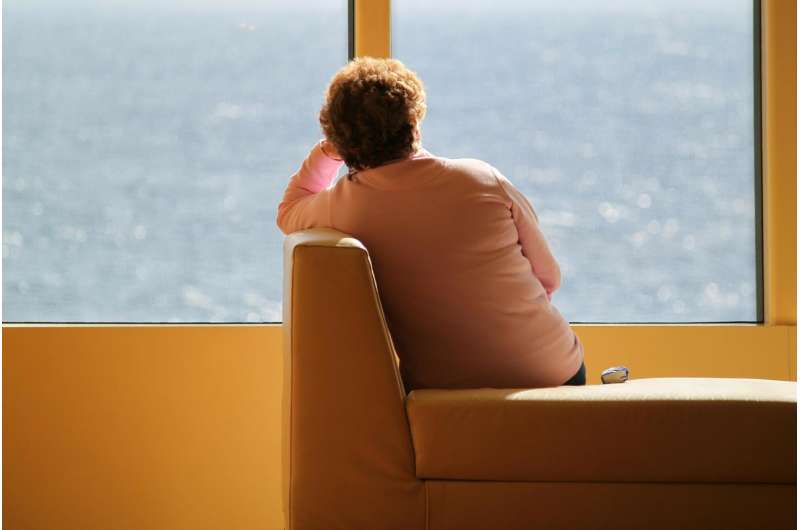
Credit: CC0 Public Domain
Six particular depressive symptoms when experienced in midlife predict dementia risk more than two decades later, finds a new study led by University College London (UCL) researchers.
Midlife depression has long been considered a risk factor for dementia in later life. However, new findings published inThe Lancet Psychiatrysuggest that this relationship is driven by a small cluster of specific symptoms rather than by depression overall.
These symptoms are:
The researchers say focusing on these six symptoms when treating patients with depression in midlife may reduce their risk of getting dementia later in life, but that more research into this link is needed.
Lead author Dr. Philipp Frank (UCL Division of Psychiatry) said, "Our findings show thatdementia riskis linked to a handful of depressive symptoms rather than depression as a whole. This symptom-level approach gives us a much clearer picture of who may be more vulnerable decades before dementia develops.
"Everyday symptoms that many people experience in midlife appear to carry important information about long-term brain health. Paying attention to these patterns could open new opportunities for early prevention."
The researchers analyzed data from 5,811 middle-aged adults who participated in the Whitehall II study, a British longitudinal cohort initiated in 1985 by the Medical Research Council and Wellcome.
Midlife depressive symptoms were assessed in 1997–1999, when all participants were dementia-free and middle-aged (age 45–69, average age of 55), using a questionnaire covering 30 common depressive symptoms.
Participants' health status was then tracked for 25 years through national health registries, with dementia diagnoses recorded up to 2023. During this period, 10.1% developed dementia. The long follow-up period allowed the researchers to investigate symptom-dementia associations stemming long before typical neurodegenerative changes emerge.
The analyses showed that participants classified as depressed (those reporting five or more symptoms) in midlife had a 27% higher risk of subsequently developing dementia. However, this increased risk was driven entirely by the six specific symptoms in adults under 60. In particular, loss of self-confidence and difficulty coping with problems were each associated with a roughly 50% increased risk of dementia.
The researchers note that symptoms such as loss of self-confidence, difficulty coping with problems, and poor concentration can lead toreduced social engagementand fewer cognitively stimulating experiences, both of which are important for maintaining cognitive reserve—that is, your brain's ability to cope with damage or disease, allowing you to maintain normal thinking and function even when the brain is physically affected.
In contrast, other depressive symptoms, including sleep problems, suicidal ideation, or low mood, showed no meaningful association with dementia in the long term.
Professor Mika Kivimäki (UCL Faculty of Brain Sciences), who leads the Whitehall II study and co-authored the paper, said, "Depression doesn't have a single shape—symptoms vary widely and often overlap with anxiety. We found that these nuanced patterns can reveal who is at higher risk of developing neurological disorders. This brings us closer to more personalized and effective mental health treatments."
Professor Gill Livingston (UCL Division of Psychiatry), chair of The Lancet Commission on dementia prevention, intervention and care, who is also one of the co-authors of the study, said, "This is a new and important way of considering depression and dementia, and it is more evidence that depression is a wide umbrella and not necessarily one illness.
"There is some limited evidence that treating dementia in midlife might reduce later dementia risk, but further research is needed to better understand how best to reduce dementia risk."
The researchers also acknowledge that more research across different populations is still needed to confirm how widely these findings apply.
Dr. Richard Oakley, Associate Director of Research and Innovation at Alzheimer's Society, commented, "Dementia is the UK's biggest killer and one in three people born today will go on to develop the condition. The Lancet Commission ... has previously identified depression as a midlife risk for dementia. The connection between dementia and depression is complicated.
"It's encouraging to see this new observational study begin to unpick how dementia and depression are interlinked. However, more research is needed to confirm whether these six symptoms also apply to women and ethnic minorities.
"It's important to note that not everyone who has depression will go on to develop dementia, and people with dementia won't necessarily develop depression."
This study was conducted by an international research team including scientists from UCL, Inserm (France) and University of Helsinki (Finland).
More information Specific midlife depressive symptoms and long-term dementia risk: a 23-year UK prospective cohort study, The Lancet Psychiatry (2025). DOI: 10.1016/S2215-0366(25)00331-1 Journal information: The Lancet Psychiatry








Post comments