




































byKrystal Kasal, Medical Xpress
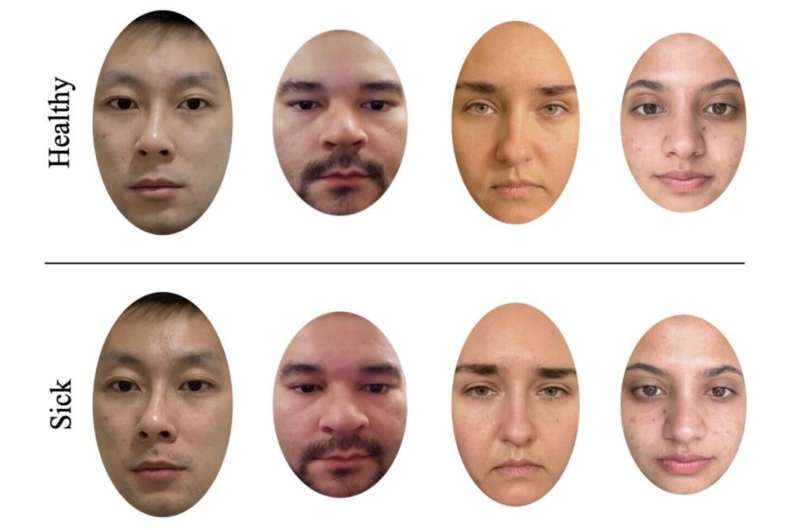
Examples of healthy (top) and sick (bottom) face stimuli. Credit:Evolution and Human Behavior(2026). DOI: 10.1016/j.evolhumbehav.2025.106803
Most people have either been told that they don't look well when they were sick, or thought that someone else looked ill at some point in their lives. People often use nonverbal facial cues, such as drooping eyelids and pale lips, to detect illness in others, potentially to prevent infection in themselves. A new study,publishedinEvolution and Human Behavior, finds that women are more sensitive to these subtle cues than men.
In past studies, participants have been asked to rate signs of illness in the faces of others, but some of these studies used manipulated photos or people who had artificially induced sicknesses in the photos. In the new study, the team wanted to see whether naturally sick individuals would be rated as sick-looking, or as having an expression of "lassitude," by other individuals and whether the recognition differed by sex.
To do this, the team recruited 280 undergraduate students, of which 140 were male and 140 were female, to rate 24 photos. The photos consisted of 12 different faces in times of sickness and health.
The ratings were based on six illness-related dimensions, including: safety, healthiness, approachability, alertness, social interest and positivity, using 9-point Likert scales. These differing dimensions helped the researchers assess things like whether the participants felt as if they could approach the person in the photo and whether they looked like they were happy or tired, as well.
"Given that these dimensions are positively correlated with each other and have been previously used to assess sick face sensitivity, we created a latent lassitude perception variable, indexed by the six dimensions that each tapped unique but related constructs. We also predicted that sex would predict latent lassitude perception, with females showing more accuracy in their ability to discriminate between sick and healthy faces than males," the study authors explain.
After analyzing the participants' ratings they found that their hypothesis was correct—women, on average, were more sensitive to signs of illness in faces. The difference was small, but still statistically significant and consistent throughout the study.
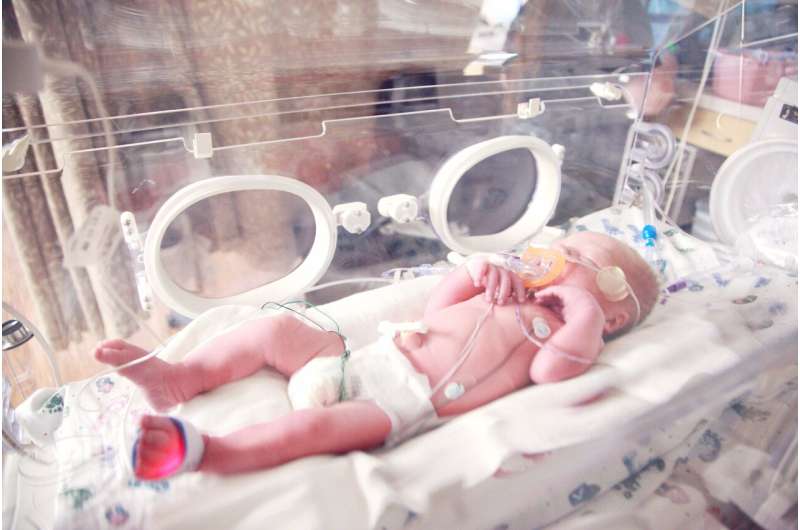
There are two dominant hypotheses as to why women might be capable of detecting illness more accurately. The first is referred to as the"primary caretaker hypothesis,"which posits that because, throughout history, women were more often the ones taking care of infants and young children, they evolved to detect illness better. In theory, recognizing the nonverbal cues of illness would help women to detect illness in babies and young children faster. Ultimately, this ability increases the survival of their offspring.
Another hypothesis is the"contaminant avoidance hypothesis."This hypothesis states that females experience higher levels of disgust compared to males.
The study authors write, "These differences are theorized to result from repeated periods of immune suppression across the reproductive lifespan, occurring both during pregnancy and in the luteal phase of the monthly cycle, in anticipation of pregnancy. Females, therefore, overall, may have had greater selective pressure for disease-avoidance than males."
The researchers note that this study was limited to undergraduate students, which may not generalize to broader populations. Also, indicators of sickness, like voice and posture, were not included. The photos in the study were only of stationary, cropped faces. These additional indicators may influence sickness perception to a different degree.
© 2025 Science X Network
More information Tiffany S. Leung et al, Individual differences in sick face sensitivity: females are more sensitive to lassitude facial expressions than males, Evolution and Human Behavior (2026). DOI: 10.1016/j.evolhumbehav.2025.106803 Journal information: Evolution and Human Behavior








Post comments