




































by Ed Hutchinson,The Conversation
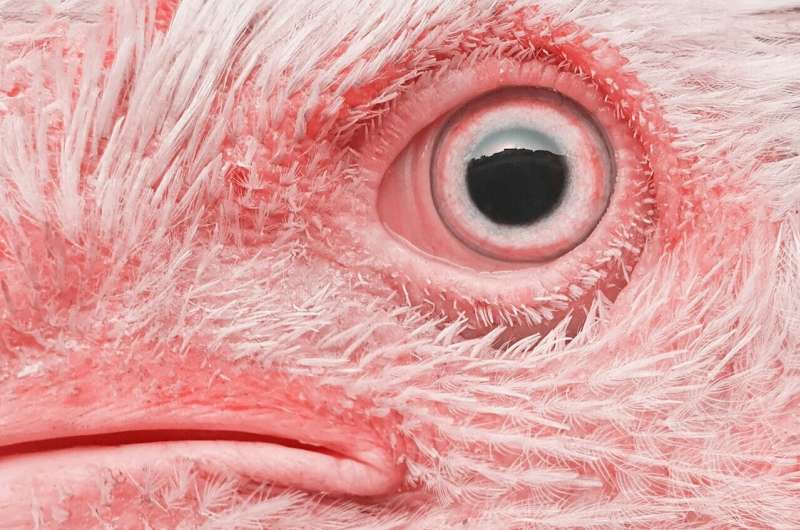
Credit: Unsplash/CC0 Public Domain
The first human case of H9N2 influenza virus (bird flu) has been reported in Europe. A human infection was recorded by the Italian Ministry of Health on March 25, 2026.
As aninfluenzavirologist, I can explain what this means and why I am not particularly worried by it – yet.
What do we know about this case?
The patient was infectedoutside of Europebefore traveling to the Lombardy region of northern Italy. Lombardy's welfare councilor Guido Bertolasohas reportedthat the patient is a boy with underlying health conditions who was diagnosed after returning from a visit to Africa.
Fortunately, his infection hasn't made him seriously unwell, but he has been placed in hospital isolation in the San Gerardo hospital in Monza. Italian public health authorities diagnosed H9N2 influenza virus infection using laboratory tests that detect the virus's genetic material.
What is H9N2 influenza virus?
H9N2 influenza viruses are influenza A viruses. This large group of viruses includes two of the viruses causing human seasonal influenza (H1N1 and H3N2) as well as many other viruses that infect birds.
H9N2 influenza viruses are classified as "low pathogenicity avian influenza viruses." "Low pathogenicity" refers to their ability to cause disease in poultry (avian influenza is a major threat to poultry farming), but it is unusual for H9N2 to cause anything other than mild illness in humans.
H9N2 is not well suited toinfecting humans, and when it does manage to do so it tends to be throughdirect contact with poultry in heavily contaminated environments. Although this was the first human case in Europe, hundreds of human H9N2 cases have been recorded previously,mainly in China, but also in other countries across Asia and Africa.
What is the level of risk to humans?
Hopefully, the infected patient will make a good recovery. At the moment,the wider risk to humans is very low.
Why is this? Virologists look formultiple factorswhen assessing if an isolated human infection with an animal virus is likely to cause wider problems – in the worst case a pandemic, which avian influenza viruses have caused repeatedly in the past. This case of H9N2 currently shows no signs of this.
We know that this particular strain of influenza virus would need toacquire mutationsin order to becomewell adapted to growing in humans. As a precaution,Italian public health authorities have traced contacts of the patientto confirm there was no onwards transmission. At the moment, it seems very unlikely that this will go any further.
However, there is a wider picture. There are many influenza viruses out there that are much more unpleasant than H9N2. Most troubling is theongoing worldwide outbreakof H5N1 avian influenza viruses, which are much more pathogenic and are showing a troubling tendency toinfect mammals.
An isolated case of H9N2 influenza in Europe may not be a major problem itself, but it is a reminder that we need to remain vigilant in monitoring the unpredictable behavior of avian influenza viruses.
This article is republished fromThe Conversationunder a Creative Commons license. Read theoriginal article.
Clinical categories Infectious diseases Common illnesses & Prevention Preventive medicine










Post comments