































Provided by Ludwig Maximilian University of Munich
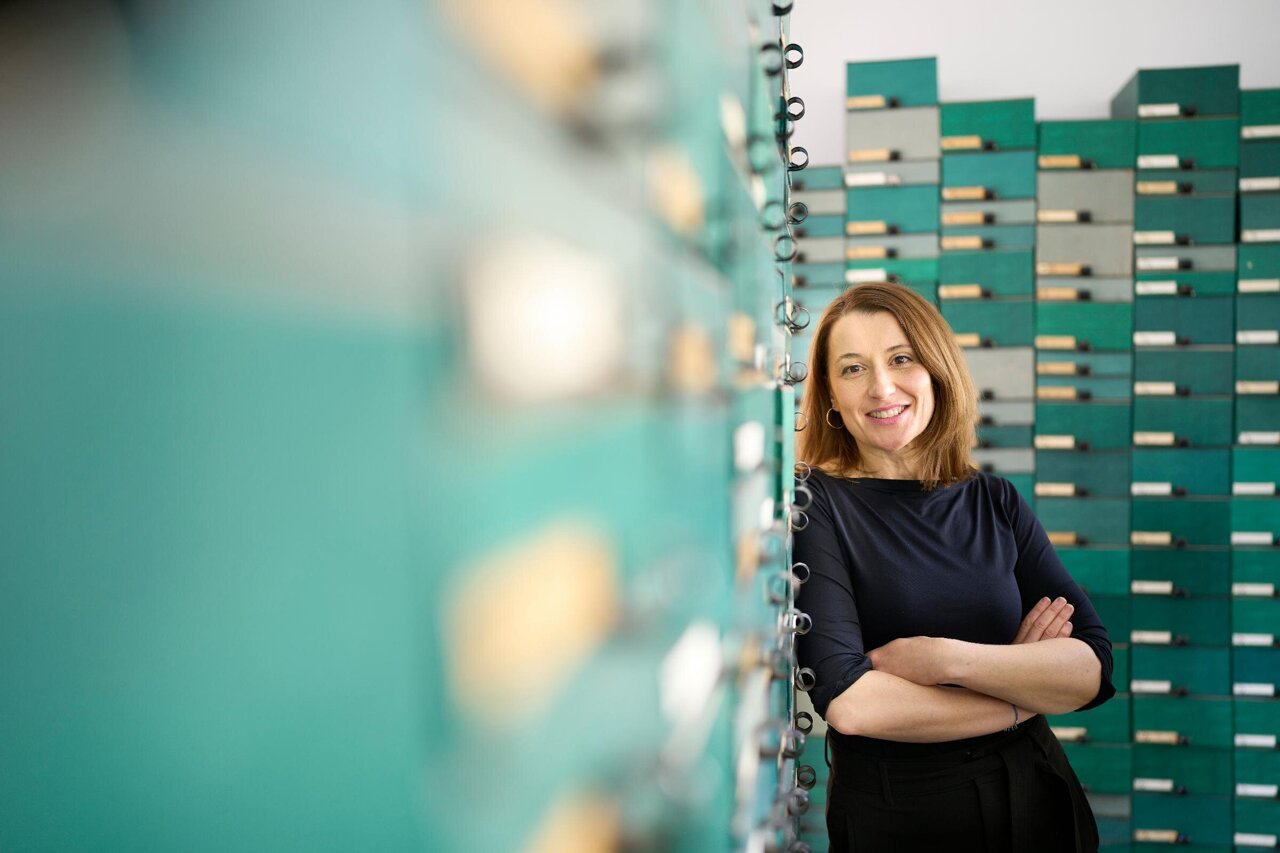
MU chronobiologist Maria Robles Credit: LMU / Jan Greune
LMU researchers have elucidated how different organs adapt the same clock machinery to regulate their individual needs over the course of a day.
Circadian clocks impose daily rhythms on virtually every cell in the body. They control physiological processes, behavioral patterns and our adaptation to recurring environmental changes such as light and dark. In mammals, this system is orchestrated primarily by the proteins CLOCK and BMAL1, two so-called transcription factors that rhythmically activate specific genes. In this way, they generate oscillatory patterns of gene expression and protein function and establish a molecular timetable for cellular and organ function throughout the day.
CLOCK and BMAL1 are expressed throughout an organism. So how can the same molecular clock machinery regulate entirely different biological processes in different organs? What makes this tissue specificity possible? An international team led by LMU chronobiologist Maria Robles and her doctoral student Fatih Aygenli has now made decisive progress in answering these questions. They have published their results in the journal Nature Cell Biology.
Liver cells have functions that must be regulated at different times of day than those of kidney cells, and lung cells have different functions again. The researchers found that this tissue-specific temporal control arises through the communication and interaction of CLOCK and BMAL1 with other proteins on DNA. Which proteins are present, in what quantities and when they are active varies between tissues and across the day.
To capture this spatial and temporal complexity, the scientists applied an advanced method combining the isolation of DNA-associated proteins with quantitative proteomics. This provided a comprehensive snapshot of the protein inventory associated with BMAL1 and CLOCK on chromatin in each tissue. "This approach enabled us to directly identify more than 1,500 proteins in the liver, kidney and lung tissues of mice that are associated with the circadian clock machinery across different organs and times of day," says Robles, a professor at LMU's Institute of Medical Psychology and Biomedical Center (BMC).
Characterization of the CLOCK/BMAL1 protein interaction landscape at the chromatin site along the circadian transcriptionally active phase in mouse liver. Credit: Nature Cell Biology (2026). DOI: 10.1038/s41556-026-02041-4
Known transcription factors take on new functions
Among the plethora of proteins mapped in their interaction atlas, the researchers identified three well-known transcription factors with a previously unrecognized role in circadian regulation and the missing link they were looking for: "We were able to experimentally demonstrate that PROX1, HNF1B and HOXA5—key transcription factors involved in tissue development and the maintenance of cell identity—modulate circadian function in a tissue-specific manner. In doing so, they communicate to the internal circadian clock machinery the specialized functions that must be regulated at different times of the day in the liver, kidney and lung," Robles explains.
These three proteins are already known to play important roles in embryonic development and the establishment of tissues and cell identity. The new findings show that they also help tailor the circadian clock to the specific physiological requirements of individual organs across the day. "Our results thus show that such organ-specific factors confer tissue and cell identity on the circadian clock machinery, thereby shaping tissue-specific gene expression and physiology over the course of the day," adds Aygenli.
According to the Munich researchers, the combined analytical method they optimized provides a powerful approach for comprehensively characterizing protein complexes bound directly to chromatin, where DNA is flexibly packaged, in living tissue. They note that the method can be broadly applied across many areas of molecular biology to investigate how gene-regulatory mechanisms operate in vivo.
Beyond this methodological advance, the study uncovered a fundamental mechanism by which the circadian clock recognizes cell identity and organ context to temporally regulate the appropriate physiological functions in each tissue. As Robles observes, this could help explain why a broken clock or circadian disruption affects different tissues in distinct ways, leading to metabolic, cardiovascular, immune and other diseases.
In the longer term, the LMU researchers hope these findings could contribute to the development of more precisely timed and organ- targeted therapeutic strategies for conditions such as cardiovascular conditions or diabetes. These and other disorders are associated with circadian disruption or desynchronization as a consequence of living against our internal clocks, which has become a "widespread feature of our modern lifestyle," as Robles states.
More information: Fatih Aygenli et al, CLOCK/BMAL1 interactome uncovers homeodomain factors as tissue regulators, Nature Cell Biology (2026). DOI: 10.1038/s41556-026-02041-4







Post comments