


































byUniversity of Bristol
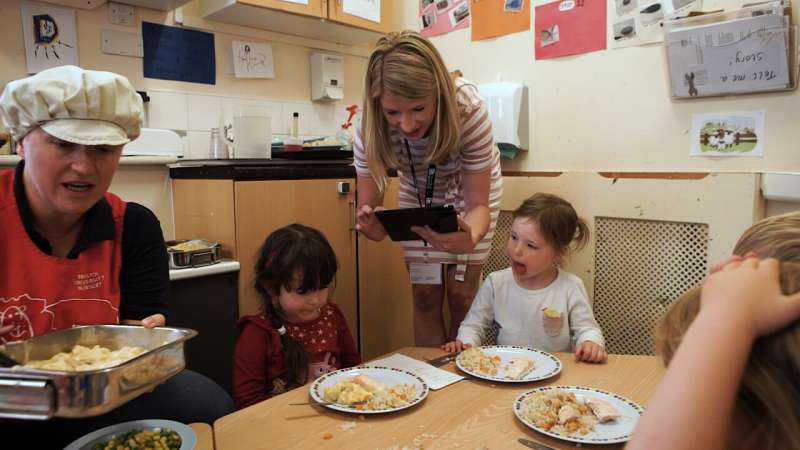
Preschoolers having lunch. Credit: University of Bristol
A pre-school diet and physical activity program does not improve children's calorie intake or overall physical activity levels in nursery settings, a new University of Bristol-led study has found. The research published inThe Lancet Regional Health—Europetoday highlights the need for policy-led rather than intervention-led approaches to improving young children's health.
The NAP SACC UK program (Nutrition and Physical Activity Self-Assessment for Child Care), adapted from an established US model, aimed to improve nutrition and physical activity policies, practice and provision within UK Early Years settings.
The research team, including the universities of Birmingham, Cardiff and Glasgow and the Bristol Trials Center (BTC), tested its effectiveness and cost-effectiveness through a large multicenter trial.
The cluster-randomized controlled trial, carried out between March 2022 and March 2024, enrolled 52 early childhood education and care providers and 835 children aged 2–5 years across the UK. The research team evaluated whether the program reduced children's energy consumption during nursery meals, measured by assessing nutrient content of food photos, and increased their physical activity, measured through activity belts (accelerometers).
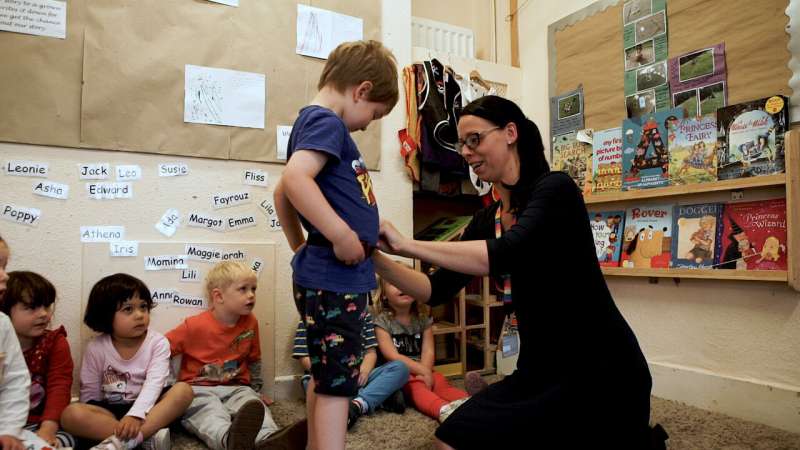
A preschool boy having his waist measured. Credit: University of Bristol
The study found that children who took part in the NAPSACC UK intervention did not:
There was some evidence of improvement in the calories served and eaten at lunch, but overall, the program did not achieve its intended impact.
Ruth Kipping, Professor of Public Health in the Bristol Medical School: Population Health Sciences (PHS), and senior author on the study, said, "The NAPSACC UK study is one of the largest UK trials to explore improving physical activity and nutrition in early years settings—it has shone a light on the priority moving forward in this area to focus onpolicy and statutory changesfor large scale equitable health improvements for our young children."
Given the limited capacity within the early years sector and ongoing constraints in public health funding, the findings do not support rolling out NAPSACC UK nationally.
The researchers conclude that policy-level and statutory changes, such asmandated nutritional requirements, clear portion-size standards and free provision of lunches, are likely to be more effective, scalable, and equitable approaches to improving young children's diet and physical activity.
The research team suggest future work should focus on system-wide approaches rather than interventions requiring intensive delivery. This includes examining how policy, regulation and statutory changes, including government-funded early years food, could deliver meaningful improvements at scale.
An increasing number of children start primary school living with overweight or obesity, which can pose risks to their long-term health and development. Despite national and international guidance, children under 5 are consistently failing to meet dietary or physical activity recommendations.
Previous research has shown that the environments where young children spend time strongly influence weight gain. However, changing home environments has proven particularly challenging.
In England, children aged 0–4 spend an average of 22 hours per week inearly years settings, a figure set to rise with the expansion to government-funded childcare. This makes nurseries, preschools and nursery schools a key setting for promoting healthy behaviors.
More information Effectiveness of an environmental nutrition and physical activity intervention in early childhood education and care settings (NAPSACC UK): a multicentre cluster randomised controlled trial, The Lancet Regional Health - Europe (2025). DOI: 10.1016/j.lanepe.2025.101550










Post comments