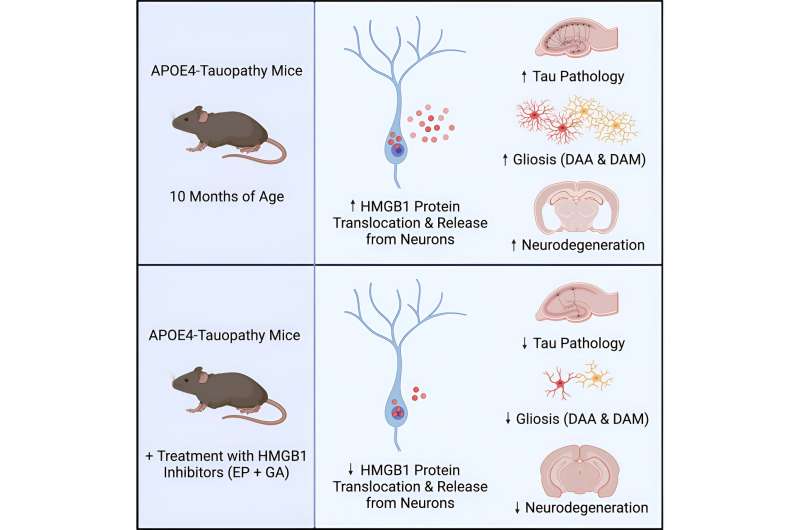






























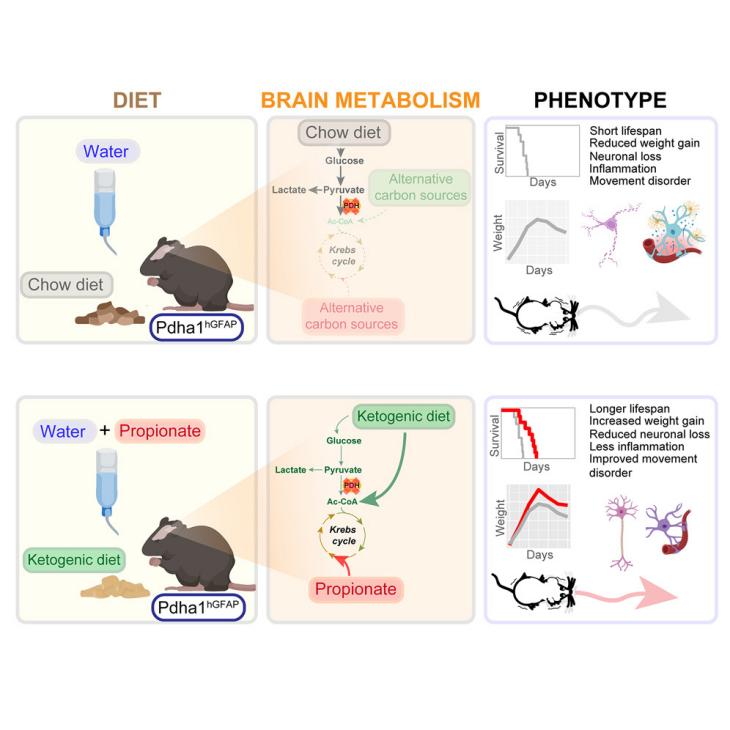

by Gladstone InstitutesGraphical abstract. Credit:Cell Reports(2023). DOI: 10.1016/j.celrep.2023.113252If you're one of the nearly 25 percent of people with the gene variant known
by The National Institutes for Quantum Science and TechnologyResearchers from Japan developed a novel tracer compound that binds to α-synuclein aggregates, making them easy to detect in PET scans and
byColumbia UniversityHuman brain-scan images show regions toward the back and front that are active for a person who is feeling curious. Credit: Gottlieb Lab/Columbia's Zuckerman InstituteYo
byColumbia University Irving Medical CenterCredit: Pixabay/CC0 Public DomainColumbia researchers have discovered a genetic variant that reduces the odds of developing Alzheimer's disease by
byPrinceton UniversityNeurons in the microscopic worm C. elegans. The worm’s neurons have been genetically engineered to be color coded by their cell type. The names of each neuron are shown in
by Krishna Ramanujan,Cornell UniversityAssociative and predictive codes in the hippocampus. Our optogenetic manipulation perturbed hippocampal sequences without affecting cell coactivity, thus s
by UC DavisDiagram of the brain of a person with Alzheimer's Disease. Credit: Wikipedia/public domain.For the first time, researchers have found higher levels of Gram-negative bacteria antige
by Alzheimer's Research UKCredit: Pixabay/CC0 Public DomainA series of experiments presented today at the Alzheimer's Research UK 2022 Conference at the Brighton Centre, has implicated th
by Ian Harris, Adrian C Traeger and Caitlin Jones,The ConversationCredit: CC0 Public DomainIn an episode ofABC's "Four Corners"this week, the use of spinal cord stimula
by Liu Jia, Chinese Academy of SciencesCredit: Neuron (2024). DOI: 10.1016/j.neuron.2024.03.028Astrocytes, as vital cells in the central nervous system, are crucial for brain health and function. Rece
by St. Jude Children's Research HospitalFirst author Bradlee Heckmann, Ph.D. (right), a postdoctoral fellow in Doug Green's (left) laboratory at St. Jude, led research that identified the