




































byKarl Landsteiner University of Health Sciences
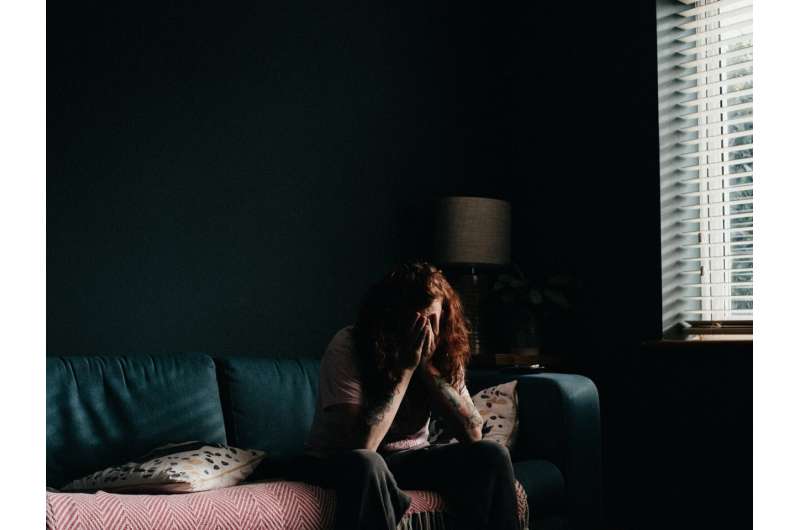
Crying is often seen as a healthy emotional release. However, a new study suggests that the picture is more complex. In a four-week smartphone-based study, researchers found that crying did not generally make people feel better. Instead, its short-term emotional impact varied depending on the reason for crying. Crying after situations of emotional strain or feeling overwhelmed was linked to lower positive affect and higher negative affect, while crying in response to moving media content was associated with a reduction in negative affect.
Conducted by researchers at Karl Landsteiner University (KL Krems), the study captured emotional crying in participants' everyday lives rather than in laboratory settings. The findings,publishedinCollabra: Psychology, suggest that crying is not a uniform emotional response, but one whose short-term effects vary with the situation.
Adult emotional crying is a familiar behavior unique to humans, but surprisingly little is known about how it actually affects mood outside artificial research settings. Earlier studies often relied either on retrospective questionnaires or on laboratory experiments, each of which has clear limitations.
To examine crying under more natural conditions, researchers at KL Krems used an event-based experience sampling approach that captured crying episodes close to when they occurred in daily life, which reduced recall bias and allowed to study emotional states in a more natural setting than laboratory-based studies.
Shared tears
"Our goal was to study crying where and when it really happens—in everyday life," said Prof. Stefan Stieger, Head of the Department of Psychological Methodology at KL Krems. "Using smartphones, we were able to capture crying episodes in real time and then follow emotional changes over the next hour. This allowed us to study changes after crying much more precisely than retrospective reports or laboratory studies."
The study followed 106 adults over four weeks. Participants used theirsmartphonesto document each episode of emotional crying, including its trigger, duration and intensity. They also reported their emotional state immediately after crying and again 15, 30 and 60 minutes later. In total, the team analyzed 315 crying episodes reported directly after they occurred, plus additional episodes documented later in end-of-day reports.
Complex crying
The findings paint a differentiated picture. Overall, crying was associated with fewer positive and more negative emotional states immediately afterwards—meaning that people tended to feel less uplifted and more distressed after crying. More intense crying was linked to stronger emotional effects. At the same time, the pattern differed by trigger: Crying related to loneliness or to feeling overwhelmed showed the most negative short-term emotional profile, while crying in response to media content was associated with lower negative profile. Some of these effects faded quickly, whereas others remained measurable for up to an hour. By the next day, however, none was still detectable.
The researchers also observed notable gender differences: Women cried more often than men, and their crying episodes were generally longer and more intense. The triggers also differed: Crying related to loneliness was more common among women, while men more often cried in response to helplessness or media content. Overall, this suggests that how people feel after crying depends not just on the tears themselves, but also on the situation in which they occur.
"The study shows that crying should not be seen as an automatic form of emotional relief," said Hannah Graf MSc, senior co-author of the study. "Its emotional effects seem to depend strongly on the context in which it occurs."
Overall, the findings challenge the widely held idea that crying is generally relieving. Rather, they suggest that crying is part of a more complex emotional process. For KL Krems, the study also highlights how digital real-life methods can sharpen psychological research by bringing measurement closer to lived experience.
More information Stefan Stieger et al, Effects of Crying on Affect: An Event-based Experience Sampling Study of Adult Emotional Crying, Collabra: Psychology (2026). DOI: 10.1525/collabra.157541







Post comments